

Finding the Right Men’s Clinic for TRT: Quality Over Quick Prescriptions
If you’re a man looking to address low testosterone through legitimate medical channels, you’ve probably noticed the landscape has changed dramatically in recent years. Testosterone replacement therapy (TRT) clinics seem to pop up on every corner, promising quick fixes and aggressive marketing. But not all TRT providers are created equal.
The challenge many men face today is finding a reputable men’s health facility that takes testosterone therapy seriously. One that prioritizes proper diagnosis, monitoring, and comprehensive care over simply writing prescriptions to anyone willing to pay.
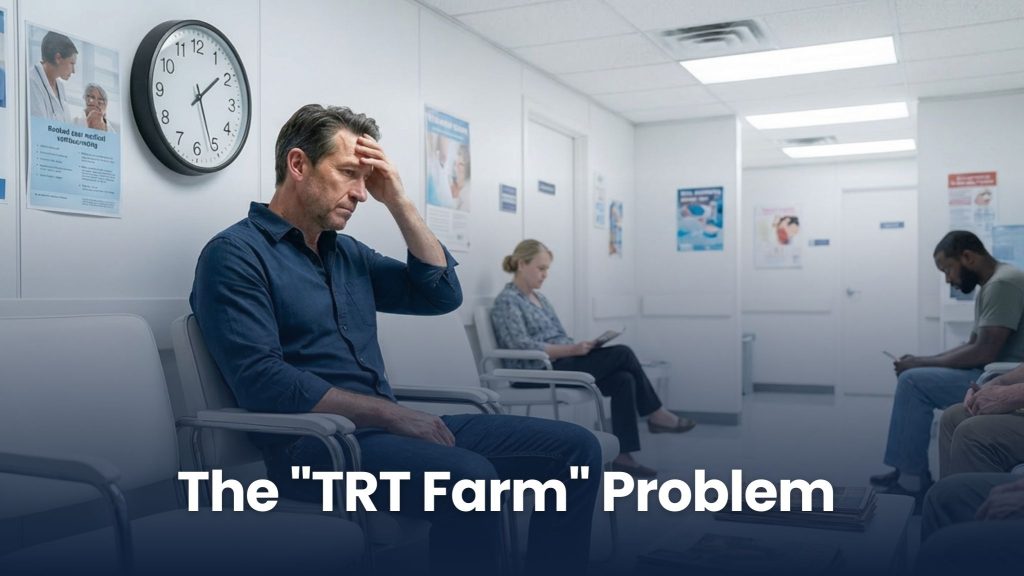
The “TRT Farm” Problem
The term “TRT farm” has emerged to describe clinics that essentially operate as prescription mills. These facilities often:
- Approve nearly every applicant regardless of actual medical need
- Skip comprehensive bloodwork or health assessments
- Provide minimal follow-up care or monitoring
- Focus primarily on revenue rather than patient outcomes
- Use aggressive marketing tactics targeting men who may not actually have hypogonadism
According to research published in JAMA Internal Medicine, there has been a significant increase in testosterone prescriptions over the past two decades, with many prescriptions written without proper testing for hypogonadism. The study found that only about half of men starting testosterone therapy had their testosterone levels tested beforehand, raising concerns about inappropriate prescribing practices.
While testosterone therapy can be life-changing for men with genuine low testosterone, it’s not without risks. The FDA has issued concerns about potential cardiovascular risks associated with testosterone therapy, emphasizing the importance of proper patient selection and monitoring with medical professionals to provide clinical supervision therapy. Proper TRT requires licensed provider monitoring, regular blood work, and ongoing adjustments to dosing and protocol.
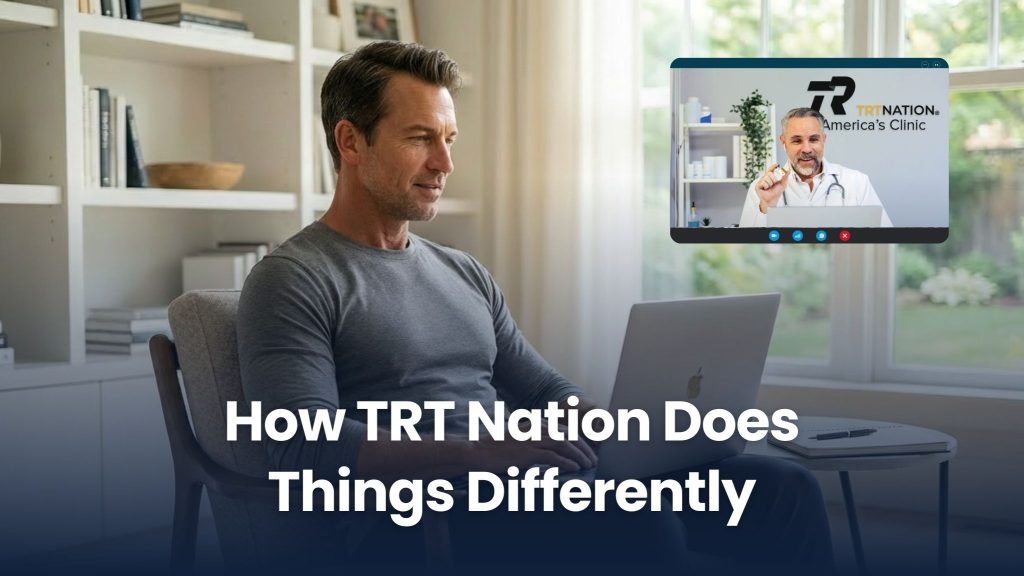
How TRT Nation Does Things Differently
At TRT Nation, we’ve built our telemedicine practice specifically to address the shortcomings we see in the “TRT farm” model. We believe that convenience and accessibility shouldn’t come at the expense of quality medical care.
Our Evidence-Based Approach: We follow clinical guidelines established by the Endocrine Society, which recommend that TRT should only be offered to men with consistent symptoms of testosterone deficiency and unequivocally low testosterone levels confirmed by laboratory testing. Before any patient begins treatment with TRT Nation, we require:
- Comprehensive blood work including total testosterone, CBC, CMP, and other relevant hormonal markers
- Morning testosterone tests (typically one morning samples) to confirm low levels, as recommended by clinical guidelines
- Review of medical history and current medications
- A thorough consultation with one of our licensed physicians
Board-Certified Medical Team: Every TRT Nation patient works with board-certified physicians who specialize in hormone replacement therapy. Our doctors don’t just review lab numbers, they take time to understand your symptoms, health goals, and individual circumstances during virtual consultations.
Ongoing Monitoring and Support: According to the American Urological Association, men on TRT should be monitored regularly for treatment efficacy and adverse effects. At TRT Nation, we take this seriously:
- Regular follow-up blood work (typically at 3 months, 6 months, and annually thereafter)
- Virtual check-ins to assess symptom improvement and side effects
- Protocol adjustments based on your individual response
- Monitoring of hematocrit levels, PSA, and other health markers
- Access to our medical team for questions between appointments
Personalized Treatment Protocols: Research shows that there’s no one-size-fits-all approach to TRT. Factors like age, baseline testosterone levels, symptoms, and individual response all influence optimal treatment. We customize protocols for each patient, offering various delivery methods (injections, pills/capsules, or other regulated licensed USA pharmacies approved formulations) based on what works best for your lifestyle and physiology.
Holistic Health Perspective: We recognize that testosterone is just one piece of the puzzle. Our team provides guidance on:
- Evidence-based nutrition strategies to support hormonal health
- Exercise programming that complements TRT
- Sleep optimization techniques
- Stress management approaches
- Metabolic health and body composition
Studies published in The Journal of Clinical Endocrinology & Metabolism have shown that lifestyle interventions can significantly impact testosterone levels, and we incorporate this research into our patient care.
The Telemedicine Advantage (When Done Right)
Some people are skeptical of telemedicine TRT clinics, and frankly, they have good reason to be… Many online providers have contributed to the “TRT farm” reputation. But telemedicine, when executed with proper medical standards, offers genuine advantages:
Accessibility: Men in rural areas or underserved communities often lack access to specialized hormone therapy providers. TRT Nation brings expert care to patients regardless of location.
Convenience: No need to take time off work for appointments or sit in waiting rooms. Virtual consultations fit into busy schedules while maintaining medical rigor.
Continuity of Care: Even if you travel frequently or relocate, your TRT Nation care team stays with you, ensuring consistent monitoring and treatment adjustments.
Comprehensive Documentation: Digital health records mean your complete treatment history, lab results, and consultation notes are always accessible to you and your care team.

What We Won’t Do
At TRT Nation, we’re committed to responsible medicine, which means:
- We won’t approve you for TRT if your labs and your symptoms are normal
- We won’t skip necessary bloodwork or monitoring
- We won’t promise unrealistic results or treat TRT as a performance-enhancing drug
- We won’t continue treatment if lab work or symptoms suggest TRT isn’t appropriate for you
- We won’t ignore potential contraindications or risk factors in your medical history
According to a consensus statement published in Mayo Clinic Proceedings, TRT should not be offered to men seeking treatment primarily for athletic performance enhancement or in the absence of clinical hypogonadism. We adhere to these ethical standards.

Red Flags in Other TRT Providers
Whether you choose TRT Nation or another provider, watch out for these warning signs:
- Approval for treatment based solely on a questionnaire without comprehensive lab work
- No requirement for follow-up blood tests after starting treatment
- Aggressive marketing focused on muscle building or sexual performance rather than treating medical conditions
- Lack of clear information about physician credentials
- Unwillingness to discuss risks, side effects, or alternatives to TRT
- Protocols that don’t account for individual variation in response
The American Association of Clinical Endocrinologists emphasizes that proper TRT management requires individualized treatment plans and regular monitoring—if a clinic doesn’t offer this, consider it a major red flag.

The Science Behind Our Standards
Our approach at TRT Nation is grounded in peer-reviewed research and clinical guidelines:
Research in European Urology has demonstrated that properly administered TRT can improve sexual function, mood, bone density, and lean body mass in men with hypogonadism. However, these benefits are most pronounced in men with genuine testosterone deficiency; not those with normal levels seeking enhancement.
The Endocrine Society’s clinical practice guidelines specify that diagnosis of hypogonadism requires both symptoms (reduced libido, erectile dysfunction, decreased energy, etc.) AND laboratory confirmation of low testosterone levels.
Long-term safety data, published in journals like The New England Journal of Medicine, has raised important questions about cardiovascular and prostate health in men on TRT. This research informs our screening protocols and monitoring practices, ensuring we identify and manage potential risks proactively.

Transparency and Education
At TRT Nation, we believe informed patients make better health decisions. That’s why we:
- Provide detailed educational resources about testosterone deficiency, treatment options, and what to expect
- Discuss potential risks and benefits openly during consultations
- Share your lab results with clear explanations of what the numbers mean
- Encourage questions and give you direct access to medical staff
- Offer realistic timelines for symptom improvement based on clinical evidence
A study in The Journal of Urology found that patient education and realistic expectation-setting improved treatment satisfaction and adherence in men receiving TRT. We’ve incorporated these findings into how we communicate with patients.
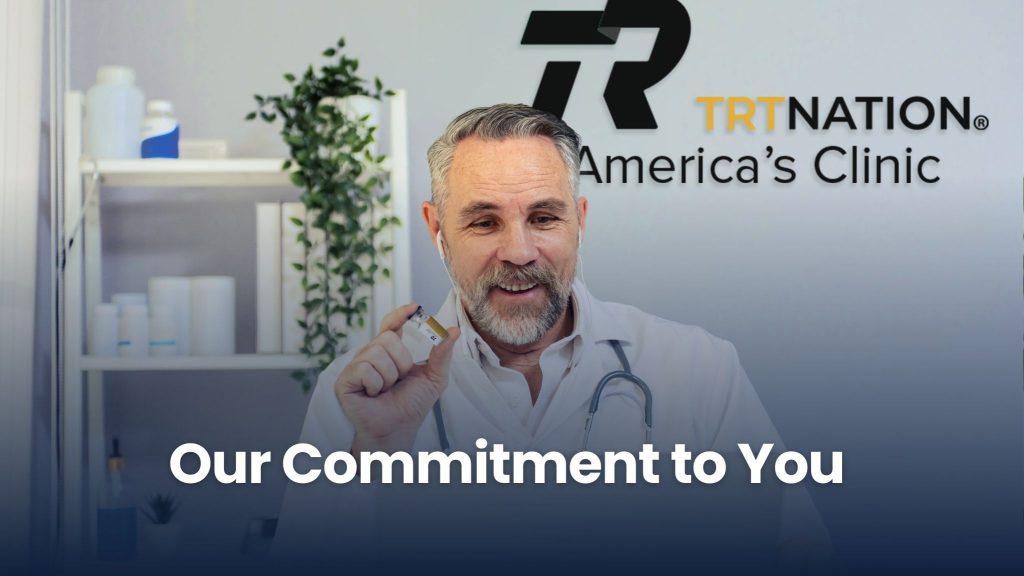
Our Commitment to You
TRT Nation exists because we saw a gap in the market: men needed convenient access to legitimate hormone therapy without sacrificing medical quality. We’re not interested in being the biggest TRT provider. We’re focused on being the most responsible one.
Every decision we make, from our strict diagnostic criteria to our comprehensive monitoring protocols, is designed with one goal: helping men with genuine testosterone deficiency achieve better health outcomes through evidence-based medicine.
If you have symptoms of low testosterone and want to explore whether TRT is right for you, we invite you to schedule a consultation with TRT Nation. Order the appropriate lab work, review your results thoroughly, and have an honest conversation about whether you’re a good candidate for treatment.
And if you’re not? We’ll tell you that too, and help you explore other avenues for addressing your symptoms. Because at TRT Nation, we measure our success not by how many prescriptions we write, but by how many men we genuinely help.

The Bottom Line
The rapid increase of “TRT farms” has made it harder for men to find legitimate care, but it’s also created an opportunity for telemedicine providers like TRT Nation to demonstrate that convenience and quality aren’t mutually exclusive.
Your health deserves better than a rubber-stamp prescription mill. Whether you choose TRT Nation or another provider, demand comprehensive testing, individualized treatment, ongoing monitoring, and licensed physicians who put your long-term health above short-term profits.
Testosterone replacement therapy, when properly indicated and carefully managed, can transform lives. But getting it right requires working with healthcare providers who respect both the power and the responsibility that comes with prescribing hormone therapy.
At TRT Nation, that’s exactly what we’re here to provide.
References:
- Baillargeon J, Urban RJ, Ottenbacher KJ, Pierson KS, Goodwin JS. “Trends in Androgen Prescribing in the United States, 2001 to 2011.” JAMA Internal Medicine, 2013;173(15):1465-1466. https://jamanetwork.com/journals/jamainternalmedicine/fullarticle/1691925
- Bhasin S, Brito JP, Cunningham GR, et al. “Testosterone Therapy in Men With Hypogonadism: An Endocrine Society Clinical Practice Guideline.” The Journal of Clinical Endocrinology & Metabolism, 2018;103(5):1715-1744. https://academic.oup.com/jcem/article/103/5/1715/4939465
- Mulhall JP, Trost LW, Brannigan RE, et al. “Evaluation and Management of Testosterone Deficiency: AUA Guideline.” The Journal of Urology, 2018;200(2):423-432. https://www.auajournals.org/doi/10.1016/j.juro.2018.03.115
- Corona G, Giagulli VA, Maseroli E, et al. “Testosterone Supplementation and Body Composition: Results From a Meta-analysis Study.” European Urology, 2016;70(4):643-651. https://www.europeanurology.com/article/S0302-2838(15)01163-2/fulltext
- Snyder PJ, Bhasin S, Cunningham GR, et al. “Effects of Testosterone Treatment in Older Men.” The New England Journal of Medicine, 2016;374:611-624. https://www.nejm.org/doi/full/10.1056/NEJMoa1506119
- Gooren LJG, Behre HM, Saad F, Frank A, Schwerdt S. “Diagnosing and treating testosterone deficiency in different parts of the world: changes between 2006 and 2010.” The Aging Male, 2012;15(3):150-156. https://www.tandfonline.com/doi/full/10.3109/13685538.2012.699562
Disclaimer: This article is for informational purposes only and does not constitute medical advice. Consult with a qualified healthcare provider to determine if TRT is appropriate for your individual situation.