

Top Testosterone-Boosting Workouts to Try This Year 2026
Last updated: February 2026
Looking to make the most of testosterone therapy this year? The most effective testosterone boosting exercises for men combine heavy compound lifting, explosive power work, and short, intense conditioning, organized with smart recovery. Together, these strategies amplify the benefits of TRT while also nudging your body’s own hormone production.
Below is TRT Nation’s definitive, evidence backed guide to testosterone boosting workouts and program design, built for men on testosterone therapy or those considering it.
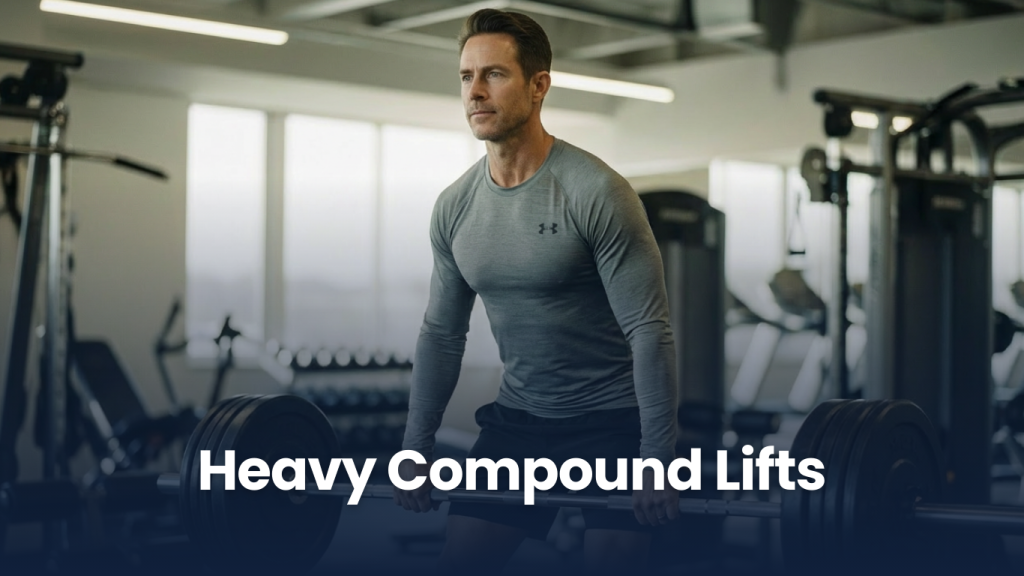 Heavy Compound Lifts
At the foundation of any testosterone-optimized training plan are compound lifts. These multi-joint movements recruit large amounts of muscle mass by engaging the hips, knees, shoulders, and core simultaneously. Because they demand greater systemic effort, compound lifts create a stronger stimulus for strength gains, muscle development, and short-term post-workout testosterone responses.
Foundational exercises include:
- Barbell squat: full body lower body strength with core stability
- Deadlift: posterior chain driver including glutes, hamstrings, and back
- Bench press: chest, triceps, and front deltoids
- Pull ups: vertical pulling for the back, biceps, and grip
Research shows that heavy, multi-joint training produces larger hormonal responses than isolation movements, especially when effort is high and rest periods are controlled. Over time, this style of training also supports meaningful strength gains that improve body composition and metabolic health.
Recommended starting prescriptions:
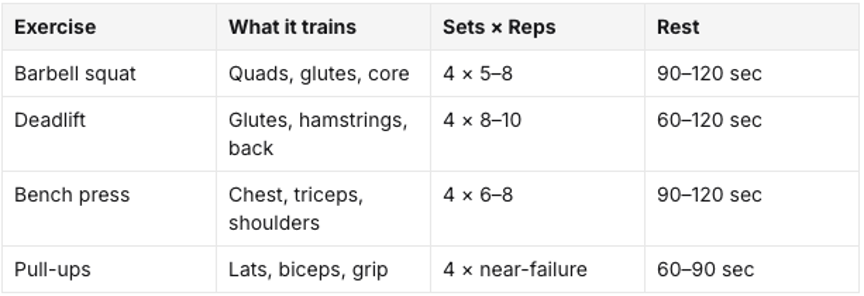
Tip: Choose loads that challenge you while maintaining clean form. Progress with small weekly increases to keep overload moving without compromising recovery.

Olympic and Explosive Lifts
Once a strength based is established, explosive lifting becomes a powerful addition. Olympic lifts, including the clean and jerk and the snatch, are full-body barbell movements performed with speed and power. When kept to lower reps with crisp technique, they are unmatched for building explosive power and neuromuscular drive.
Because these lifts demand coordination and intent, they also generate strong short-term hormonal responses when performed intensely and safely.
Practical pointers:
- Prioritize technique first; begin with hang variations, PVC, or empty-bar practice
- Train in low reps of 2–4 for 3–6 sets, resting 2–3 minutes
- Move the bar fast and end sets before technique breaks down
This style of training enhances testosterone-boosting workouts by pairing high power output with full-body loading.
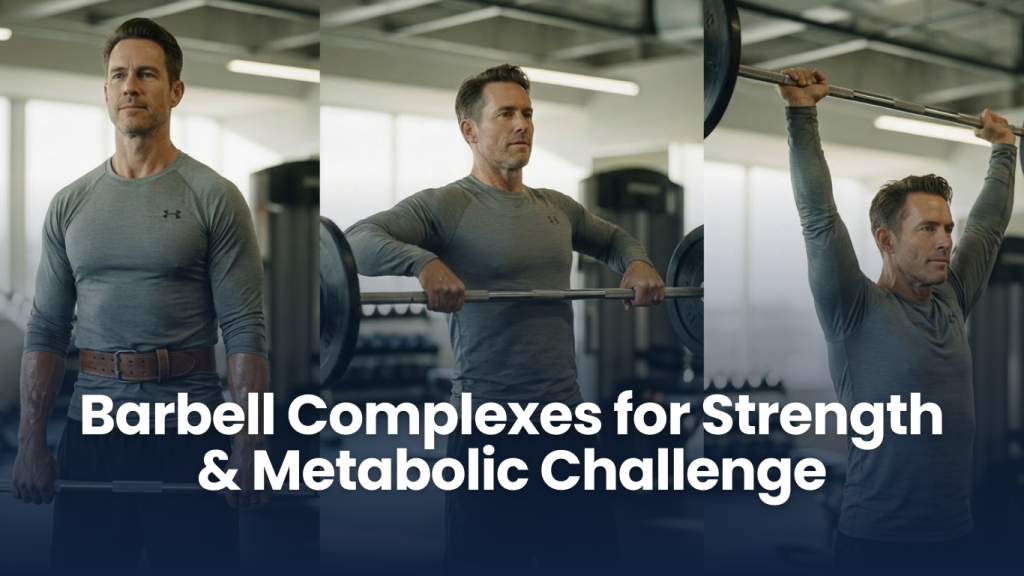
Barbell Complexes for Strength and Metabolic Challenge
To bridge the gap between strength and conditioning, barbell complexes offer an efficient solution. A complex strings four to five movements together without setting the bar down, transforming traditional lifts into a metabolic challenge that taxes multiple systems at once.
For example, a single complex might include deadlift, bent-over row, hang clean, front squat, and push press. This format delivers an anabolic stimulus while saving time.
A simple complex to try:
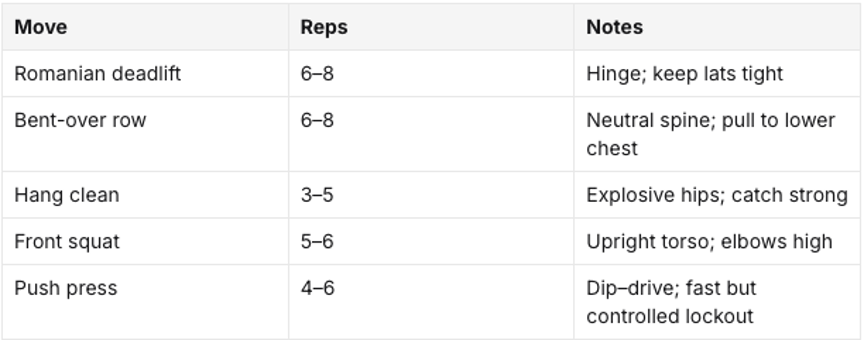
How to run it:
- Load lightly (about 40–50% of your front squat)
- Perform 3–5 rounds; rest 2–3 minutes between rounds
- Keep barbell in hands across each round and focus on smooth transitions
High-Intensity Interval Training Sprints
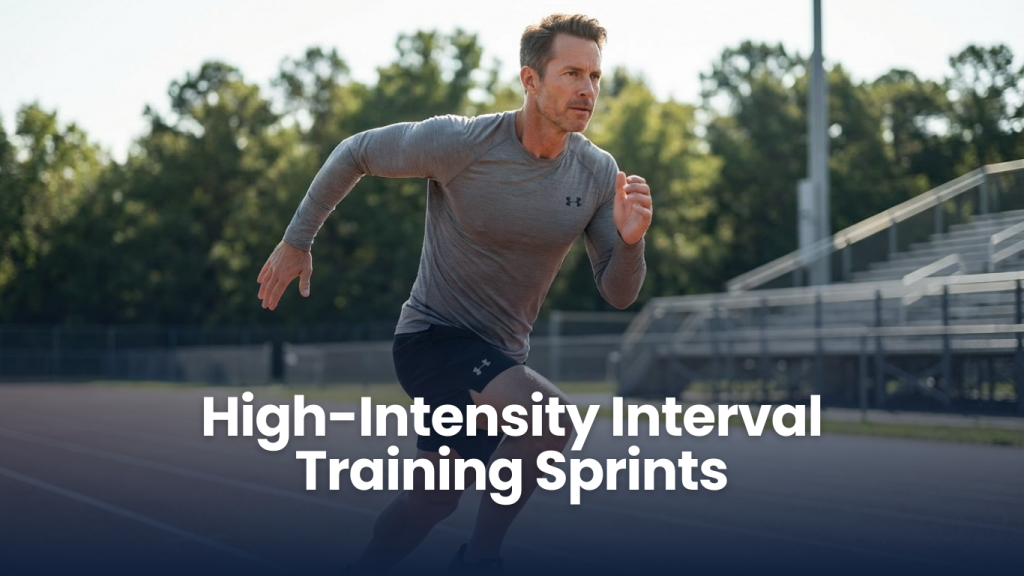
While strength training anchors testosterone optimization, conditioning plays a complementary role. High-intensity interval training (HIIT) alternates short bursts of near-all-out effort with brief recovery. Compared to steady state cardio, sprint style intervals are associated with stronger acute hormonal responses and greater fat loss efficiency for many men.
For those on TRT, two to three sprint sessions per week pair well with lifting while supporting cardiovascular health and body composition.
How to structure HIIT:
- Sprint for 20-40 seconds, recover for 10-30 seconds
- Complete 8-12 intervals per session
- Options include treadmill, track, assault bike, rower, or hill sprints
Keep intervals short and progress gradually by adding rounds or slightly increasing effort while monitoring recovery

Plyometrics and Explosive Bodyweight Exercises
In addition to barbell-based power, plyometrics train fast-twitch muscle fibers through rapid, elastic movements. These exercises reinforce the ability to generate force quickly without heavy loading, making them ideal for men on TRT.
Effective options include box jumps, clap push-ups, and pull-ups performed to technical fatigue. Coaches often program 4–6 sets with short rests to preserve power output.
Example movements:
- Box jumps: 3-6 reps per set, prioritizing controlled landings
- Clap push-ups: 5-8 explosive reps, keeping shoulders stability
- Pull ups to near failure: stop 1-2 reps shy of form breakdown
These movements create an anabolic stimulus by combining speed, intent, and manageable volume without excessive fatigue.
Kettlebell Swings and Loaded Conditioning
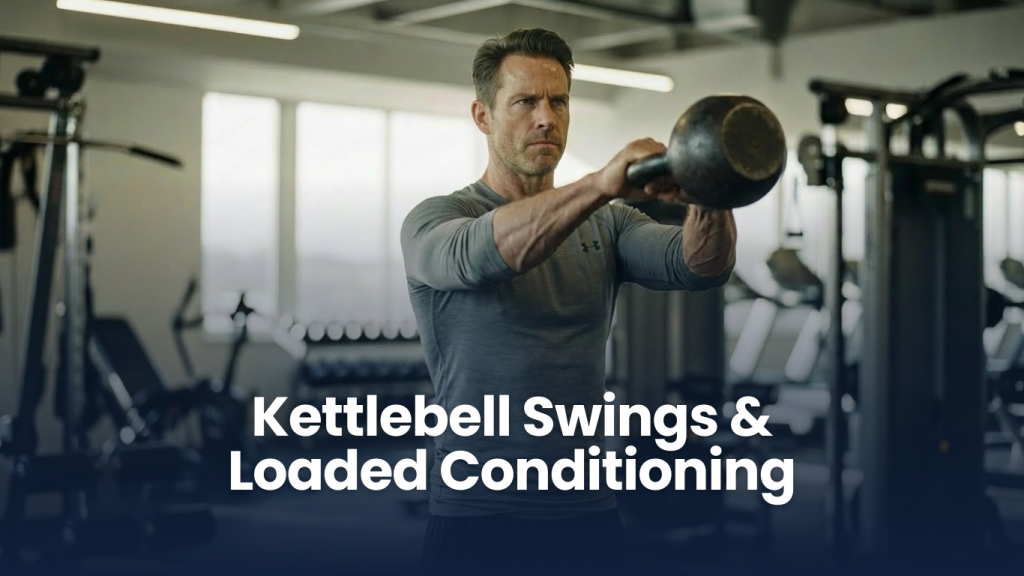
For minimal-equipment conditioning, kettlebell swings and loaded carries deliver outsized returns. Swings train the posterior chain through a powerful hip hinge, while carries challenge grip strength, core stability, and total-body tension.
Together, they provide minimal equipment conditioning that supports hormone friendly training and overall work capacity.
Suggested starting work:
- Kettlebell swings: 3-5 sets of 10-15 reps, resting 60-90 seconds between sets
- Farmers or suitcase carries: 3-5 sets of 20-40 yards, resting 60-90 seconds between sets
Focus on crisp hip hinges and tall posture, increasing load or distance gradually.
Upper and Lower Push Pull Split with Progressive Overload
To organize training efficiently, a push–pull split groups workouts by movement patterns: push for chest, shoulders, and triceps; pull for back and biceps; and lower body for hips and legs. Rotating these sessions across the week balances intensity and recovery, making it ideal for three to five training days.
For men on TRT, this structure aligns well with consistent strength gains, fat loss, and sustainable energy.
Sample weekly flow:
- Day 1: Upper Push – bench, overhead press, dips, push-ups
- Day 2: Lower + Pull – squats or deadlifts, rows, hamstring work
- Day 3: HIIT or Conditioning
- Day 4: Upper Pull – pull ups, rows, rear delts, curls
- Day 5: Lower + Push – front squat, lunges, calves, push press
Use progressive overload by making small weekly increases in weight, reps, or training density while keeping technique a priority.
Effective Programming for Testosterone-Boosting Workouts
Smart programming, which carefully manages volume, intensity, rest, and frequency, turns good training into great results. Below are clear parameters to guide your TRT workout plan.
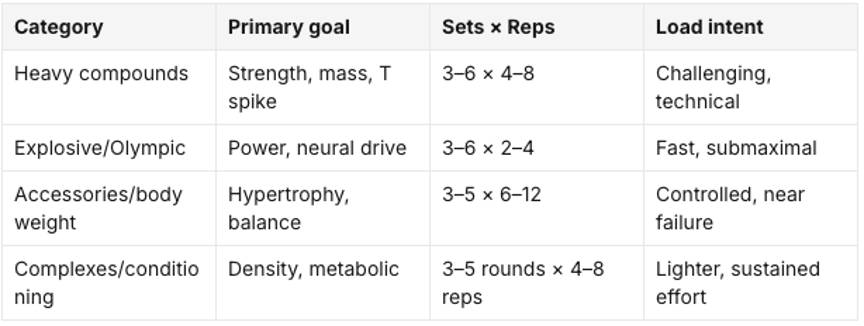
Reps, Sets, and Load Recommendations
For primary lifts, work mostly in moderate to heavy zones:
- Main lifts: 3-6 sets of 4-10 reps, pushing heavier in the 6-8 rep range
- Explosive work: 3-6 sets of 2-6 reps, maintaining high bar speed
- Accessories or bodyweight movements: 3-5 sets of 6-12 reps, focusing on quality and control
Comparative snapshot:
Rest Intervals and Recovery Timing
Rest drives repeat performance:
- Resistance sets: rest 1-2 minutes to maintain output and hormonal stimulus
- HIIT sprints: keep rests short (10–30 seconds) to preserve intensity
Recovery amplifies results. Prioritize 7 to 9 hours of sleep, proper hydration, adequate protein intake, and stress management. TRT can support sleep and recovery, and TRT Nation offers deeper strategies for integrating therapy with training.
Weekly Training Frequency
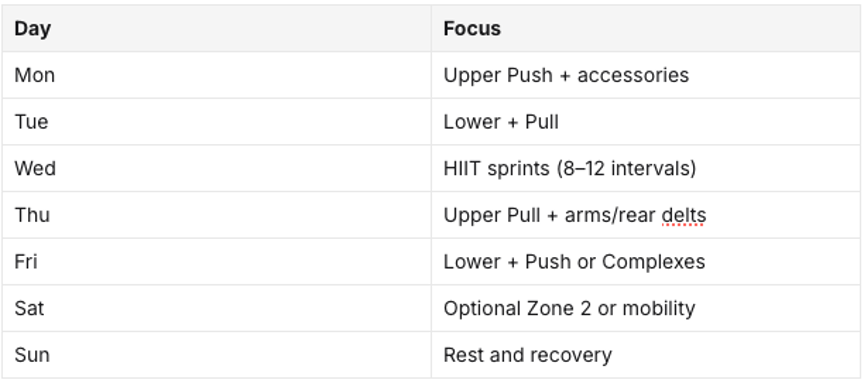
Most men benefit from 3 to 5 resistance sessions plus 1 to 3 HIIT or sprint sessions per week. New lifters or older individuals may need additional recovery days between heavy or explosive sessions.
Example week:

Benefits and Considerations of Testosterone-Enhancing Exercises
Thoughtful programming maximizes benefits while managing risk, which is especially important for men optimizing TRT.
Advantages of Compound Lifting and HIIT
Heavy compound lifts and HIIT produce the most robust acute testosterone responses, drive lean mass, and improve metabolic health. They are scalable across equipment and experience levels. Multiple reviews note that HIIT outperforms steady state cardio for time efficiency and conditioning, making it a high impact complement to strength training.
Injury Risk and Age-Related Recovery Needs
Heavier and technical lifts carry higher risk if performed too quickly. Get medical clearance if you are older, sedentary, or managing medical conditions, then progress deliberately, as noted by TRT Nation physicians on training with TRT. Men over 40 often benefit from longer recovery windows, more mobility work, and rotating heavy, moderate, and light training days.
Avoiding Overtraining and Hormonal Suppression
Overtraining occurs when workload exceeds recovery capacity. This can lead to plateaus, nagging pain, poor sleep, and suppressed testosterone. Fuel adequately, schedule deload weeks every 4 to 8 weeks, and monitor for persistent fatigue or performance dips.
Expert Tips for Maximizing Hormonal Response in Workouts
- Prioritize explosive intent over junk volume. Push presses for six reps or fewer with crisp speed are more effective than grinding sets that slow you down.
- Keep programming consistent but variable by rotating rep ranges, swapping barbell and dumbbell variations, and periodizing effort.
- Make recovery non-negotiable. Adequate sleep, protein intake of 0.7 to 1.0 g per pound of bodyweight, hydration, and stress management are as important as sets and reps. For TRT specific context, see the benefits of working out while on TRT.
- Use supplements as a complement, not a foundation. Evidence for most ergogenic aids on testosterone is mixed, so prioritize training and lifestyle first. See the ScienceDirect review on supplements and hormonal responses for more information.

Frequently Asked Questions
What are the best workout splits for boosting testosterone?
Push/pull/legs and full-body splits are among the most effective, maximizing muscle engagement throughout the week and supporting consistent testosterone-boosting results.
Which compound exercises most effectively raise testosterone?
Barbell squats, deadlifts, bench presses, rows, military presses, and pull-ups are top compound exercises for stimulating testosterone, as they activate large muscle groups and drive hormonal response.
How often should I train for maximum testosterone gains?
Training at least 3–4 times weekly with a mix of strength and HIIT sessions supports optimal testosterone levels for most men.
Should I include cardio, and what type supports testosterone best?
Yes, including HIIT or Zone 2 cardio 2–3 times per week helps burn fat and sustain testosterone without raising stress hormones.
How does recovery impact the effectiveness of testosterone-boosting workouts?
Adequate sleep and planned rest days are crucial for maximizing workout effectiveness and maintaining healthy testosterone—poor recovery can limit your gains.
References
Science Direct: “Examining the Effects of Herbs on Testosterone Concentrations in Men: A Systematic Review” Available here