


From Surviving to Thriving: What Happens to Your Body at Month 2 vs. Month 6 on TRT
Last Updated April 2026
If you have been feeling like a dimmer version of yourself, struggling with low energy, brain fog, a fading sex drive, or the frustrating sense that your body is not responding as it once did, you’re not imagining it. Low testosterone is a real, measurable, and treatable condition. And for men who take the step to start testosterone replacement therapy (TRT), the journey ahead is one of the most rewarding decisions they will ever make.
But here is what most men want to know before they start: what is going to happen, and when? TRT is not a light switch. It is a process, and understanding the TRT results timeline helps you stay patient, stay consistent, and stay motivated through every phase. Let us walk through two of the most important milestones on the TRT journey: Month 2 and Month 6.
 Why the Timeline Matters
One of the most common reasons men feel discouraged early in their TRT journey is unmet expectations. They start treatment hoping to feel superhuman by week two, and when the changes come gradually, doubt creeps in. Understanding the biology of testosterone, the full TRT results timeline, and how your body responds to hormonal optimization over time is the key to staying the course.
Testosterone does not just flip a switch in your body. It works at the cellular level, influencing gene expression, receptor sensitivity, red blood cell production, and neurotransmitter activity. These are deep, systemic changes that take time to fully express themselves. The research backs this up: a landmark study published in the New England Journal of Medicine found that testosterone therapy produced significant improvements in sexual function, physical performance, and mood, with effects continuing to build over 12 months of treatment.
 Month 2 on TRT: The Foundation Is Being Built
The early phase of the TRT results timeline is often subtle but critical. By the time you hit your second month on TRT, something important has already happened: your body has started to recalibrate. Your protocol has been dialed in, your testosterone levels are rising toward an optimal range, and the early signals of change are beginning to surface. This phase is about foundation, not fireworks.
What many men notice around the 6-to-8-week mark:
- Improved sleep quality and a more consistent sleep cycle
- A noticeable uptick in morning energy and mental clarity
- Early improvements in libido and sexual function
- Subtle changes in mood, with less irritability and a greater sense of emotional stability
- The beginning of improved motivation and drive
- Some early muscle fullness, particularly for those who are also exercising
It is important to acknowledge that Month 2 can also bring some adjustment. Some men experience minor acne, water retention, or fluctuations in energy as their body adapts to new hormone levels. This is completely normal, and it is exactly why working with board-certified providers who monitor your labs and fine-tune your protocol is so critical. At TRT Nation, your care team does not just write a prescription and disappear. They stay engaged with your progress and make evidence-based adjustments, so your protocol is always working for you.
Research published in the Journal of Clinical Endocrinology and Metabolism confirms that early symptomatic improvements in mood and energy typically emerge within four to six weeks of initiating testosterone therapy, with sexual function improvements often trailing slightly behind at six to eight weeks. Month 2 represents real progress in the TRT results timeline, even when it does not feel dramatic yet.
 Month 6 on TRT: The Transformation Becomes Undeniable
As you move deeper into the TRT results timeline, the changes become more visible and measurable. This is typically where men look in the mirror and recognize themselves again. Month 6 is when the cumulative effect of consistently optimized testosterone levels begins to show up everywhere: in your body composition, your confidence, your relationships, your performance at work, and your drive to pursue the things that matter to you.
By Month 6, the changes men typically experience include:
- Significant lean muscle gains, especially when combined with resistance training
- Meaningful reduction in body fat, particularly visceral (abdominal) fat
- Sustained, high-quality energy throughout the day without the afternoon crash
- Strong, reliable libido and improved sexual performance
- Sharper mental focus, better memory, and faster decision-making
- Greater emotional resilience and a more positive overall outlook
- Improved cardiovascular endurance and physical stamina
- Deeper, more restorative sleep
Researchers for a a comprehensive meta-analysis found that men receiving long-term testosterone therapy experienced sustained improvements in body composition and quality of life metrics over a period of up to 10 years, with notable gains in lean body mass and reductions in fat mass becoming well established by the 6-month mark.
The psychological transformation at Month 6 is equally significant. Researchers have demonstrated that testosterone optimization is associated with clinically meaningful reductions in depressive symptoms and improvements in overall psychological well-being. Men report feeling more like the person they know themselves to be: motivated, clear-headed, and engaged with life.
 Month 2 vs. Month 6: A Side-by-Side Look
When looking at the TRT results timeline, think of Month 2 as planting seeds and Month 6 as the harvest. At Month 2, your body is absorbing and adapting. The hormonal environment is shifting, early symptoms are lifting, and the groundwork for transformation is being laid. At Month 6, those seeds have taken root. The gains are visible, the energy is reliable, and the benefits have woven themselves into your daily life in ways that feel natural and sustainable.
The men who get the most out of TRT are the ones who treat Month 2 not as a disappointment, but as a commitment. They show up, they stay consistent with their protocol, they exercise, they sleep, and they trust the process. By Month 6, that consistency pays dividends that extend far beyond what any symptom checklist can capture.
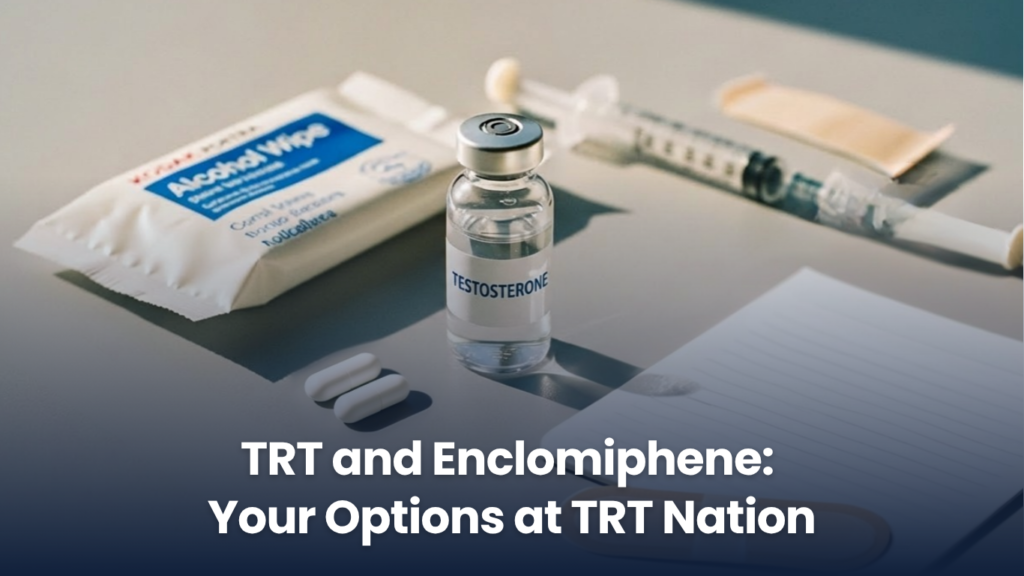 TRT and Enclomiphene: Your Options at TRT Nation
At TRT Nation, hormone optimization is not a one-size-fits-all prescription. Men have access to two primary evidence-based pathways for testosterone therapy, and the right choice depends on your individual labs, health history, goals, and lifestyle.
Traditional TRT delivers exogenous testosterone directly into the body, replacing what your system is no longer producing at adequate levels. It is a well-established approach to testosterone optimization, with decades of clinical data supporting its safety and effectiveness when properly managed.
Enclomiphene is an alternative for men who want to stimulate their body’s own testosterone production. As a selective estrogen receptor modulator, enclomiphene works by signaling the pituitary gland to produce more luteinizing hormone (LH) and follicle-stimulating hormone (FSH), which in turn drives the testes to produce more testosterone naturally. It is particularly well-suited for men who are concerned about maintaining fertility during treatment.
TRT Nation’s providers will work with you to determine which protocol is the right fit, monitor your progress with regular lab work at any of over 4,400 testing locations nationwide, and adjust your protocol as needed. With transparent pricing and no long-term contracts, TRT Nation makes personalized hormone optimization accessible, sustainable, and built around you.
 How to Get the Most Out of Your TRT Journey
To maximize every phase of your TRT results timeline, lifestyle factors play a critical role. TRT works best when it is part of a broader commitment to your health. The men who see the most dramatic results by Month 6 are the ones who pair their protocol with consistent lifestyle habits. Here is what the evidence and clinical experience say matters most:
- Resistance training: Testosterone and muscle go hand in hand. Lifting weights two to four times per week dramatically amplifies the body composition benefits of TRT, helping you build lean muscle and burn fat more efficiently.
- Quality sleep: Testosterone is primarily produced during deep sleep. Prioritizing seven to nine hours per night supports your natural hormone cycles and makes your protocol more effective.
- Nutrition: A diet rich in protein, healthy fats, and micronutrients supports hormonal health. Minimize ultra-processed foods, excess alcohol, and refined sugars, which can blunt TRT’s benefits.
- Stress management: Chronic stress elevates cortisol, which directly suppresses testosterone. Practices like mindfulness, outdoor activity, and social connection reinforce the work TRT is doing in your body.
- Consistent lab monitoring: Regular bloodwork is not just a formality. It is the tool that allows your provider to keep your levels optimized, catch any adjustments that need to be made, and ensure your long-term health is protected.
 Frequently Asked Questions
How soon will I feel the effects of TRT?
Most men begin noticing early improvements in energy, mood, and sleep quality within the first four to eight weeks of starting TRT. Sexual function and libido typically follow at around six to eight weeks, with more substantial physical changes, like muscle gain and fat loss, becoming evident closer to the four-to-six-month mark. TRT Nation’s providers monitor your labs throughout the process to make sure your protocol is dialed in for the fastest, safest path to feeling your best.
How do I know if I have low testosterone?
Common symptoms of low testosterone include persistent fatigue, low libido, difficulty building or maintaining muscle, brain fog, mood changes, and reduced motivation. The only definitive way to confirm low testosterone is through a blood test. If you are experiencing these symptoms and want to understand whether your hormones could be at the root of it, you can take TRT Nation’s Hormone Readiness Assessment to get a personalized sense of where you stand before your first lab draw.
What is the difference between TRT and enclomiphene?
Traditional TRT delivers testosterone directly into the body through injections, replacing what your body is no longer producing at sufficient levels. Enclomiphene, on the other hand, stimulates your body’s own testosterone production by acting on the pituitary gland and is often preferred by men who want to preserve fertility. Both approaches are evidence-based and clinically effective, and TRT Nation’s providers will help you identify which option is the right fit for your individual goals and health profile.
Will I have to stay on TRT forever?
That depends on the cause and nature of your testosterone deficiency. Some men with secondary hypogonadism, where the issue lies in signaling rather than testicular function, may have options like enclomiphene that support their body’s natural production. For others, long-term TRT is the most effective path to sustained wellness. Your TRT Nation provider will discuss your options openly and honestly, helping you make an informed decision based on your lab results, health history, and personal goals.