


Hormones That Decline with Age: What Changes and What to Do About It
Last Updated June 2026
The fatigue, the extra weight around the midsection, the slower recovery, the brain fog. Most men chalk these up to getting older. A lot of the time, they are actually symptoms of measurable hormonal decline, and measurable means treatable. This guide covers which hormones drop with age, what that decline feels like, and what TRT Nation offers to address it.
 Why Hormones Decline with Age
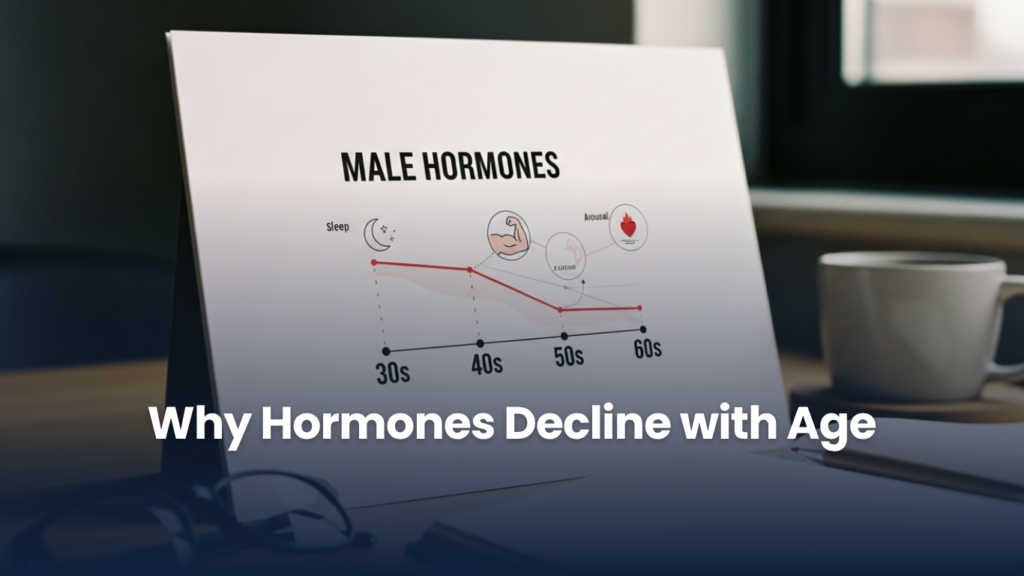
Hormonal decline starts earlier than most people expect, sometimes as early as the late twenties, and picks up pace through the thirties and forties. The communication between the brain and endocrine glands becomes less efficient, glandular tissue produces less output, and cells grow less responsive to hormonal signals. According to research published by The Mayo Clinic, the decline in testosterone and growth hormone plays a direct role in increased fat mass, reduced lean tissue, and metabolic dysfunction in aging men. These are not cosmetic issues. They have downstream effects on cardiovascular health, bone density, and cognitive function.
 The Key Hormones That Decline with Age
Testosterone
Testosterone drops at roughly 1 to 2 percent per year after age 30. By the fifties and sixties, levels can be less than half of what they were in early adulthood. Research in the Journal of Clinical Endocrinology and Metabolism confirms this decline contributes directly to muscle loss, increased body fat, reduced bone density, and diminished sexual function. Common symptoms include persistent fatigue, difficulty building or maintaining strength, midsection weight gain, reduced libido, brain fog, and low mood.
Growth Hormone
Growth hormone secretion drops about 14 percent per decade starting in the mid-twenties. By age 60, output may be half of what it was at 20. Lower GH means impaired cellular repair, slower recovery from exercise, reduced lean muscle, increased visceral fat, and disrupted sleep.
NAD+
NAD+ is a coenzyme that drives energy production through mitochondrial function and supports DNA repair. It is not a hormone, but its age-related decline is one of the most clinically significant markers of cellular aging. By the fifth decade, NAD+ levels may be less than half of what they were at age 20. When NAD+ drops, the result is fatigue, cognitive fog, and the kind of slow physical decline that accumulates quietly over years.
Glutathione
Glutathione is the body’s primary intracellular antioxidant, produced in the liver. It neutralizes free radicals, supports immune function, and aids detoxification. Like NAD+, levels fall with age and drop faster with chronic stress, illness, or poor nutrition. As glutathione declines, oxidative stress accumulates. This is one of the central mechanisms behind age-related cellular damage and chronic disease risk.
Age-Related Hormonal Decline at a Glance
| Hormone | Decline Begins | Rate | Key Impacts |
| Testosterone | Early 30s | ~1-2% per year | Muscle, energy, libido, mood, cognition |
| Growth Hormone | Mid-20s | ~14% per decade | Body composition, sleep, recovery, metabolism |
| NAD+ | 30s onward | ~50% by age 50 | Cellular energy, DNA repair, cognitive function |
| Glutathione | 30s onward | Gradual; worsens with stress | Oxidative stress, immune defense, detoxification |
 How These Hormones Can Be Treated
Testosterone Replacement Therapy (TRT)
TRT is the clinical standard for men whose testosterone has dropped to the point where symptoms become significant. It restores circulating testosterone to a healthy range through subcutaneous or intramuscular injections. At TRT Nation, protocols are built around comprehensive lab work and symptom history. Men on TRT typically report improvements in energy, strength, body composition, libido, mood, and cognitive clarity within two months. See real patient outcomes at the TRT Nation patient results page.
Enclomiphene
For men who want to restore testosterone without external hormone replacement, enclomiphene is a strong alternative. As a selective estrogen receptor modulator, it stimulates the body’s own testosterone production without suppressing the HPG axis. Testicular function is preserved, fertility is maintained, and the body keeps producing testosterone through its own biology. This makes it a compelling choice for men with secondary hypogonadism or those who want hormonal support without committing to injections. Compare both approaches in TRT vs. Enclomiphene: The Two Paths to Better Testosterone.
Sermorelin
Sermorelin addresses the growth hormone decline that begins in the mid-twenties. Rather than introducing exogenous GH, it encourages the pituitary to produce more of its own, preserving the body’s natural hormonal pattern. Most patients notice meaningful changes in 4 to 8 weeks, with optimal results accumulating over 3 to 6 months. Reported benefits include improved sleep, leaner body composition, faster exercise recovery, and better energy. TRT Nation’s approach to peptide therapy is covered in The Complete Peptide Guide.
NAD+ Therapy
Injectable NAD+ bypasses the absorption limitations of oral supplementation and delivers meaningful replenishment at the tissue level. Many patients report enhanced mental clarity, improved energy, and reduced brain fog within the first few weeks. Consistent use supports mitochondrial function, DNA repair capacity, and metabolic efficiency. It is particularly well suited for men who notice cognitive and physical effects of aging earlier than expected.
Glutathione Therapy
Injectable glutathione replenishes the body’s primary antioxidant defense and addresses one of the most fundamental mechanisms of cellular aging. Patients typically notice antioxidant and skin-related effects within 4 to 8 weeks of consistent treatment. Glutathione is frequently combined with NAD+ and TRT as part of comprehensive anti-aging protocols. Learn more about TRT Nation’s anti-aging program.
Treatment Options at a Glance
| Treatment | Target | Mechanism |
| TRT | Testosterone | Exogenous testosterone restores levels directly |
| Enclomiphene | Testosterone (natural) | Stimulates the body’s own testosterone production |
| Sermorelin | Growth Hormone | Stimulates natural GH release from the pituitary |
| NAD+ | Cellular NAD+ levels | Injectable replenishment at the tissue level |
| Glutathione | Intracellular antioxidant | Injectable restoration of the master antioxidant |
Signs Your Hormones Are Affecting You Now
Most men live with hormonal decline for years before connecting symptoms to a root cause. If several of these apply to you, it may be time to look at your levels:
- Fatigue that persists regardless of how much you sleep
- Difficulty losing body fat despite consistent diet and exercise
- Muscle loss or an inability to build and maintain lean mass
- Reduced sex drive or performance difficulties
- Mental fog, reduced focus, or declining memory
- Low mood, irritability, or a diminished sense of drive
- Slower recovery from workouts or illness
- Poor sleep quality, particularly reduced deep sleep
The TRT Nation Hormone Readiness Assessment is a structured evaluation designed to identify whether your symptoms are consistent with hormone deficiency. It is the practical first step for any man who wants an objective read on where he stands.
 Frequently Asked Questions (FAQs)
What are the most important hormones that decline with age in men?
Testosterone and growth hormone are the most clinically significant. NAD+ and glutathione are not hormones in the traditional sense, but their decline has measurable effects on energy, cellular health, and physical performance. TRT Nation evaluates all relevant markers through comprehensive lab panels to determine where intervention will have the most impact.
At what age do hormones start to decline?
Testosterone and growth hormone begin declining as early as the late twenties, with effects becoming more noticeable through the thirties and forties. NAD+ and glutathione follow similar trajectories. The TRT Nation Hormone Readiness Assessment is a practical first step in understanding where you stand.
Is testosterone replacement therapy safe for long-term use?
When managed by qualified providers with regular lab monitoring, TRT has a well-established safety profile for long-term use. The key is proper dosing and ongoing follow-up testing rather than a static protocol. TRT Nation structures its care around exactly this.
Can NAD+, sermorelin, and glutathione be used alongside TRT?
Yes. These therapies target different biological mechanisms and are frequently combined as part of comprehensive hormone optimization protocols. TRT addresses testosterone. Sermorelin restores growth hormone output. NAD+ and glutathione work at the cellular level to support energy production, DNA repair, and antioxidant defense. TRT Nation’s anti-aging program is built around this kind of integrated, multi-system approach.