

The TRT Diet: Simple Nutrition Habits That Support TRT
Last Updated October 2026
If you started testosterone replacement therapy hoping for more energy, sharper focus, and a body that finally responds to your effort, you already know the plan works best when nutrition backs it up. Low testosterone symptoms such as fatigue, low sex drive, brain fog, and stubborn weight gain brought many men to therapy in the first place. What you eat every day can help or slow down the results you are working toward.
A TRT diet is a simple way of eating that supports hormone levels, energy, and recovery while your therapy does its part. This guide breaks down what a TRT diet includes, which foods support your therapy, which foods to limit, and how small habits add up over time. For men starting or considering treatment, TRT Nation offers a hormone readiness assessment to help you understand where you stand before making changes and committing to bloodwork.
 Why a TRT Diet Matters
Testosterone replacement therapy raises your hormone levels, but your body still relies on daily nutrition to use that testosterone well. Poor eating habits can raise inflammation, disrupt blood sugar, and add stress on your liver and cardiovascular system, all of which can blunt how you feel on therapy. A steady TRT diet supports muscle growth, stable energy, and better sleep, three areas men on therapy monitor.
Nutrition plays a direct role in hormone regulation and metabolic health. Diet supports overall hormone function alongside any prescribed treatment. Pairing a thoughtful TRT diet with your therapy plan, guided by your provider, gives your body an extra edge.
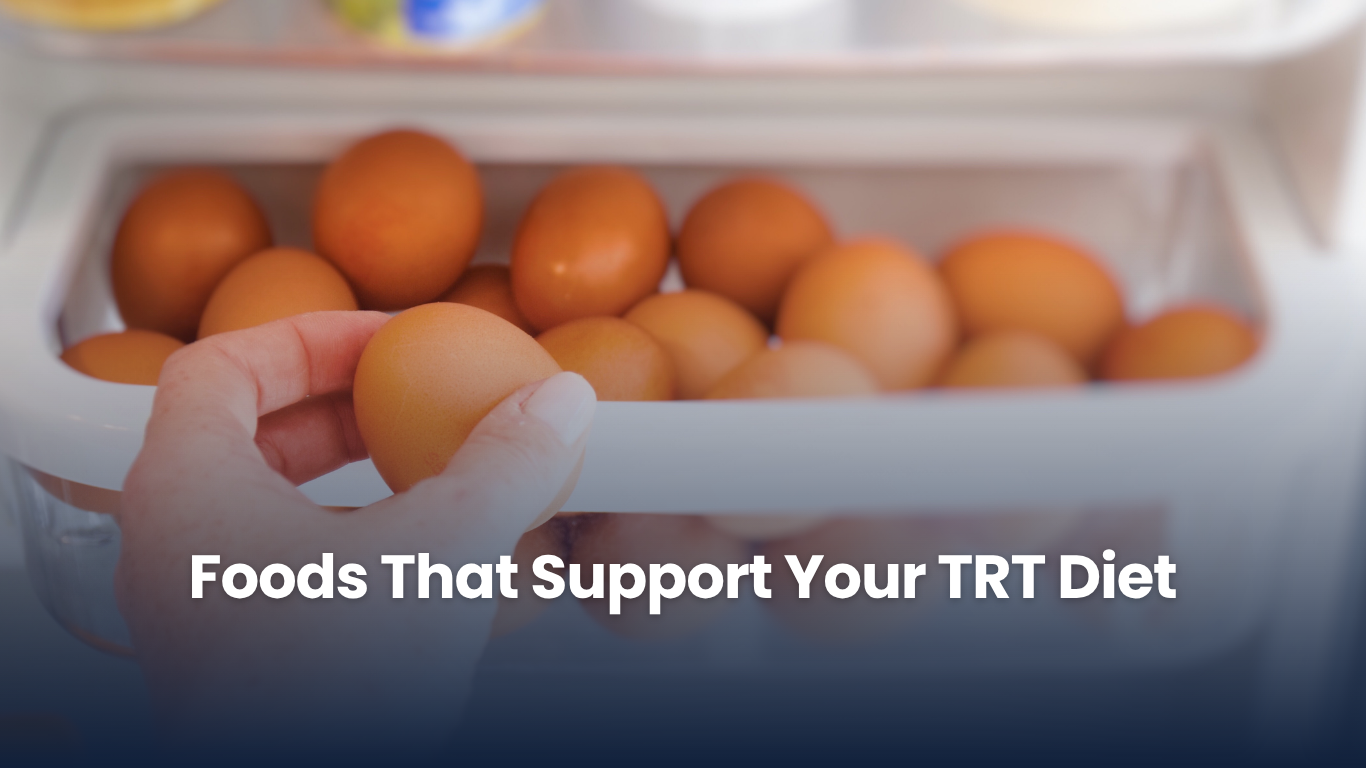 Foods That Support Your TRT Diet
A practical TRT diet does not require strict rules. It works best as a pattern built around a few core food groups:
- Lean proteins such as chicken, turkey, eggs, and fish, which support muscle repair and keep you full
- Healthy fats such as olive oil, avocado, and nuts, which support hormone production
- Complex carbohydrates such as oats, brown rice, and sweet potatoes, which provide steady energy
- Zinc and vitamin D rich foods such as shellfish and egg yolks, both linked to healthy testosterone levels according to the National Institutes of Health
- Leafy greens and colorful vegetables, which support inflammation control and overall recovery
Here is a simple breakdown of how these food groups fit into a TRT diet:
| Food Group | Examples | Why It Supports a TRT Diet |
| Protein | Chicken, eggs, fish | Supports muscle repair and satiety |
| Healthy fats | Olive oil, avocado, nuts | Supports hormone production |
| Complex carbs | Oats, brown rice, sweet potato | Provides steady energy |
| Micronutrient-rich foods | Leafy greens, berries | Helps manage inflammation |
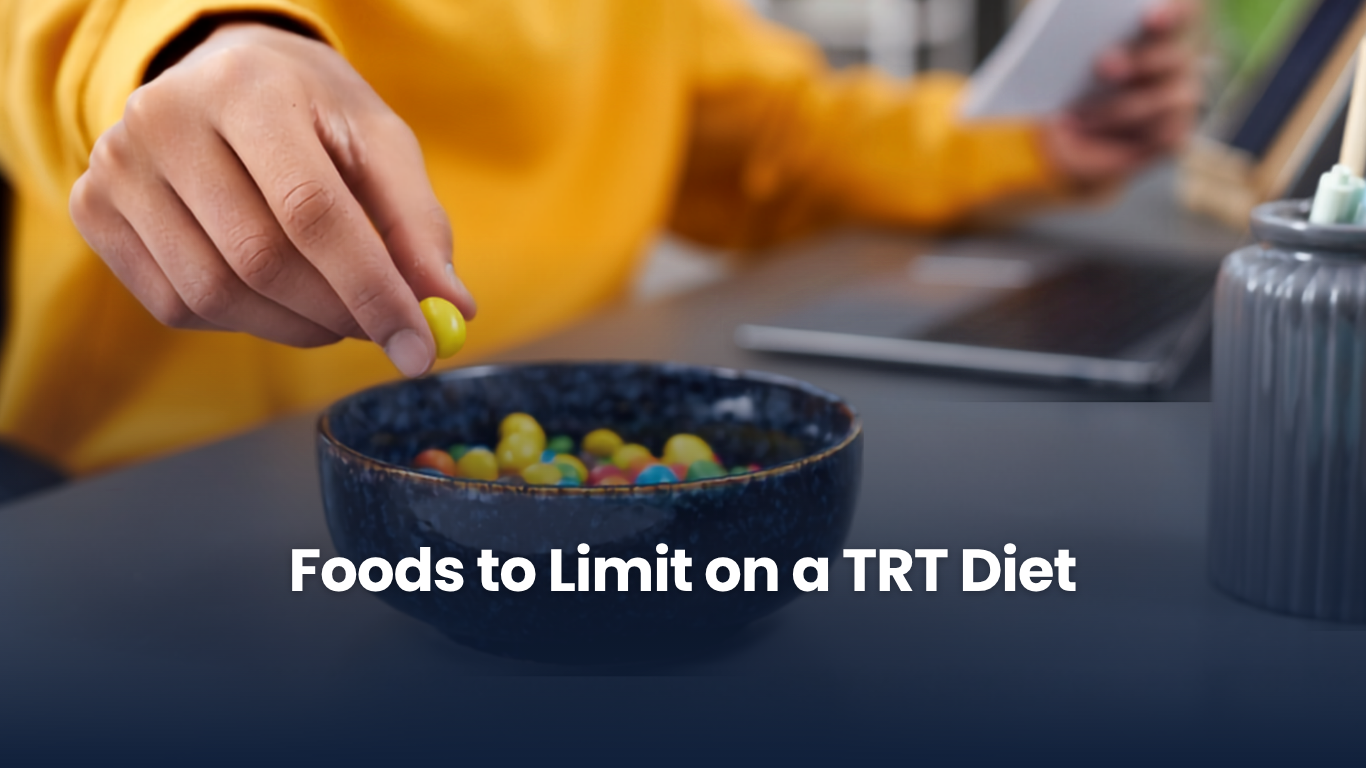 Foods to Limit on a TRT Diet
A TRT diet is not only about what you add. A few common habits can work against your therapy if left unchecked:
- Excess alcohol, which can affect liver function and hormone metabolism
- Highly processed foods and added sugars, which are linked to weight gain and insulin resistance
- Trans fats found in fried foods and packaged snacks
- Excess sodium, which can affect blood pressure, especially while on therapy
None of these foods need to disappear completely from your life. Cutting back gradually tends to work better than an all or nothing approach. For more on building meals around your therapy, TRT Nation’s blog covers more nutrition tips.
 Frequently Asked Questions
Can diet alone raise testosterone without TRT?
Diet and lifestyle changes can support healthy testosterone levels, but they usually cannot replace therapy for men with clinically low levels. A TRT diet works best alongside treatment, not instead of it.
How soon will diet changes affect my TRT results?
Most men notice small changes in energy and digestion within a few weeks of adjusting their diet, though hormone related changes take longer to show. Consistency matters more than speed with a TRT diet. Check TRT Nation’s blog for more on what to expect during the first months of therapy.
Do I need to cut carbs completely on a TRT diet?
No, complex carbohydrates like oats, rice, and sweet potatoes support energy and workout recovery for men on therapy. A TRT diet focuses on food quality, not eliminating carbs altogether. TRT Nation providers can help build a nutrition approach that fits your goals.
Does alcohol affect TRT?
Yes, regular or heavy alcohol use can affect liver function and how your body processes testosterone. Limiting alcohol supports a TRT diet and helps your therapy work as intended.
What is the easiest way to start a TRT diet?
Start by adding one or two habits at a time, such as more protein at meals or less added sugar, rather than changing everything at once. Small, steady changes tend to stick longer than strict plans.