


Expert-Reviewed TRT Success Cases: Clinical Insights Behind Life-Changing Outcomes
Testosterone replacement therapy blends careful medical oversight with modern telemedicine to help busy men reclaim energy, drive, and overall wellness. For men with hypogonadism (a clinical syndrome marked by low testosterone and symptoms like fatigue, reduced libido, and loss of muscle) testosterone therapy can restore hormone levels to a healthy range and unlock meaningful quality-of-life gains. In this article, we share the greatest TRT success examples, highlight real experiences with testosterone replacement therapy, and unpack the clinical insights that make these outcomes possible. You’ll see top success stories from testosterone therapy alongside evidence on mood, body composition, sexual function, and metabolic health. We’ll also cover safety, personalization, and the role of telehealth in sustaining results; reflecting TRT Nation’s patient-first approach to accessible, physician-guided care.
Testosterone Replacement Therapy Benefits Overview
Testosterone replacement therapy is a medical treatment designed to restore healthy testosterone levels in men diagnosed with hypogonadism (low testosterone), often improving energy, mood, muscle mass, sexual function, and metabolic health. Clinical studies and large provider datasets show rapid gains in energy and mood after initiating treatment, with sustained improvements in sexual function and body composition as therapy continues. Patient-reported outcomes echo these findings, with high rates of increased vitality, better focus, and improved confidence as levels normalize.
Common TRT benefits seen in the literature and real-world care include:
- Increased energy and vitality
- Enhanced sexual health and libido
- More muscle mass and improved body composition
- Better cognitive clarity and mood
- Improvements in sleep quality, memory, and relationships
In consumer-facing clinical reports, patients frequently describe feeling “like themselves again” within weeks of therapy, with sexual function often improving over several months as testosterone stabilizes. Aggregated outcomes from large TRT programs similarly report meaningful gains in well-being and performance across work, gym, and home life, reflecting consistent testosterone therapy outcomes across diverse patients as levels are optimized.
Real-World Transformations from Testosterone Therapy
The most inspiring TRT stories pair measurable change with day-to-day life improvements. In fact, aggregate program data show how common that transformation is: with thousands of men reporting significant improvements in energy, motivation, and sexual health after 3 months on therapy. Reports also show that 9 out of 10 patients experience life-changing results during that same timeframe.
Representative, expert-reviewed success examples include:
- Regained muscle and drive: One TRT Nation patient, 73 years old, shared that TRT “certainly improved my life,” adding that he is now **physically stronger, has more stamina, and feels more confident about staying independent.” — Kyle P.
- A TRT Nation patient reported losing 30 pounds in six months, and described the change as life-changing, saying, “Feel like a completely new man!” — Ryan H.
- Weight, strength, & vitality: One patient reported a major health shift, losing 75 lbs, dramatically increased energy, and noticeable muscle gains; illustrating how restoring testosterone can catalyze broader improvements in physical wellbeing when paired with proper monitoring and lifestyle adjustments.
- Back to being present as a father: One TRT Nation patient shared that before treatment he was constantly exhausted after work. Within months, he reported having the energy to play with his kids after dinner, stay engaged on weekends, and feel present again as a dad — not just watching life from the couch.
- Confidence passed down: One father said regaining his confidence through TRT changed how his kids saw him, not just physically stronger, but more confident, more engaged, and more emotionally available than he’d been in years.
- Renewed energy and family life: One patient shared that TRT Nation helped him “reclaim what I thought was lost forever,” restoring his energy and vitality so he could be fully present with his family again; a change he had thought was impossible. — Thomas V.
- Gym & confidence overhaul: A man in his late 30s described hitting a wall physically and professionally, but after a few short weeks on therapy, he saw substantial improvements in his physique, regained focus and confidence, and felt like he was back in his mid-20s. — Trent G.
- Showing up again: Another patient said the biggest change wasn’t muscle or weight, it was that he finally felt like himself again, able to show up for school events, family time, and everyday moments he used to dread from exhaustion.
Patterns across the top success stories from testosterone therapy:
- Renewed consistency: better mornings, stronger workouts, and sustained productivity.
- Relationship gains: improved libido, confidence, and communication.
- Motivation loop: as energy rises, adherence to sleep, nutrition, and training improves—compounding before and after TRT results.
For a sense of patient sentiment over time, you can browse verified experiences and ratings on TRT Nation’s own platform TRT Nation.

Key Clinical Insights from Expert-Reviewed TRT Cases
Beyond anecdotes, long-term studies help explain why these outcomes hold up. Reviews of testosterone therapy in hypogonadal men associate treatment with reductions in body weight and waist circumference and improvements in glycemia (a key marker of blood sugar regulation) with additional benefits reported in inflammatory markers (such as CRP), urinary symptoms, and erectile function as treatment continues peer‑reviewed review on TRT and metabolic risk. In observational cohorts, long-term therapy has been linked to preventing progression from pre-diabetes to type 2 diabetes over eight years, underscoring the metabolic implications of normalized testosterone in appropriately selected patients peer‑reviewed review on TRT and metabolic risk. Glycemia refers to the presence of glucose in the blood; improving glycemic control helps reduce chronic disease risk.
Selected outcomes snapshot:
- Life-changing improvements reported by ~90% at 3 months in a large study
- Overall patient satisfaction around 70% in published cohorts evaluating adherence and outcomes a study on TRT adherence and satisfaction.
- Reduced weight and waist circumference with better glycemic markers across long-term therapy in clinical reviews peer‑reviewed review on TRT and metabolic risk.
Outcome-to-timeline guide (illustrative):
- Energy, mood, motivation: weeks to a few months
- Sexual function and libido: months as levels stabilize
- Body composition and waist size: months to a year with training and nutrition support
- Cardiometabolic markers (e.g., glycemia, CRP): months to long-term with consistent therapy and lifestyle
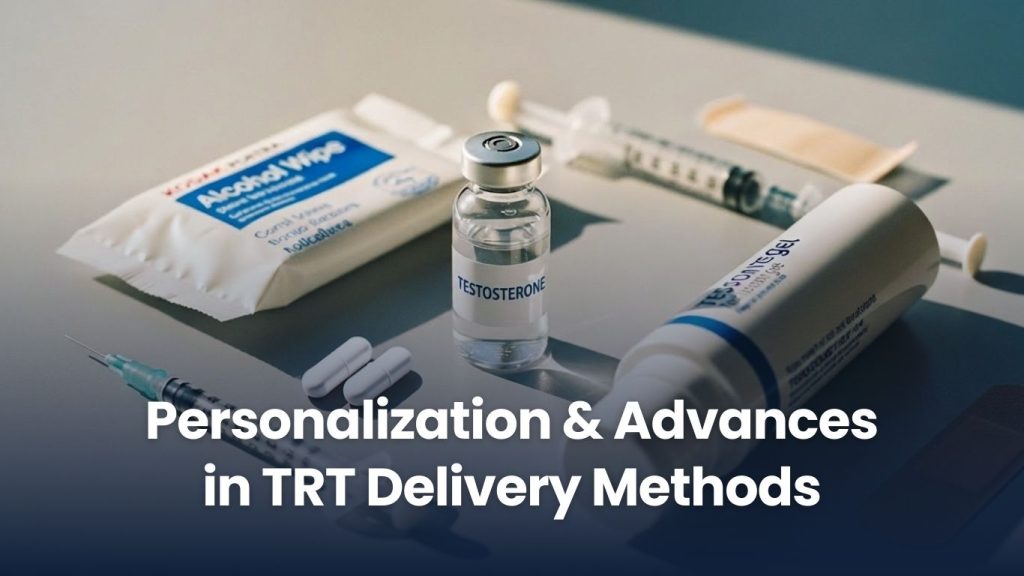
Personalization and Advances in TRT Delivery Methods
Personalization means matching the medication form, dosing schedule, and monitoring plan to an individual’s lifestyle, fertility goals, convenience needs, and side‑effect profile. That may involve traditional testosterone delivery or non-testosterone options that stimulate the body’s own production.
Emerging options extend beyond traditional injections. Some selective estrogen receptor modulators, such as oral Enclomiphene citrate, have been shown in clinical studies to increase and maintain serum testosterone into the normal range in many men with secondary hypogonadism, offering a non-injection approach that stimulates the body’s own production. Real-world preference data show that 53% of patients choose injections, emphasizing the importance of choice in adherence a study on TRT adherence and satisfaction.
Comparison of common approaches:
| Method | Pros | Cons | Typical Patient |
| Injections (short-acting) | Predictable levels; low cost; flexible dosing | Peaks/troughs if dosing is infrequent; self-injection training | Those prioritizing control and affordability |
| Oral testosterone (e.g., Enclomiphene) | Pill convenience; preserve fertility; endogenous stimulation | Must follow dosing with food; liver considerations per label | Those preferring oral options with fertility preservation. |
| Transdermal gels/creams | Steady daily levels; needle-free | Daily application; skin transfer precautions | Those valuing convenience and stable dosing |
The reemergence of patient-friendly oral options may improve adherence and reduce side effects for select men, especially those still early in their family planning years.

Safety, Monitoring, and Risk Management in TRT
TRT’s benefits are maximized through structured monitoring. Side effects like polycythemia and rises in hematocrit, along with blood pressure and prostate metrics, are managed with regular labs and dose adjustments. Hematocrit is the proportion of blood volume occupied by red blood cells; keeping it within target range helps prevent complications. While safety debates continue, recent expert reviews have tempered fears about large prostate cancer risks when therapy is prescribed appropriately and monitored carefully UroToday safety discussion.
A practical safety flow:
- Baseline: comprehensive history, exam, and labs (total/free T, CBC/hematocrit, PSA as indicated, metabolic panel).
- Initiation: tailored dosing plus education on expectations and potential side effects.
- Surveillance: periodic labs and symptom check-ins; lifestyle coaching to support outcomes.
- Adjustment: refine dose, delivery method, or frequency; address fertility planning when relevant.
At TRT Nation, patient education, continuous physician oversight, and easy access to follow-ups are built into care so men can pursue results with confidence What to expect on TRT at TRT Nation.
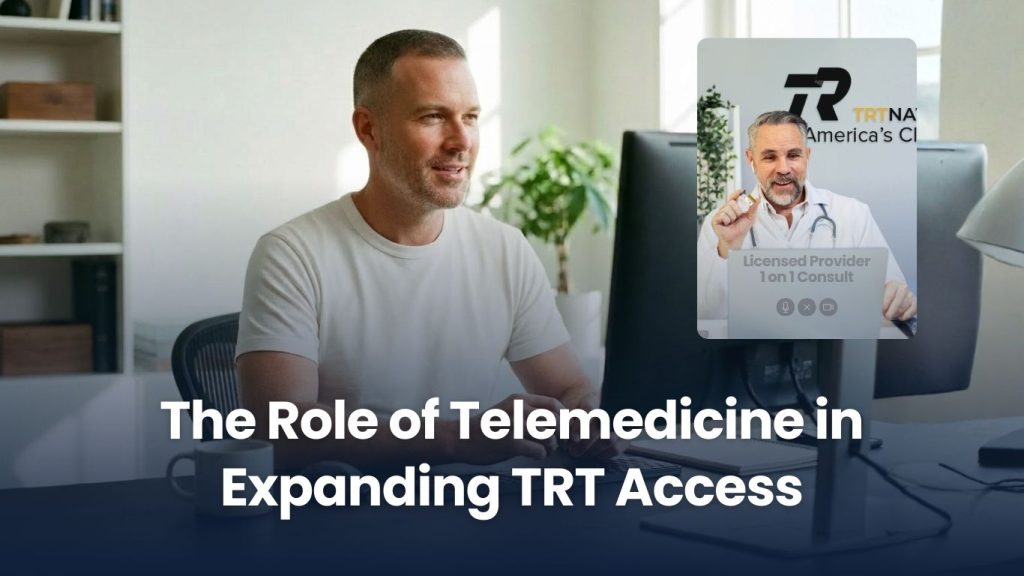
The Role of Telemedicine in Expanding TRT Access
Telemedicine and digital health are reshaping TRT access and adherence by bringing expert care to men who might otherwise delay or forgo treatment: rural, time-constrained, or underserved patients included a North America TRT market brief. Remote consults, nationwide lab networks, home delivery of medications, and unlimited follow-ups make starting and sustaining therapy simpler. This model underpins many of today’s TRT success stories, removing friction so patients can stay engaged through the full arc of care—diagnosis, optimization, and long-term monitoring About TRT Nation’s approach.
Future Directions in Testosterone Replacement Therapy
The pipeline is expanding: successful at-home injectables and patient-friendly oral options are set to broaden personalization and reduce barriers to adherence a market research overview. Regulators are also leaning in; the FDA convened an Expert Panel on TRT for men, seeking public input to guide future policy, safety signals, and misinformation management the FDA’s public notice of an Expert Panel. The direction of travel is clear: more options, more data, and more individualized, education-forward care, with continued emphasis on durable quality-of-life improvements.

Frequently Asked Questions About TRT Success Cases and Outcomes
What are the common benefits experienced with TRT?
The most common benefits of TRT include increased energy, improved sexual function, enhanced muscle mass, better mood, and a more positive sense of well-being.
How long does it take to see results from testosterone therapy?
Many individuals begin noticing improvements in energy and mood within weeks, while full benefits to body composition and sexual function typically develop over several months.
What are the potential risks and side effects of TRT?
TRT can cause side effects such as increased red blood cell counts, acne, mood changes, and in some cases, fertility issues, so ongoing monitoring is essential.
Who is an ideal candidate for testosterone replacement therapy?
Men with clinically diagnosed low testosterone and related symptoms, such as low energy or reduced libido, are ideal candidates for TRT.
How is TRT administered and personalized for individual needs?
TRT can be delivered via injections, gels, oral tablets, or other formulations, with the method and dosage personalized based on lifestyle, health goals, and physician guidance.