


Cypionate vs Enanthate: A Straight Comparison for Men 35+
You’re past 35, your energy has been running low for a while, and you’ve started reading about testosterone replacement therapy (TRT). Pretty quickly you run into the cypionate vs enanthate debate, usually in a forum thread where everyone sounds certain and nobody agrees.
Some context first. Testosterone levels generally decline about 1% a year after age 30 or 40, according to Mayo Clinic. When levels drop low enough, men can notice the symptoms Cleveland Clinic lists, like fatigue and a lower sex drive. That’s usually when the TRT research starts. If you’re still figuring out whether TRT is even on the table, the TRT vs Enclomiphene: How to Choose the Right Testosterone Treatment for Your Goals blog covers the basics.
Quick answer: Testosterone cypionate and testosterone enanthate deliver the same hormone. The difference is the ester, a small chemical tail attached to the testosterone that controls how slowly it releases after an injection. For most men, the two perform very similarly. At TRT Nation, cypionate is the version providers most commonly prescribe, and enanthate is an option you can discuss with your provider during your consultation.

What Cypionate vs Enanthate Really Means
Testosterone on its own clears out of the body fast. To make an injection last, manufacturers attach an ester. The ester slows the release from the muscle into your bloodstream, which means fewer injections and steadier levels.
Cypionate has a slightly longer ester. Enanthate has a slightly shorter one. The FDA label for testosterone cypionate puts its half life at about eight days when injected into the muscle. Once the ester comes off, your body sees plain testosterone either way.
What the two have in common:
- Same active hormone:
- Same delivery: both are oil based injections.
- Same spacing logic: both are long acting, so injections follow a schedule your provider sets.
- Same oversight: both are prescription only and require provider monitoring.
So when men compare cypionate vs enanthate and ask which one works better, the honest answer is that both do the same job. The real question is fit.
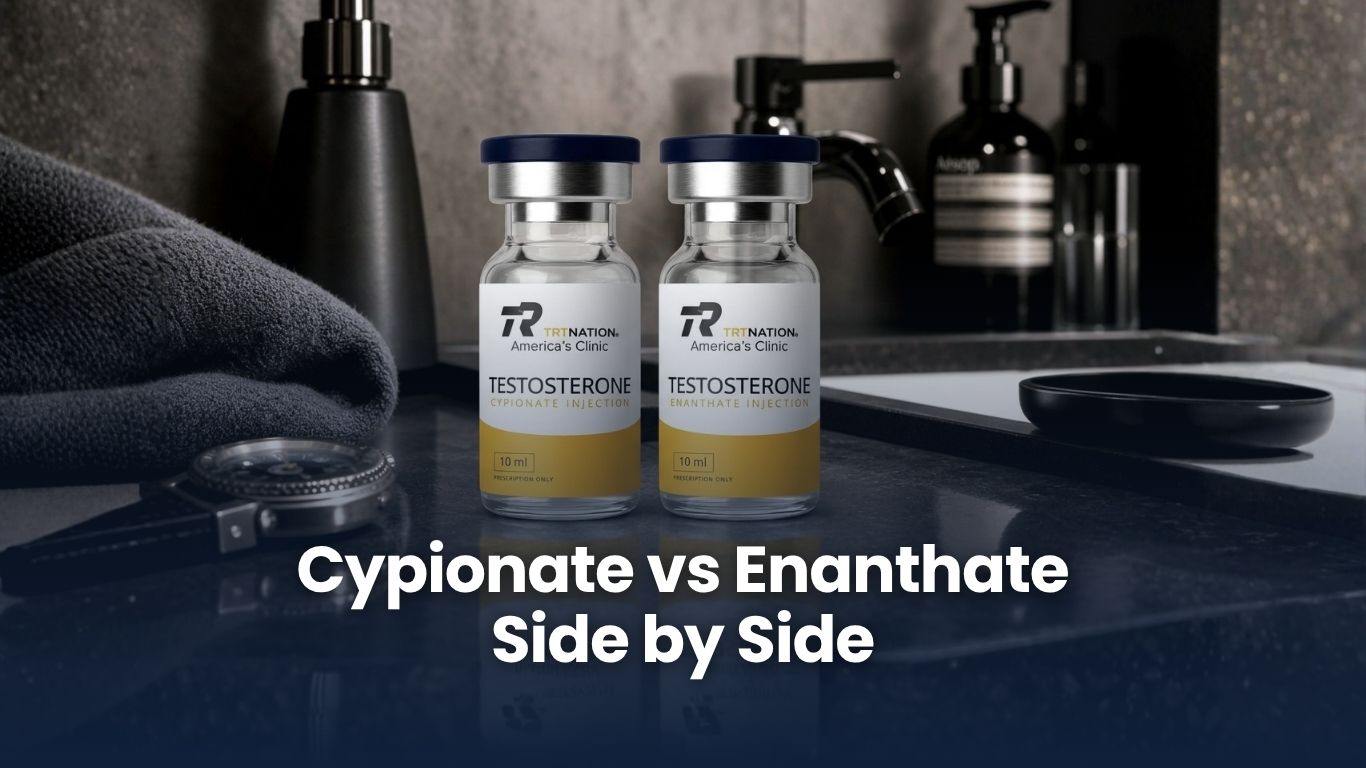
Cypionate vs Enanthate Side by Side
Here’s the cypionate vs enanthate comparison in one place. Product details come from the prescribing information on DailyMed, the National Library of Medicine’s database of FDA drug labels, for both cypionate and enanthate.
| Feature | Testosterone Cypionate | Testosterone Enanthate |
| Active hormone | Testosterone | Testosterone |
| Ester length | Slightly longer | Slightly shorter |
| Release in the body | Slow and steady | Slow and steady, very similar to cypionate |
| Common carrier oil | Cottonseed oil | Sesame oil |
| How it is given | Injection | Injection |
| Injection schedule | Set by your provider based on labs | Set by your provider based on labs |
| Use in the US | Widely prescribed | Also prescribed, less common at many clinics |
| At TRT Nation | Most commonly prescribed | Available to discuss with your provider |
Read the table again and only two rows really differ: ester length and carrier oil. Everything else lines up.

Side Effects, Labs, and Safety for Both Options
Cypionate and enanthate share the same core safety profile because they deliver the same hormone, and their FDA labels carry the same warnings. Whichever one you’re on, skipping labs is where men get into trouble.
Side effects and risks listed on the labels include:
- Acne or oily skin
- Pain or irritation at the injection site
- A rise in red blood cell count, which needs regular monitoring
- Lower sperm production, which matters if you want kids
- Fluid retention or breast tenderness
If keeping fertility on the table matters to you, say so upfront. Some men in that spot talk with their provider about enclomiphene, which is an alternative to TRT rather than a form of it.
Testing comes before any prescription. The American Urological Association guideline recommends diagnosing low testosterone using symptoms plus labs, with a total testosterone level below 300 ng/dL as a reasonable cutoff, confirmed on two separate early morning tests. The Endocrine Society guideline also calls for consistently low levels alongside symptoms. No matter where you land on cypionate vs enanthate, monitoring continues after you start.
| Lab | Why it matters |
| Total testosterone | Confirms low levels before treatment and shows where your levels land once you start |
| Hematocrit | Tracks red blood cell levels, which testosterone can raise |
| PSA | Prostate screening the AUA recommends before starting for men over 40 |

How to Choose Between Cypionate vs Enanthate
Your provider makes the prescribing call, but you should show up with a point of view. These are the factors worth raising:
- Carrier oil. If you’ve ever reacted to cottonseed or sesame, tell your provider. Every inactive ingredient is listed on the label.
- Injection comfort. Some men notice a difference between the two at the injection site. Others notice nothing. Your own experience is the one that counts.
- Availability and cost. Pharmacy stock and pricing can vary by formulation.
- Steady levels depend on sticking to the schedule your provider sets, whichever ester you use.
- Your history. If you’ve used one before, your past labs give your provider useful context.
At TRT Nation, care starts with labs and a provider review. Cypionate is the commonly prescribed option, and if you have a reason to prefer enanthate, your consultation is the place to bring it up. The cypionate vs enanthate decision is one you make with your provider, using your own numbers. Not sure where you stand yet? Take the Hormone Readiness Assessment.

Cypionate vs Enanthate FAQ
Is cypionate stronger than enanthate?
Neither one is stronger. Both deliver testosterone, and the ester only changes how slowly it releases, so the dose your provider prescribes is what determines strength. At TRT Nation, your provider sets that dose based on your labs.
Can I switch from cypionate to enanthate?
Switching is possible, but it should happen under a provider’s guidance with follow up labs to confirm your levels stay where they should. Don’t make the swap on your own. If you’re a TRT Nation patient, raise it with your provider and they can review whether a switch makes sense for you.
Why does TRT Nation commonly prescribe cypionate?
Cypionate is one of the most widely prescribed forms of injectable testosterone in the US, which makes it familiar and easy to source. Enanthate is still a legitimate option with a very similar profile. At TRT Nation, you can discuss enanthate with your provider during your consultation.
Do cypionate and enanthate have different side effects?
Their side effect profiles are essentially the same because the active hormone is the same. The main practical difference is the carrier oil, which matters if you have a sensitivity to cottonseed or sesame. TRT Nation providers review your history and labs before prescribing either one.
Do I need lab work before starting either one?
Yes. The American Urological Association calls for symptoms plus consistently low testosterone on two separate early morning tests before a diagnosis. TRT Nation starts with labs, and you can see where you stand by taking the Hormone Readiness Assessment.