


Low Testosterone After 40: The Complete Guide
Last Updated April 2026
If you’re a man over 40 who’s been feeling unusually tired, unmotivated, or just “not quite yourself,” you’re not alone, and you’re not imagining it. For millions of men, these changes are the first signs of a common, undiagnosed hormonal condition: low testosterone. The good news? It’s diagnosable, treatable, and manageable.
Testosterone plays a foundational role in how your body and mind function day to day. When levels begin to decline beyond what’s considered normal aging, the effects can ripple across nearly every aspect of your health, physical performance, mental clarity, emotional stability, and sexual function. The challenge is that these symptoms don’t always appear all at once. They tend to develop gradually, making them easy to ignore or misattribute.
The encouraging reality is that low testosterone is not something you have to simply live with. It is a well-understood medical condition that can be accurately diagnosed through proper evaluation and effectively treated with modern, evidence-based therapies. With the right approach, many men regain not just their hormone levels, but a renewed sense of vitality, focus, and confidence. This guide is designed to give you a clear, no-nonsense understanding of low testosterone after 40, what it is, why it happens, how it’s diagnosed, and what your treatment options look like today. Whether you’re just starting to notice symptoms or actively looking for solutions, this resource will help you make informed decisions about your health.

What Is Testosterone, and Why It Matters
Testosterone is your body’s primary male hormone. It’s the engine behind a remarkable range of functions that define physical vitality, mental sharpness, and sexual health. Around the ages of 30 to 40, testosterone naturally begins declining at roughly 1% per year. For some men, this decline is steeper, leading to a condition called hypogonadism, or “low T.” This isn’t simply getting older. It’s a diagnosable hormone deficiency with real, measurable effects on quality of life. Testosterone affects far more than sex drive. It governs muscle composition, bone density, mood regulation, metabolic function, and cognitive sharpness. Low T has a ripple effect across your entire health profile.
It’s important to understand that low testosterone is not just a normal part of aging, it’s a diagnosable hormone deficiency with measurable biological consequences. When testosterone levels fall below a healthy range, the body’s internal balance begins to shift. Muscle tissue becomes harder to maintain, fat accumulation increases, bone density can decline, and metabolic processes may slow down.
Beyond the physical effects, testosterone also plays a significant role in mental and emotional health. Adequate levels are associated with motivation, drive, confidence, and emotional resilience. When levels drop, men may experience brain fog, reduced focus, irritability, or even symptoms that resemble depression.

Recognizing the Symptoms
Symptoms can be subtle at first, easy to dismiss as stress, poor sleep, or “just aging.” Many men wait months or years before seeking answers. Here’s what to watch for:
- Low libido
- Reduced muscle mass and strength
- Increased body fat, especially belly fat
- Decreased bone density
- Persistent fatigue and low energy
- Reduced body and facial hair
Cognitive and Emotional Symptoms:
- Low motivation or drive
- Depressed mood or irritability
- Anxiety or mood swings
- Brain fog
- Loss of confidence
- Disrupted sleep patterns
These symptoms stem from the body’s biochemical response to declining hormone levels. Many overlap with conditions like depression, thyroid disorders, or sleep apnea, which is exactly why proper diagnosis matters.
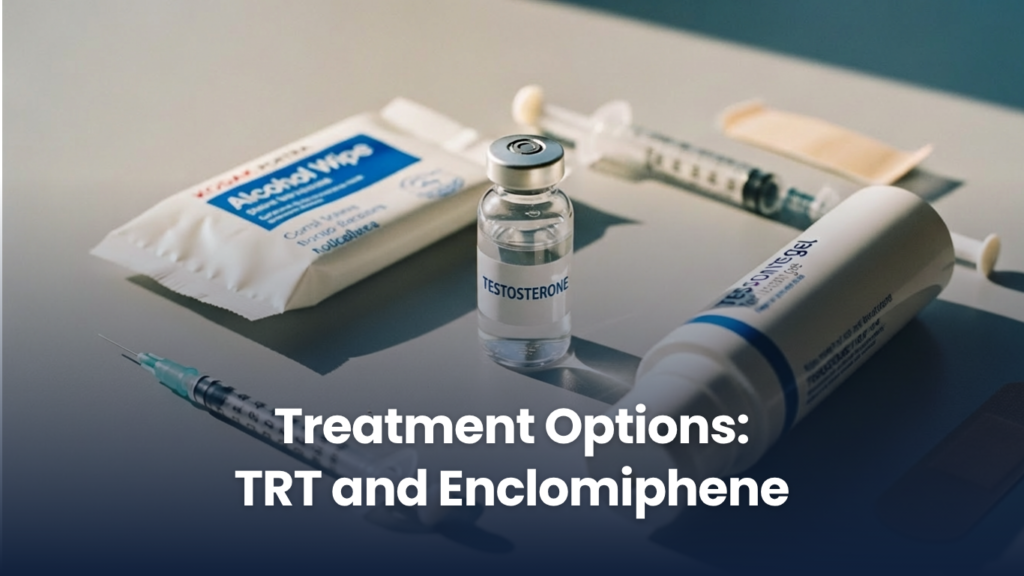
Treatment Options: TRT and Enclomiphene
Two well-studied, clinically supported treatments are available for men with low testosterone. The right choice depends on your goals, health profile, and whether fertility preservation is a consideration.
Testosterone Replacement Therapy (TRT):
- Directly raises testosterone to optimal levels
- Proven to improve libido, energy, and muscle mass
- Well-established safety profile with monitoring
- Rapid symptom improvement for many men
- Suppresses natural testosterone production
- May reduce fertility; not ideal if fatherhood is near-term goal
Enclomiphene (Testosterone Therapy):
A SERM that stimulates the body’s own natural production
- Stimulates the brain-testes hormonal axis naturally
- Preserves fertility, a major advantage for some men
- Oral administration, no injections needed
- May produce smaller increases vs. TRT in severe cases
- Still requires monitoring and medical supervision
Side-by-Side Comparison
| TRT | Enclomiphene | |
| Boosts testosterone levels | ✓ Directly | ✓ Indirectly |
| Preserves natural production | ✗ Suppresses | ✓ Stimulates |
| Fertility preservation | ✗ May decrease | ✓ Preserved |
| Effective for severe low T | ✓ Strong evidence | ✓ May be less dramatic |
| Requires ongoing monitoring | ✓ Yes | ✓ Yes |
| Administration method | Injections | Oral capsules |
A recent systematic review found enclomiphene significantly increased testosterone levels versus placebo and showed comparable effectiveness, while also maintaining FSH levels important for fertility. The right choice comes down to your individual goals and health profile.

Lifestyle Strategies That Support Hormone Health
Medical therapy is typically necessary for men with clinically diagnosed hypogonadism. But lifestyle habits create the foundation that makes any treatment more effective.
- Prioritize Sleep Quality: Testosterone is largely produced during deep sleep. Chronic poor sleep is directly associated with suppressed levels.
- Resistance Training: Compound lifts, squats, deadlifts, presses, are the most effective exercise stimulus for testosterone production.
- Balanced Nutrition: Adequate protein and healthy dietary fats are essential for hormone synthesis. Don’t fear fat.
- Weight Management: Excess visceral fat increases aromatase activity, converting testosterone to estrogen and worsening symptoms.

Frequently Asked Questions
- How do I know if I have low testosterone or just normal aging?
While testosterone naturally declines with age, persistent symptoms like low libido, fatigue, and brain fog may a deeper issue. A simple blood test is the only way to confirm if levels are clinically low. Getting properly evaluated through a provider like TRT Nation ensures accurate diagnosis and next steps. - What tests are used to diagnose low testosterone?
Diagnosis typically involves measuring total and free testosterone levels through a morning blood test, often alongside other hormones. Doctors may also evaluate related markers to rule out underlying conditions. Clinics like TRT Nation provide comprehensive lab orders to guide treatment decisions. - Is testosterone replacement therapy safe long-term?
When prescribed and monitored correctly, TRT has a well-established safety profile for most men. Regular follow-ups and lab work are essential to ensure optimal levels and minimize risks. TRT Nation emphasizes ongoing monitoring to keep treatment both safe and effective. - What’s the difference between TRT and enclomiphene?
TRT directly replaces testosterone in the body, while enclomiphene stimulates your body’s natural production. The right option depends on factors like symptom severity and whether you want to preserve fertility. Providers like TRT Nation help tailor treatment based on your individual goals. - Can lifestyle changes alone fix low testosterone?
Healthy habits like better sleep, strength training, and proper nutrition can support hormone health but often aren’t enough to correct clinically low levels. Medical treatment is usually required for significant deficiencies. TRT Nation combines lifestyle guidance with medical therapy for the best outcomes.