


Low Testosterone Symptoms in Men: What Your Body Is Trying to Tell You, and What to Do Next
Last Updated May 2026
You wake up tired after a full night of sleep. Your motivation has gone quiet. The drive that used to push you through a hard week, at work, at the gym, at home, feels like it’s running on fumes. You’re not imagining it, and you’re not just getting older. You may be experiencing low testosterone symptoms in men, and they deserve your full attention. The first step toward understanding what’s happening inside your body is simpler than most men expect, TRT Nation’s free Hormone Readiness Assessment was built for this moment, and thousands of men have used it to finally put a name to what they’ve been feeling.
Testosterone is the primary male sex hormone responsible for energy, muscle mass, sexual function, mood regulation, and cognitive clarity. According to the American Urological Association, testosterone levels naturally decline at roughly 1 to 2 percent per year after age 30, but for many men, the drop is steeper and more disruptive than that average suggests. The result is a constellation of symptoms that are often dismissed, misdiagnosed, or attributed to stress or age, when the root cause may be hormonal. This guide breaks down what low testosterone symptoms in men look like, why so many men miss them, and what to do if you recognize yourself in this list.
 What Is Low Testosterone, and Why Does It Happen?
Low testosterone, clinically referred to as hypogonadism or testosterone deficiency, is diagnosed when total testosterone falls below 300 ng/dL in conjunction with symptoms. The Endocrine Society defines this threshold as the clinical boundary for deficiency, though many men experience significant symptoms at levels considered borderline or even low-normal.
Several factors contribute to declining testosterone beyond the natural aging process:
- Chronic sleep deprivation: testosterone is primarily produced during deep sleep
- Obesity and excess body fat: adipose tissue converts testosterone into estrogen
- Chronic stress and elevated cortisol: cortisol directly suppresses testosterone production
- Sedentary lifestyle: physical inactivity is associated with faster hormonal decline
- Poor nutrition: deficiencies in zinc, vitamin D, and healthy fats impair testosterone synthesis
- Underlying health conditions: including type 2 diabetes, thyroid disorders, and pituitary dysfunction
Understanding the cause matters because it shapes the treatment path. If you’re reading that list and checking boxes, you’re not alone, and you don’t have to keep guessing. TRT Nation’s Hormone Readiness Assessment takes just a few minutes and helps you understand whether your symptoms point to a hormonal cause before you ever speak to a clinician.
 The Most Common Low Testosterone Symptoms in Men
Low testosterone symptoms in men do not always arrive loudly. For many men, they build slowly, first one, then another, until a pattern emerges that can no longer be explained away. Here is what to look for.
Persistent Fatigue That Rest Does Not Fix
This is one of the most reported low testosterone symptoms in men, and it is one of the most misunderstood. This is not the tiredness of a hard day’s work. It is a systemic exhaustion, a heaviness that lingers even after a full night of sleep. Men describe it as feeling like they are operating at sixty percent capacity, no matter what they do. The Cleveland Clinic notes that fatigue is among the most frequently reported symptoms associated with low testosterone, often preceding other physical changes by months.
Low Sex Drive and Reduced Libido
Testosterone is the primary driver of male sexual desire. When levels drop, libido often drops with them. Men may find themselves disinterested in sex when they never were before or notice a dramatic reduction in frequency of sexual thoughts. This is not a psychological failing, it is a physiological response to hormonal insufficiency. A significant drop in sex drive is consistently cited as one of the defining low testosterone symptoms in men across peer-reviewed research and clinical practice.
Erectile Dysfunction and Reduced Sexual Performance
While erectile dysfunction (ED) has multiple contributing factors, testosterone plays a central role in arousal, blood flow, and sexual response. Low T can make achieving and maintaining erections more difficult, even in men who are otherwise healthy. The Mayo Clinic identifies ED and reduced sexual performance as key markers of testosterone deficiency that warrant evaluation.
Loss of Muscle Mass and Increased Body Fat
Testosterone is anabolic, it supports the building and maintenance of lean muscle tissue. When levels decline, men often notice they are losing muscle despite maintaining their workout routine or gaining fat, particularly around the abdomen, despite no significant change in diet. This shift in body composition is a direct downstream effect of hormonal imbalance and represents one of the more visible low testosterone symptoms in men.
Mood Changes: Irritability, Anxiety, and Depression
Testosterone has a direct relationship with mood-regulating neurotransmitters, including dopamine and serotonin. Low testosterone symptoms in men often include increased irritability, a short fuse, unexplained anxiety, and persistent low mood or depressive episodes. Research published in the Journal of Clinical Endocrinology and Metabolism found significant associations between testosterone deficiency and depressive symptoms in middle-aged men.
Brain Fog and Difficulty Concentrating
Cognitive sharpness depends partly on adequate testosterone levels. Men with low testosterone frequently report difficulty concentrating, memory lapses, reduced problem-solving ability, and a general sense of mental sluggishness. This “brain fog” can affect professional performance, decision-making, and daily functioning. It is one of the more underappreciated low testosterone symptoms in men because it rarely gets connected to hormones in a clinical setting.
Disrupted Sleep
Low testosterone is associated with insomnia, poor sleep quality, and fragmented sleep architecture, including reduced time in deep, restorative sleep stages. Sleep disruption in turn further suppresses testosterone production, creating a feedback cycle that compounds the problem over time.
Reduced Bone Density
Testosterone contributes to bone mineral density. Men with chronically low T are at higher risk of developing osteopenia or osteoporosis, conditions typically associated with women but increasingly recognized in men with hormonal deficiency. The National Institutes of Health acknowledges testosterone’s role in male bone health and the elevated fracture risk associated with low levels.
Hair Thinning and Loss
Testosterone supports hair follicle health across the body. While genetics plays a role in male pattern baldness, accelerated hair loss or thinning can be a symptom of declining testosterone, particularly when it appears alongside other signs on this list.
 Low Testosterone Symptoms in Men
| Symptom | Typical Excuse | What It May Actually Signal |
| Constant fatigue | Poor sleep or overwork | Low testosterone or hormonal imbalance |
| Low libido | Stress or relationship issues | Testosterone deficiency |
| Erectile dysfunction | Age or anxiety | Low T affecting sexual function |
| Mood swings / depression | Work pressure or life stress | Neurotransmitter disruption from low T |
| Brain fog | Burnout or poor diet | Cognitive impact of hormonal decline |
| Muscle loss / weight gain | Slowing metabolism | Loss of anabolic support from testosterone |
| Poor sleep | Screen time or caffeine | Low T disrupting sleep architecture |
| Reduced bone density | Aging | Testosterone’s role in bone maintenance |
If three or more items in that table sound familiar, that’s your body signaling something worth investigating. Take TRT Nation’s Hormone Readiness Assessment and find out whether your symptom pattern is consistent with low testosterone.
 Why Low Testosterone Symptoms in Men Are So Often Missed
One of the most significant challenges with low testosterone symptoms in men is that they mimic an enormous range of other conditions, or they simply get normalized as “just getting older.” Men who would never ignore a physical injury often overlook months or years of progressive hormonal decline because the symptoms do not feel urgent enough to act on. Physicians also contribute to underdiagnosis. Standard bloodwork panels frequently omit a full hormone assessment, and men’s symptoms are often addressed in isolation, mood treated separately from fatigue, fatigue treated separately from sexual dysfunction, rather than recognized as a pattern pointing toward a single root cause.
Making matters more complex, some men have testosterone levels that fall within the “normal” reference range on paper but still experience significant symptoms. As TRT Nation’s blog explores, the number on your lab report does not always tell the whole story. Free testosterone levels and individual receptor sensitivity influence how testosterone functions in the body, and a man can have low-normal total testosterone while still experiencing the full weight of deficiency.
This is exactly why TRT Nation built the Hormone Readiness Assessment, to give men a structured, private way to look at their full symptom picture together.
 Not Sure If Your Symptoms Add Up? Start Here
If you have been reading this list and finding yourself nodding along, quietly tallying the fatigue, the mood shifts, the lost motivation, that recognition matters. Low testosterone symptoms in men are not something to push through indefinitely and accept as normal.
Take the Hormone Readiness Assessment specifically for men who want to understand whether their symptoms may point to a hormonal cause. The assessment is private, takes just a few minutes, and helps you identify whether the pattern of what you’re experiencing is consistent with low testosterone, before committing to anything. This is not a sales funnel. It is a starting point, a way to take your symptoms seriously and begin asking the right questions with professional support.
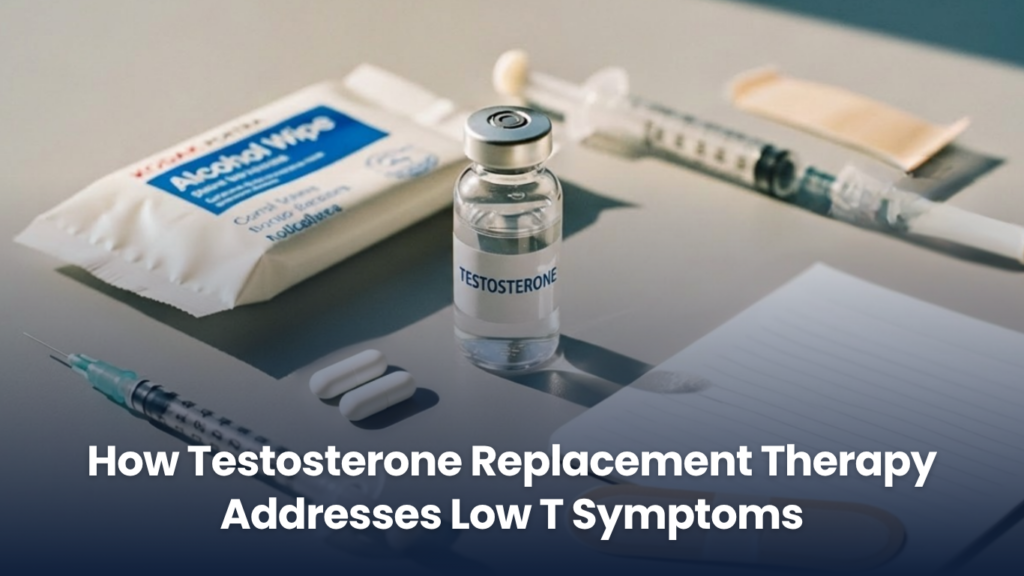 How Testosterone Replacement Therapy Addresses Low T Symptoms
Testosterone replacement therapy (TRT) is a clinically established treatment for men with confirmed testosterone deficiency and corresponding symptoms. Its goal is not to maximize testosterone levels, it is to restore levels to a healthy physiological range and resolve the symptoms that accompany deficiency.
When properly administered and monitored, TRT has been shown to:
- Improve energy levels and reduce fatigue
- Restore libido and improve sexual function
- Support lean muscle maintenance and reduce excess body fat
- Stabilize mood and reduce symptoms of depression and irritability
- Improve cognitive clarity and mental focus
- Support bone mineral density
- Improve sleep quality over time
The American Urological Association’s clinical guidelines support the use of TRT for men with documented testosterone deficiency and symptoms and emphasize the importance of ongoing monitoring to ensure safety and efficacy.
What to Expect When You Take Low T Symptoms Seriously
Many men spend years attributing their symptoms to external causes, stress at work, demands of family life, the inevitable slowdown of getting older, before discovering that a hormonal imbalance was driving much of what they were experiencing. The path from recognition to resolution is more straightforward than most men expect.
| Step | What Happens |
| 1. Recognize the symptom pattern | You identify that multiple low testosterone symptoms in men apply to your experience |
| 2. Complete the Hormone Assessment | TRT Nation’s free assessment helps you gauge whether your symptoms are consistent with low T |
| 3. Lab testing | Blood work confirms total testosterone, free testosterone, and related hormone markers |
| 4. Clinical consultation | A provider reviews your labs and symptoms to determine whether TRT is appropriate |
| 5. Begin therapy | Medication is prescribed and delivered to your door within 7 to 10 days |
| 6. Ongoing monitoring | Regular follow-up and lab reviews ensure treatment is working safely |
Men who have gone through this process frequently describe the change as something deeper than feeling better, they describe feeling like themselves again. That is what addressing low testosterone symptoms in men is about: not optimization for its own sake, but reclaiming quality of life.
 Related Reading from TRT Nation
If you want to go deeper on any aspect of testosterone health, TRT Nation’s blog is built to inform. Some relevant pieces worth reading:
- What Are the Symptoms of Low Testosterone?
- 9 Signs You Might Need TRT
- Normal Testosterone Levels But Low Energy: Why Your Labs Don’t Tell the Whole Story
- How to Overcome Low Testosterone with Safe Home TRT Solutions
- The Lowdown on Low Testosterone: Signs and Solutions for the Working Man
- TRT Nation Hormone Readiness Assessment
 Frequently Asked Questions
What are the earliest signs of low testosterone in men?
The earliest low testosterone symptoms in men tend to be subtle, gradual fatigue that doesn’t resolve with rest, a quiet reduction in sexual desire, and a flattening of motivation or mood that is hard to pinpoint. Because these changes develop slowly, many men normalize them before recognizing them as symptoms. If you’ve noticed a shift in energy, drive, or overall sense of well-being that you can’t explain, TRT Nation’s Hormone Readiness Assessment is a useful first step.
Can low testosterone cause depression and anxiety?
Yes. Testosterone directly influences the brain’s mood-regulating systems, including dopamine and serotonin pathways. Men with low T frequently experience irritability, persistent low mood, reduced motivation, and anxiety, symptoms that are often treated as psychiatric conditions without investigating their hormonal root. Research published in the Journal of Clinical Endocrinology and Metabolism has documented this association clearly. If mood symptoms accompany physical changes like fatigue or reduced libido, a hormone evaluation through TRT Nation can help identify whether low T is a contributing factor.
How is low testosterone diagnosed?
Low testosterone is diagnosed through a blood test, ideally drawn in the morning when levels are naturally at their peak, combined with a clinical assessment of symptoms. A diagnosis requires both a lab value below the clinical threshold and symptoms consistent with deficiency; the number alone is not sufficient. TRT Nation’s process includes comprehensive lab work and a one-on-one consultation to ensure that any diagnosis reflects the full picture of your health.
Is TRT safe, and what does treatment involve?
Testosterone replacement therapy, when prescribed and monitored by qualified clinicians, is a well-established and safe treatment for men with confirmed low testosterone. Regular monitoring of bloodwork, including red blood cell count, PSA, and estrogen levels, is standard protocol to ensure both effectiveness and safety over time. At TRT Nation, treatment is tailored to each patient, delivered to your door, and supported by ongoing clinical oversight with no mandatory autopay or lock-in commitments.