


What Endocrinologists Say About Telehealth TRT Clinics
Last Updated June 2026
TRT has come a long way. What used to require a specialist referral and a months-long wait can now happen within days, from home. That convenience has drawn millions of men, along with a fair amount of scrutiny from the medical community.
Here is the thing: endocrinologists are not anti-telehealth. They have specific standards that separate responsible care from careless prescribing. Knowing those standards helps you ask better questions and choose a provider who actually meets the bar.
 The Clinical Standard for Diagnosing Low T
The Endocrine Society is clear: hypogonadism requires both consistent symptoms and confirmed low levels via lab testing. Symptoms alone, including fatigue, low libido, and mood changes, are not enough on their own. These can stem from sleep apnea, thyroid issues, depression, or cardiovascular disease. Any provider worth their salt will rule those out first.
The threshold most clinical bodies use is a total testosterone level below 300 ng/dL, but context matters. The point is not to find a number to prescribe around. It is to understand why levels are low and whether TRT will actually help.
What Endocrinologists Look for Before Recommending TRT
| Clinical Requirement | Why It Matters |
| Testosterone blood draw | Confirms low levels |
| Symptoms consistent with hypogonadism | Rules out incidental low readings in healthy men |
| Comprehensive metabolic and health history | Screens for conditions that could explain symptoms or contraindicate TRT |
| Ongoing lab monitoring post-initiation | Tracks PSA, estradiol, and testosterone response |
 The Concerns About Online TRT and What They Actually Mean
The telehealth TRT market is growing fast, and not every clinic holds itself to the same standards. The concerns endocrinologists raise are real, but they describe a pattern seen at the low end of the market, not across the whole industry.
Common red flags they call out:
- Prescribing without lab values
- Doses higher than standard clinical practice recommends
- Little to no follow-up monitoring
- Failing to counsel younger men on fertility implications
As the American Telemedicine Association has noted, blood labs are the primary tool for safely initiating and monitoring testosterone therapy. Telehealth providers are fully capable of ordering and reviewing those labs remotely. The quality of the clinical process is what determines whether care is appropriate.
 What a Responsible Telehealth TRT Protocol Looks Like
When you strip it down, endocrinologists want the same things from any prescriber, virtual or in-person. Here is what that looks like in practice:
| Protocol Element | Clinical Purpose |
| Comprehensive intake with symptom review | Identifies qualifying candidates |
| Two-point morning testosterone lab confirmation | Aligns with Endocrine Society standards |
| Provider reviews all lab results before prescribing | Ensures a licensed provider makes the call |
| Individualized dosing based on labs and response | Avoids one-size-fits-all over-dosing |
| Follow-up labs at 8-10 weeks, then every 3-6 months | Monitors testosterone levels over time |
| Direct access to your provider | Supports dose adjustments, side effect management, and informed consent |
TRT Nation follows this model. Licensed providers review labs, protocols are individualized, and ongoing monitoring is built into the process from day one. Not sure if you qualify? Start with the Hormone Readiness Assessment to know what to bring to a provider conversation. Or read real results from real patients.
Testosterone Cypionate: The Clinical Gold Standard
The most common form of testosterone used in supervised TRT is testosterone cypionate, an injectable that produces stable, sustained hormone levels. The Endocrine Society recognizes it as a well-established treatment for confirmed hypogonadism, typically dosed at 100 to 200 mg weekly or biweekly based on individual response.
Endocrinologists favor injectables because they allow precise dosing, consistent absorption, and clean monitoring of serum levels. There is no transference risk like topical gels and no pharmacokinetic unpredictability.
What separates good TRT from problematic TRT is not the delivery method. It is the discipline around dosing. Clinics that adjust doses based on how a patient feels rather than actual lab values are the ones specialists flag as operating outside accepted standards.
 Enclomiphene: The Alternative for Men Who Want to Preserve Fertility
Exogenous testosterone suppresses the body’s own hormonal signaling, which can reduce sperm production. For men with secondary hypogonadism who want to preserve fertility, enclomiphene is a clinically relevant alternative. It is also one that TRT Nation offers as part of its protocol options.
Enclomiphene works by blocking estrogen receptors in the hypothalamus and pituitary, prompting the testes to produce testosterone naturally. Because it works through the body’s own hormonal axis, it does not suppress the HPG axis. Fertility is preserved or often improved.
A 2025 systematic review published in the Archives of Endocrinology and Metabolism found enclomiphene significantly increased testosterone levels while preserving spermatogenesis. Researchers called it a clinically relevant option for younger men with functional or secondary hypogonadism.
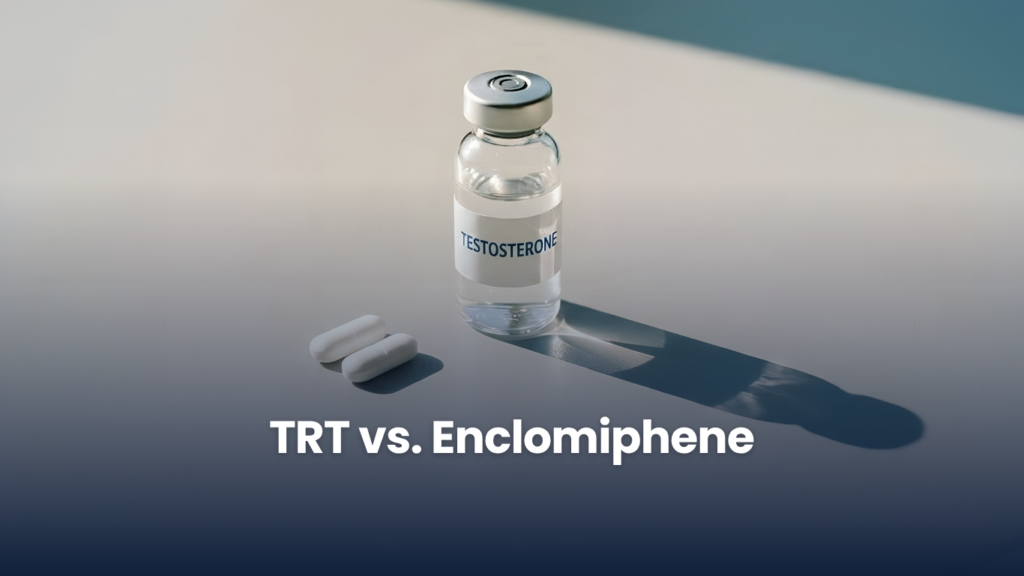 TRT vs. Enclomiphene at a Glance
| Factor | Testosterone Replacement (TRT) | Enclomiphene |
| Mechanism | Exogenous testosterone replaces natural production | Stimulates body’s own production via HPG axis |
| Fertility impact | Suppresses sperm production | Preserves or improves sperm count and motility |
| Testicular function | Testes may atrophy without HCG support | Maintained through LH/FSH stimulation |
| Ideal candidate | Men with confirmed hypogonadism, not planning near-term fertility | Men with secondary hypogonadism preserving fertility |
| Administration | Injection | Oral capsule |
Note: Enclomiphene is not a replacement for TRT in all cases. Men with primary hypogonadism, where the issue lies in the testes rather than pituitary signaling, are unlikely to respond. Learn more about TRT vs. Enclomiphene.
Why Monitoring Is Where Most Clinics Fall Short
Endocrinologists are consistent on this point: starting TRT is only step one. The Endocrine Society recommends follow-up testosterone levels at three and six months post-initiation, then annually once stable. Without regular monitoring, there is no way to know whether treatment is working or creating new problems.
For telehealth patients, this is completely achievable. Lab work is ordered, drawn locally, and reviewed remotely by a provider. What matters is that a real provider actually reviews results and adjusts protocols when the numbers call for it. The telehealth model does not compromise any of this, as long as the clinic builds it into standard care.
 How to Evaluate Any Telehealth TRT Clinic
The debate over telehealth TRT is not really about telehealth. It is about clinical standards. Before starting with any provider, ask these questions:
- Does the clinic require lab testing before prescribing?
- Is a licensed provider reviewing labs and making prescribing decisions?
- Does the clinic follow up with regular lab monitoring?
- Is dosing individualized based on your lab results?
- Can you reach your provider when you have questions?
TRT Nation is built around all five. Not sure if you are a candidate? Take the Hormone Readiness Assessment to understand your symptoms and guide your first conversation with a provider. And check out the 7 Critical Factors Online TRT Clinics should follow in 2026.
 Frequently Asked Questions (FAQs)
What do endocrinologists say about telehealth TRT clinics?
They generally support TRT for men who meet clinical criteria, meaning confirmed low testosterone combined with symptoms of deficiency. Their concern is not the format but whether clinics follow proper diagnostic and monitoring protocols. A telehealth clinic that orders comprehensive labs, involves a licensed provider in prescribing decisions, and provides regular follow-up meets the standard.
What labs should a responsible telehealth TRT clinic require before prescribing?
At minimum: total testosterone, estradiol, PSA, and a metabolic panel. The Endocrine Society recommends testosterone be confirmed on two separate morning draws before diagnosis. TRT Nation builds all of this into the intake process so prescribing decisions are always grounded in actual clinical data.
How is enclomiphene different from TRT?
Enclomiphene stimulates your body’s own testosterone production by blocking estrogen receptors in the brain, prompting the pituitary to release more LH and FSH. Unlike TRT, it does not shut down natural hormone production or suppress fertility. That makes it a strong option for younger men or those with secondary hypogonadism who want to maintain sperm production. TRT Nation offers enclomiphene for men whose labs and goals make it the right fit.