


What is TRT and Who Are the Best Candidates?
Last Updated June 2026
Testosterone Replacement Therapy (TRT) is a medically supervised treatment designed to restore healthy hormone levels in men clinically diagnosed with low testosterone. Testosterone is not simply a hormone associated with masculinity or athletic performance. It is a foundational driver of energy metabolism, cognitive function, cardiovascular health, bone density, sexual function, and emotional regulation. When levels fall below functional thresholds, the effects rarely present as a single complaint. Instead, they accumulate as an overlapping cluster of symptoms, persistent fatigue, decreased libido, loss of muscle mass, increased abdominal fat, difficulty concentrating, and mood disturbances, that quietly erode quality of life over months or years. Because many of these symptoms are shared with other conditions, a diagnosis cannot and should not be made on symptoms alone. Laboratory confirmation through blood testing, ideally across more than one draw to account for natural hormonal fluctuation, is a non-negotiable prerequisite for legitimate treatment.
This guide walks prospective patients through how TRT works, what the diagnostic process involves, who genuinely qualifies, and how to make an informed, medically grounded decision about whether therapy is the right path forward. For real patient stories read more on the TRT Nation blog.
Understanding Testosterone Replacement Therapy
TRT is a provider-prescribed treatment that replaces insufficient testosterone in men diagnosed with hypogonadism, a condition where the body cannot produce enough of the hormone. The goal is to bring testosterone back to normal levels and relieve symptoms that interfere with physical and mental performance. Unlike anabolic steroids used for bodybuilding, TRT is a regulated, evidence-based therapy prescribed by licensed providers.
Common TRT delivery methods include:
- Intramuscular injections administered weekly or biweekly
- Oral medication
Each has unique benefits, and the right choice depends on preference, consistency, and clinical response. TRT Nation’s providers tailor dosing and delivery to each patient’s goals and lifestyle through fully supervised telemedicine care.

Common Signs and Symptoms of Low Testosterone
Low testosterone can develop gradually but tends to intensify over time. Recognizing the signs early helps you act before broader health or performance declines occur.
- Reduced libido or sexual performance issues
- Chronic fatigue or low energy
- Decreased muscle mass or strength
- Weight gain and increased body fat
- Low mood, irritability, or lack of motivation
- Poor concentration or mental fog
- Thinning hair or decreased bone density
When multiple symptoms interfere with quality of life, a professional evaluation is essential. Because these issues can overlap with other conditions, blood testing is the only reliable way to confirm low testosterone.

Diagnosing Low Testosterone and Hypogonadism
A valid TRT diagnosis requires both measurable low hormone levels and clinical symptoms. providers confirm low testosterone with a blood test.
The American Urological Association defines total testosterone below 300 ng/dL as consistent with hypogonadism. However, a single low reading is not enough. Roughly one-third of men test normal upon repeat measurement.
Typical diagnostic steps include:
- Symptom review – evaluating fatigue, libido, mood, and overall function
- Testosterone lab test
- Ruling out reversible causes – such certain medications or underlying illness
Only after confirming low results alongside genuine clinical symptoms does a qualified provider consider initiating TRT. At TRT Nation, the process is simplified, without cutting corners, offering nationwide lab access through accredited partners and fully online provider consultations that allow patients to complete treatment from home, efficiently, compliantly, and under the supervision of board-certified providers.

Who Qualifies as a Candidate for TRT
An appropriate candidate for testosterone replacement therapy meets clear medical criteria based on lab-confirmed deficiency and ongoing, related symptoms.
Core candidate criteria:
- A clinically low testosterone reading
- Persistent symptoms like low libido, erectile dysfunction, or chronic fatigue
- Addressed or excluded reversible factors (e.g., medication or obesity)
Testosterone replacement therapy is not appropriate in all medical situations. Certain conditions can make TRT unsafe or call for stricter monitoring.
Absolute contraindications include:
- Active or suspected prostate cancer
- Untreated severe sleep apnea
- Recent heart attack or stroke
Providers proceed carefully in men with cardiovascular risk factors or untreated sleep conditions. TRT is not intended for age-related decline alone or aesthetic enhancement. At TRT Nation, safety protocols and ongoing monitoring are built into every prescription. Men wishing to preserve fertility should use caution. TRT may reduce sperm production, and alternatives such as enclomiphene therapy are often better suited for patients actively trying to conceive. TRT Nation offers both treatments based on your goals.

Expected Benefits and Limitations of TRT
When prescribed appropriately and monitored by a qualified provider, TRT can lead to substantial, measurable improvements in daily functioning, physical health, and overall quality of life. For men who have been living with undiagnosed or untreated hypogonadism for an extended period, the changes can feel significant, not because testosterone is a performance enhancer, but because restoring a deficient hormone to its functional range allows the body’s systems to operate the way they are physiologically designed to. That said, every patient’s response is individual, shaped by age, baseline hormone levels, body composition, the delivery method used, and how consistently the treatment plan is followed.
Potential benefits:
- Increased libido and improved sexual performance
- Noticeable gains in lean muscle mass
- Better mood stability and motivation
- Enhanced bone density over time
It is equally important to approach TRT with realistic expectations and an understanding of its limitations. Testosterone therapy is not a substitute for foundational health habits, improvements in mental focus, energy, and physical performance are significantly amplified by consistent exercise, quality sleep, and sound nutrition. Patients who begin TRT without addressing lifestyle factors often experience a narrower range of benefit than those who treat therapy as one component of a broader health strategy. Results also take time; meaningful changes in muscle mass and bone density may take several months to become apparent, and symptom relief varies in both speed and magnitude from patient to patient. A provider-led program like TRT Nation ensures that expectations are calibrated accurately from the outset, so patients can measure progress against realistic clinical benchmarks rather than unrealistic timeline.
Administration Methods and Treatment Options
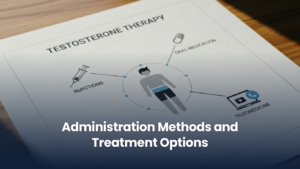
TRT delivery methods vary by convenience, dosing frequency, and comfort. The ideal approach combines clinical goals with patient preference and adherence.
| Delivery | Description | Pros | Cons |
| Injections | Administered into muscle or under the skin every 1–2 weeks | Predictable doses, consistent absorption | Requires needles |
| Enclomiphene (Oral) | Taken daily as an oral pill to stimulate natural testosterone production | Convenient, needle-free, fertility-friendly | Requires daily adherence |

Monitoring and Safety
TRT works best under structured medical supervision, not because complications are inevitable, but because the variables involved in hormone therapy require consistent clinical attention to keep treatment both effective and safe. Testosterone levels can shift in response to dosage changes, lifestyle factors, weight fluctuations, and the natural aging process, meaning a protocol that is well-calibrated at month three may need refinement by month six. Routine lab tracking is what allows a provider to catch these shifts early, make precise adjustments, and ensure that therapy continues to deliver results within a clinically appropriate range rather than drifting into territory that introduces unnecessary risk.
Key monitoring parameters:
- Testosterone levels: confirm consistent normalization
- PSA (prostate-specific antigen): maintain prostate health oversight
- Estradiol levels: prevent imbalances that can cause symptoms such as water retention, mood changes, or reduced libido
At TRT Nation, licensed U.S. providers guide every stage, from labs and diagnosis to prescription and ongoing monitoring. The process is fully online, transparent in pricing, and typically completed in days, not months. Before starting, confirm that TRT fits your long-term health strategy and performance goals with a provider who specializes in hormone optimization. If you are curious what the next steps are, TRT Nation offers a free Hormone Readiness Assessment. See if you qualify today.

Frequently Asked Questions (FAQS)
How quickly does TRT work?
The timeline for results varies depending on which symptoms are being addressed and how significantly testosterone levels were depleted prior to treatment. Early improvements in energy, mood, and mental clarity often begin to emerge within the first few weeks, while changes in body composition, libido, and sexual function typically develop more gradually over three to six months of consistent therapy. TRT Nation’s providers set clear, realistic expectations from the first consultation so that patients can track meaningful progress against clinical benchmarks rather than arbitrary timelines.
Can TRT affect fertility?
Yes, standard testosterone therapy can suppress the body’s natural sperm production by interrupting the hormonal signals that drive it, which is an important consideration for any man with future family planning goals. In most cases fertility returns after therapy is discontinued, but the timeline varies and is not guaranteed without proper clinical management. TRT Nation offers fertility-preserving protocol options, including enclomiphene support, for patients who want to optimize their testosterone levels without compromising their reproductive future.
What are the common side effects of TRT?
Most side effects associated with TRT are manageable when therapy is properly dosed and consistently monitored by a licensed provider. Commonly reported effects include mild acne, oily skin, minor fluid retention, and changes in red blood cell levels, none of which typically require discontinuing treatment when caught and addressed early. TRT Nation’s structured lab monitoring protocol is specifically designed to identify these shifts before they become clinical concerns, keeping patients safe without interrupting the progress of their therapy.
How is TRT monitored for safety?
Safety monitoring is built into every stage of treatment, with follow-up labs ordered at clinically appropriate intervals to track testosterone levels, hematocrit, PSA, estradiol, and metabolic markers throughout the course of therapy. Results are reviewed directly by the prescribing provider, not a support team or automated system, ensuring that any necessary dose adjustments are made with full clinical context. At TRT Nation, this provider-led review process is a standard feature of every patient’s care plan, not an optional add-on.
Can TRT be stopped once started?
Yes, TRT can be discontinued, and doing so under medical supervision is always the recommended approach to allow the body to transition safely and minimize the return of low testosterone symptoms. A structured discontinuation plan, guided by a provider, can help preserve as much of the therapeutic progress as possible while monitoring the body’s recovery of natural hormone production. TRT Nation’s providers are experienced in managing both the initiation and the responsible wind-down of therapy, ensuring patients are supported at every stage of their hormonal health journey.