


How Does TRT Work in the Body? A Complete Guide to Testosterone Replacement Therapy
Last Updated April 2026
If you have been feeling chronically fatigued, mentally foggy, or struggling to maintain muscle mass and a healthy libido, low testosterone may be at the root of it. Millions of men across the United States experience these symptoms every day, yet many never connect them to declining hormone levels. Understanding how TRT works in the body is the first step toward reclaiming your health.
Testosterone replacement therapy, commonly referred to as TRT, is a medically supervised treatment that restores testosterone to a clinically healthy range. But what does that mean physiologically? How does TRT work in the body on a biological level, and what can you realistically expect once treatment begins? This guide answers those questions clearly and thoroughly.
Testosterone is not simply a “sex hormone.” It is a master regulator involved in dozens of critical biological processes, from red blood cell production and bone density to mood stability and cognitive function. When levels drop below the normal range, whether due to aging, a medical condition, or lifestyle factors, the effects ripple across nearly every system in the body. TRT works by reintroducing bioidentical or synthetic testosterone through injections, allowing the body to resume the functions it performs optimally when hormone levels are balanced.
 What Is Testosterone and Why Does It Matter?
Testosterone is a steroid hormone primarily produced in the testes, with smaller amounts synthesized in the adrenal glands. It belongs to the androgen family and serves as one of the most important chemical messengers in the male body. While testosterone is often associated with masculinity and physical strength, its role extends far beyond those associations. According to Medical News Today, testosterone plays a vital role in muscle and bone health, cognition, red blood cell formation, and sexual function.
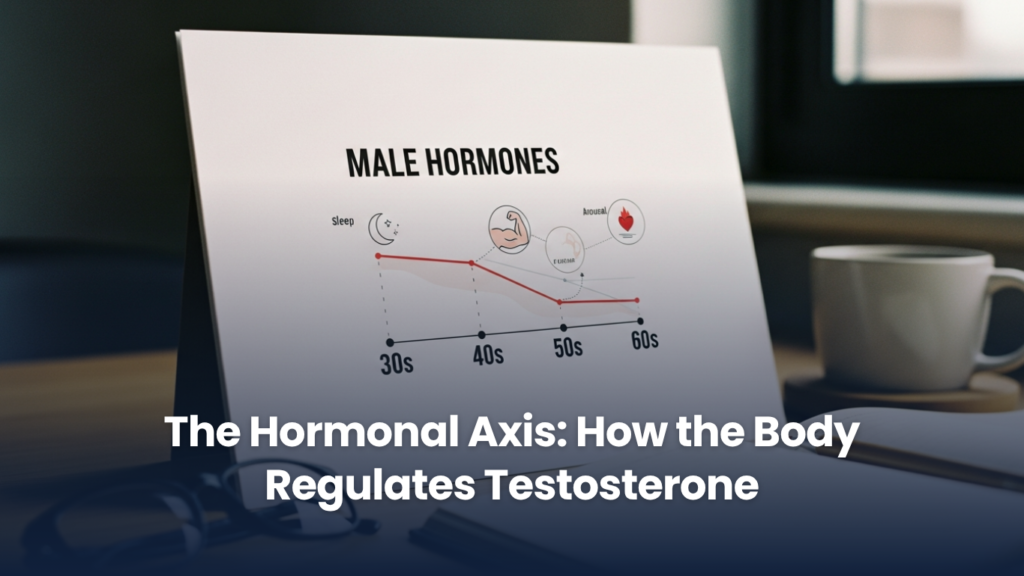
Testosterone levels peak in early adulthood and begin a gradual decline starting around age 30, typically dropping about one to two percent per year. For many men, this decline eventually reaches a threshold where symptoms become impossible to ignore.
Common signs of low testosterone include:
- Persistent fatigue that does not improve with sleep
- Reduced libido and sexual performance issues
- Difficulty building or maintaining muscle mass
- Increased body fat, particularly around the midsection
- Brain fog, poor concentration, and memory difficulties
- Mood changes including irritability and depression
- Poor sleep quality
If several of these symptoms resonate with you, take the free Hormone Readiness Assessment provided by TRT Nation to help you understand whether your hormone levels could be affecting your daily life.
 The Hormonal Axis: How the Body Regulates Testosterone
To understand how TRT works in the body, it helps to first understand how the body regulates testosterone naturally. This process is governed by what is known as the hypothalamic-pituitary-gonadal (HPG) axis, a tightly controlled feedback loop involving three key structures.
| Structure | Role | Signal Sent |
| Hypothalamus | Releases gonadotropin-releasing hormone (GnRH) | Signals pituitary to act |
| Pituitary Gland | Releases luteinizing hormone (LH) and follicle-stimulating hormone (FSH) | Signals the testes to produce testosterone |
| Testes | Produce and release testosterone into the bloodstream | Signals back to hypothalamus/pituitary to reduce GnRH and LH |
This feedback loop is self-regulating. When testosterone levels are adequate, the hypothalamus and pituitary slow their signaling. When levels drop, they ramp up production again. In men with hypogonadism, a clinical condition where the testes cannot produce sufficient testosterone, this system fails to produce enough of the hormone regardless of the signals it receives.
 How Does TRT Work in the Body? The Core Mechanism
When a man begins testosterone replacement therapy, exogenous (externally supplied) testosterone is introduced into the bloodstream. This supplemental testosterone behaves identically to the testosterone the body produces naturally, binding to androgen receptors found throughout the body’s tissues and triggering the same biological responses.
Here is how the process unfolds step by step:
- Testosterone enters the bloodstream through the delivery method used
- Free testosterone circulates and binds to androgen receptors in target tissues, including muscle, bone, brain, fat, and the cardiovascular system.
- Once bound, the testosterone-receptor complex enters the cell nucleus and influences gene expression, triggering the biological effects associated with healthy testosterone levels.
- The HPG axis detects rising testosterone levels and reduces its own signaling, which is why the testes reduce natural testosterone production during TRT.
- Ongoing monitoring through blood work allows providers to track levels and adjust dosage to maintain a therapeutic range.
Understanding how TRT works in the body at this level clarifies why medical supervision is so essential. Proper dosing ensures testosterone remains within a range that produces benefits without pushing levels too high, which carries its own risks.
 Delivery Methods: How TRT Enters the Body
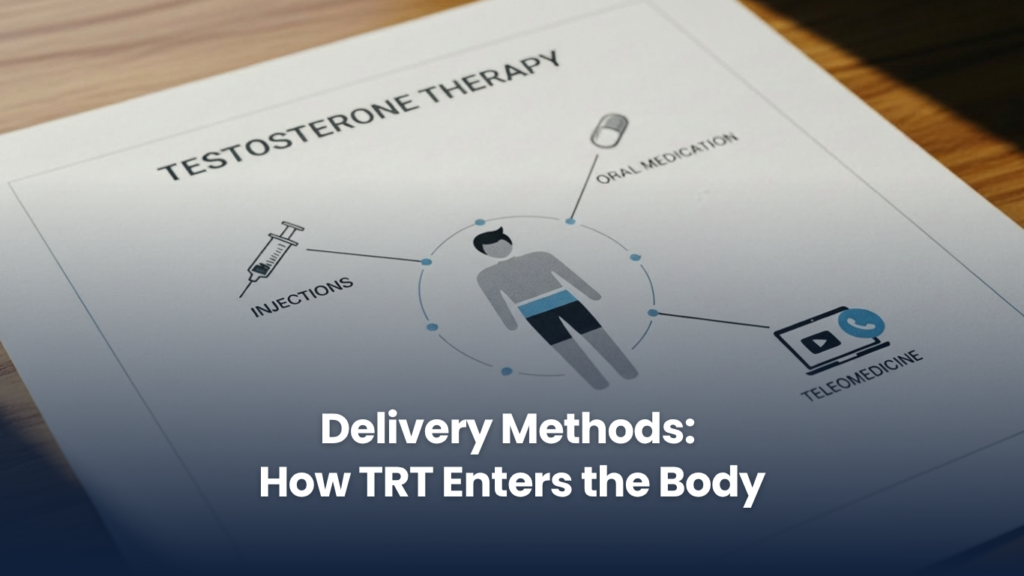
TRT is not a one-size-fits-all treatment, and how it is delivered affects how quickly it acts, how stable levels remain, and what the experience of treatment is like day to day. Delivery methods include:
| Method | How It Works | Key Consideration |
| Intramuscular Injection | Testosterone is injected directly into muscle (typically glute or thigh) where it absorbs into the bloodstream | Produces reliable, measurable levels; the gold standard for most TRT protocols |
| Enclomiphene (Oral) | Stimulates the body’s own hormonal signaling to naturally boost testosterone production | Preserves fertility; ideal for men who prefer not to inject |
At TRT Nation, licensed providers work with each patient to identify the delivery method that best fits their health profile, lifestyle, and treatment goals. Protocols are personalized, not templated.
 What Happens in the Body After TRT Begins?
Once TRT is initiated, the effects on the body unfold in a predictable sequence. Most men do not experience overnight transformation, instead, changes accumulate progressively as testosterone levels stabilize and the body’s tissues respond to restored hormonal signaling.
The general timeline looks like this:
- Weeks 1 to 4: Many men report early improvements in energy, mood, and motivation. Morning erections may return, and sleep quality often begins to improve as hormonal balance is restored.
- Weeks 4 to 8: Libido typically rebounds during this phase. Cognitive clarity improves, men often describe feeling sharper, more focused, and better equipped to manage stress.
- Months 2 to 4: Noticeable changes in body composition begin. Lean muscle mass increases while body fat, particularly visceral fat around the midsection, starts to decrease.
- Months 4 to 12 and beyond: Long-term improvements in bone density, cardiovascular markers, red blood cell production, and metabolic function continue to develop with sustained therapy.
Research published in clinical studies on testosterone therapy confirms that testosterone replacement augments lean mass gains and reduces total fat mass, particularly visceral fat, through its effects on adipocyte differentiation and lipid metabolism. Learn more about the timeline of results.
 The Physiological Effects of TRT: System by System
To fully understand how TRT works in the body, it is useful to look at the specific systems it affects and the mechanisms behind those changes.
Muscle and Physical Strength
Testosterone activates androgen receptors in muscle cells, stimulating protein synthesis and the growth of muscle fibers. It also promotes the release of growth hormone and IGF-1, both of which support muscle repair and hypertrophy. Men on TRT consistently report that resistance training becomes more productive, recovery is faster, and strength gains are more sustainable.
Body Composition and Fat Metabolism
Testosterone directly inhibits the differentiation of progenitor cells into fat cells (adipocytes) while simultaneously promoting lipid mobilization in existing fat stores. This dual action means that TRT does not just help men build muscle, it actively counteracts fat accumulation, particularly around the abdomen where low-testosterone-related fat tends to concentrate.
Brain Function and Mood
Androgen receptors are present throughout the brain, including in regions governing mood, motivation, and cognition. When testosterone levels are restored, men often report significant improvements in mental clarity, emotional stability, and motivation, effects that have been corroborated by multiple studies linking low testosterone to depression and cognitive decline.
Bone Density
Testosterone plays a critical role in maintaining bone mineral density. Hypogonadism is associated with accelerated bone loss, which increases fracture risk over time. TRT helps restore the hormonal signaling needed to maintain and even rebuild bone density, particularly with sustained, long-term treatment.
Cardiovascular System and Red Blood Cell Production
Testosterone stimulates the production of erythropoietin (EPO) in the kidneys, which in turn signals the bone marrow to produce more red blood cells. This increases oxygen-carrying capacity and supports energy and endurance. Testosterone also influences cholesterol metabolism and arterial health, though these effects require monitoring, as elevated red blood cell counts (erythrocytosis) can develop and are managed through regular blood work.
Sexual Function and Libido
One of the most frequently cited benefits of TRT is the restoration of sexual drive and function. Testosterone directly influences the brain’s sexual response pathways and contributes to erectile function by supporting nitric oxide production in penile tissue. Most men on TRT report meaningful improvement in both libido and erectile quality within the first several weeks of treatment. This is consistent with what Cleveland Clinic notes about TRT reversing the key effects of hypogonadism.
 The Role of Medical Monitoring in TRT
Understanding how TRT works in the body also means understanding why provider oversight is non-negotiable. TRT is not a supplement. It is a medical treatment that requires ongoing monitoring to ensure it is producing the intended results without unintended consequences.
Key markers monitored during TRT include:
- Total testosterone levels
- Estradiol (E2)
- PSA (prostate-specific antigen)
- Complete Metabolic Panel
At TRT Nation, every protocol includes regular lab work and unlimited provider consultations, so patients are never navigating their treatment alone. This is what responsible, provider-guided hormone care looks like in practice.
 TRT and the HPG Axis: What Happens to Natural Production?
A common question men have when learning how TRT works in the body is what happens to their natural testosterone production once they begin treatment. The answer lies in that HPG feedback loop.
When exogenous testosterone is introduced, the hypothalamus and pituitary detect elevated circulating levels and reduce their output of GnRH and LH. Without the LH signal, the testes significantly reduce, or in many cases stop, their own testosterone production. This is a normal and expected physiological response to TRT, not a malfunction.
For men who wish to preserve fertility or testicular function, enclomiphene is a better approach to supporting natural testicular activity. TRT Nation offers combination protocols to address this, and their providers tailor these decisions to each patient’s circumstances. Learn more about fertility-safe options.
 Who Is a Candidate for TRT?
TRT is a treatment for men who have clinically confirmed low testosterone, not a performance-enhancing shortcut. The appropriate candidates are men who have:
- Received a blood test confirming low testosterone levels (typically below 300 ng/dL)
- Are experiencing symptoms consistent with hypogonadism
- Have had other potential causes of symptoms ruled out or accounted for
- Are under the ongoing care of a qualified healthcare provider
Men may feel more energetic, have a higher sex drive, gain muscle mass, and lose body fat as benefits of treatment, but that these outcomes are most reliably achieved when testosterone levels are low and therapy is medically supervised. If you are unsure whether you might have low testosterone, the Hormone Readiness Assessment is a quick starting point that can help guide your next steps.
 Frequently Asked Questions (FAQS)
How long does it take to feel the effects of TRT?
Most men notice early improvements in energy, mood, and libido within the four to six weeks of starting TRT. More significant changes in body composition, strength, and cognitive function typically emerge over the following two to four months as testosterone levels stabilize. TRT Nation’s provider-guided protocols are designed to monitor your progress throughout this timeline and adjust your dosage as needed to optimize your results.
Does TRT permanently shut down natural testosterone production?
TRT suppresses the body’s own testosterone production during treatment because the HPG axis detects sufficient circulating hormone and reduces signaling to the testes. This effect is generally reversible if TRT is discontinued, though recovery time varies from person to person and may take several months. For men concerned about fertility or testicular function, TRT Nation offers enclomiphene as a fertility-safe option. Talk to your provider about what protocols best align with your family planning goals.
Is TRT safe long term?
When administered and monitored correctly, testosterone replacement therapy has a well-established long-term safety profile for men with clinically diagnosed hypogonadism. The key to long-term safety is consistent medical oversight, including regular blood panels to monitor hormone levels and other relevant markers. TRT Nation’s model of unlimited provider consultations and routine lab monitoring is specifically designed to support safe, sustainable outcomes over the long term.