


Effective Workouts for Men on TRT to Maximize Muscle Growth
Starting testosterone replacement therapy is a powerful step toward reclaiming strength, energy, and body composition, but the biggest gains come when you pair TRT with a smart training plan, dialed-in nutrition, and consistent recovery. The most effective workouts for men on TRT focus on compound lifts, progressive overload, and 3–5 weekly resistance sessions, supported by a high-protein diet and 7–9 hours of sleep. This guide distills the essentials into a clear plan you can start today, with medical guardrails, realistic timelines, and practical routines. As a medically overseen, patient-first provider, TRT Nation empowers you to structure safe, effective habits that turn hormone therapy into measurable muscle and strength.

Medical Setup and Initial TRT Assessment
Before you overhaul training or diet, confirm low testosterone through lab testing and begin therapy under physician oversight. Testosterone is a controlled medication; medical supervision ensures your dose, delivery method, and follow-up labs are safe and effective. Most clinicians repeat bloodwork 6–8 weeks after starting to dial in dosing and address side effects, then space monitoring as you stabilize, often every 2–3 months initially. Guidance like the Shape Plus overview underscores these timelines and the need for clinical oversight to optimize gains.
Optimal levels are individual: age, baseline T, body composition, and response matter. Men typically start seeing visible changes in 3–6 months, with more complete recomposition over 6–12 months, as summarized in the Vyve Wellness explainer.
For a broader primer on expectations and safety, see TRT Nation’s guide What Every Man Should Know About Testosterone Therapy.
Designing a Baseline Workout Program on TRT
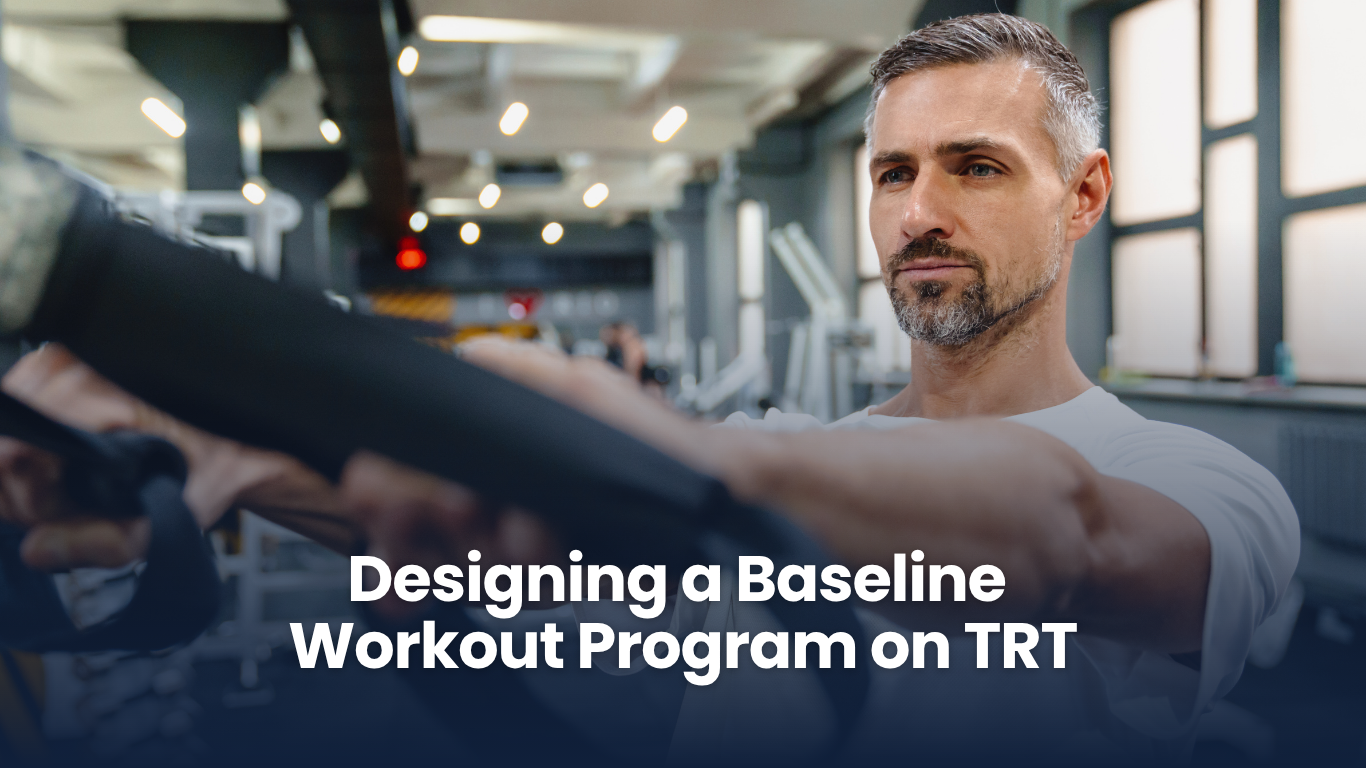
TRT improves recovery and the capacity to build muscle, but training is the engine. Start with 3–4 structured sessions per week that target all major muscle groups and emphasize fundamental movement patterns. Resistance training means any exercise that challenges muscles against load: free weights, machines, cables, bands, or bodyweight.
Pairing resistance training with TRT yields greater improvements in lean mass and strength than TRT alone, according to the Atlas Pro Training overview on TRT and strength. Keep your split simple so you can progress consistently.

Recommended weekly structures:
| Day | 3‑Day Full Body | 4‑Day Upper/Lower Split | |
| Monday | Full Body A (squat, bench, row, accessory) | Upper A (bench press, row/pull-up, arms) | |
| Tuesday | Rest or cardio/mobility | Lower A (squat/hinge, lunge, calves, core) | |
| Wednesday | Full Body B (deadlift, overhead press, pull-up, accessory) | Rest or cardio/mobility | |
| Thursday | Rest | Upper B (overhead press, pulldown/row, chest accessory, arms) | |
| Friday | Full Body C (front squat or lunge, incline press, hip hinge, accessory) | Lower B (deadlift/hinge, split squat, posterior chain, core) | |
| Saturday | Cardio or active recovery | Cardio or active recovery | |
| Sunday | Rest | Rest |
Prioritizing Compound Movements for Maximum Muscle Growth
Compound movements recruit multiple joints and large muscle groups at once; driving bigger strength and hypertrophy returns per rep. Core lifts like squats, deadlifts, bench press, rows, and pull-ups create a strong metabolic stimulus while remaining time efficient. As summarized by Optimized TR’s performance guide, these lifts underpin the fastest path to size and strength.
Five essentials for men on TRT:
- Squats
- Deadlifts
- Bench press
- Rows
- Pull-ups
Use this quick targeting matrix to build balanced sessions:
| Exercise | Primary muscles | Secondary muscles | |
| Back squat | Quads, glutes | Core, adductors, spinal erectors | |
| Deadlift (conventional or trap bar) | Glutes, hamstrings | Lats, forearms, upper back | |
| Bench press (flat or incline) | Chest, triceps | Anterior delts, upper back (stability) | |
| Row (barbell or cable) | Lats, mid-back | Biceps, rear delts, spinal erectors | |
| Pull-up/lat pulldown | Lats | Biceps, lower traps, rotator cuff |
Structuring Workout Frequency and Volume with TRT
Most men thrive on 3–5 resistance sessions weekly. TRT often supports slightly higher training frequency and better recovery, but you still need to build volume and load gradually. Add 1–2 moderate cardio or interval sessions for heart health and work capacity without compromising muscle.
Evidence-based guardrails from Optimized TR:
- Frequency: 3–5 lifting days, plus 1–2 cardio days
- Progression: increase sets or load cautiously; too-fast jumps still risk overuse and fatigue
Sample weekly flow:
- Monday/Thursday: Upper body (compound focus)
- Tuesday/Friday: Lower body + core
- Wednesday/Saturday: Cardio, mobility, or active recovery
- Sunday: Rest
Progressive Overload Strategies to Enhance Gains
Progressive overload means steadily increasing training demands heavier loads, more reps or sets, denser rest periods to keep muscles adapting. TRT supports this by enhancing muscle protein synthesis and recovery capacity, making consistent progression more achievable, as outlined by Atlas Pro Training and Optimized TR.
How to progress safely:
- Add small increments every 1–3 weeks while maintaining form.
- Track working sets and key lifts in an app or notebook.
- When reps stall, hold load and perfect technique or add a back-off set.
Example progression:
- Week 1: Bench press 3×8 at 135 lb
- Week 2: 3×9 at 135 lb
- Week 3: 3×8 at 140 lb

Nutrition Guidelines to Support Muscle Growth on TRT
Your diet powers hypertrophy and recovery. Aim for 0.8–1.0 grams of protein per pound of goal body weight to maximize muscle protein synthesis, a target reinforced by the Optimized TR overview. Round out the plate with complex carbs for training fuel and healthy fats for hormone function, plus micronutrients like zinc and magnesium that support performance and sleep. The MedHealth360 guide highlights these nutrient priorities for men on TRT.
Key concepts:
- Caloric surplus: eating more than you burn promotes muscle gain.
- Caloric deficit: eating less supports fat loss.
- Recomposition: with TRT and training, many men can add muscle while losing fat by hovering near maintenance calories and prioritizing protein, as noted by Optimized TR.
High‑protein options (quick reference):
- Chicken breast (6 oz): ~50 g protein
- Lean beef (6 oz): ~42 g protein
- Salmon (6 oz): ~38 g protein
- Greek yogurt (1 cup): ~20 g protein
- Eggs (3 large): ~18 g protein
- Cottage cheese (1 cup): ~24 g protein
- Whey isolate (1 scoop): ~24–27 g protein
- Lentils (1 cup cooked): ~18 g protein
- Tofu (6 oz): ~18–20 g protein
Sample day (adjust portions to goals):
- Breakfast: Omelet with 3 eggs, spinach, feta; oats with berries
- Lunch: Grilled chicken, quinoa, mixed vegetables, olive oil
- Snack: Greek yogurt with almonds
- Dinner: Salmon, roasted potatoes, asparagus; side salad
- Pre/post-workout: Whey shake and a banana
For more food ideas, see TRT Nation’s 10 Essential Foods for an Effective TRT Meal Plan.

Recovery Practices to Optimize Training Results
TRT can’t outwork poor recovery. Anchor your routine with 7–9 hours of quality sleep, stress management, and consistent nutrition; these pillars are as important as the workouts themselves, a theme emphasized by Optimized TR. Add low-intensity movement (walking), mobility work, and occasional yoga or stretching to stay limber and reduce injury risk. Simple, sustainable strategies recommended by Tri-City Men’s Health.
Use both subjective and objective signals to course-correct:
- Subjective: energy, soreness, motivation, irritability
- Objective: training performance trends, sleep quality, resting heart rate
If two or more indicators trend down for a week, deload or add a rest day.
Monitoring Progress and Adjusting Workouts on TRT
Stay proactive with medical follow-up and training audits. Early on, many clinicians re-test testosterone and related markers (including estrogen) every 2–3 months to maintain a therapeutic range and refine dosing, as noted by Shape Plus. In the gym, reassess your split, exercise selection, volume, and intensity every 8–12 weeks or sooner if progress stalls or recovery worsens.
Timelines to expect:
- 3–6 months: visible changes in muscle and strength
- 6–12 months: more substantial recomposition and performance gains These ranges align with the Vyve Wellness summary of outcomes on TRT.
Working with a telemedicine team? Take advantage of frequent check-ins and lifestyle support; TRT Nation’s guide on essential lifestyle changes offers practical ways to align sleep, nutrition, and training for better, safer results.

Frequently Asked Questions
Does resistance training enhance muscle growth on TRT more than TRT alone?
Yes. Evidence indicates TRT combined with structured resistance training produces greater gains in lean mass and strength than TRT alone.
What are the best exercises for muscle hypertrophy on TRT?
Prioritize compound lifts like squats, deadlifts, bench and overhead presses, and rows or pull-ups to train the most muscle efficiently.
What is the optimal workout frequency and structure for men on TRT?
Most men do best with 3–5 lifting sessions weekly plus 1–2 cardio days, following a progressive overload plan and rotating upper/lower or full-body sessions.
What does a sample weekly workout schedule look like?
Alternate upper and lower days (Mon/Thu upper, Tue/Fri lower), add cardio or mobility midweek and Saturday, and keep at least one full rest day.
How much muscle gain can men on TRT expect from workouts, and what are realistic outcomes?
Expect visible changes within 3–6 months, with more complete body composition shifts over 6–12 months, assuming consistent training and nutrition.
Should cardio be included, and how does it fit with muscle growth goals?
Yes. Moderate cardio supports heart health and fat loss; 1–2 sessions weekly complement lifting without compromising hypertrophy.
What recovery and nutrition tips maximize results on TRT?
Sleep 7–9 hours, eat high-protein, minimally processed foods with healthy fats and complex carbs, and schedule rest and active recovery days consistently.
Links cited:
- Shape Plus on medical oversight and lab timelines: Men’s Over 40, Low Testosterone, and Training on TRT
- Vyve Wellness on expected muscle gain timelines: TRT and Muscle Gain: How Much Can You Expect?
- Atlas Pro Training on training synergy with TRT: How Strength Training Can Enhance Results
Internal resources: