

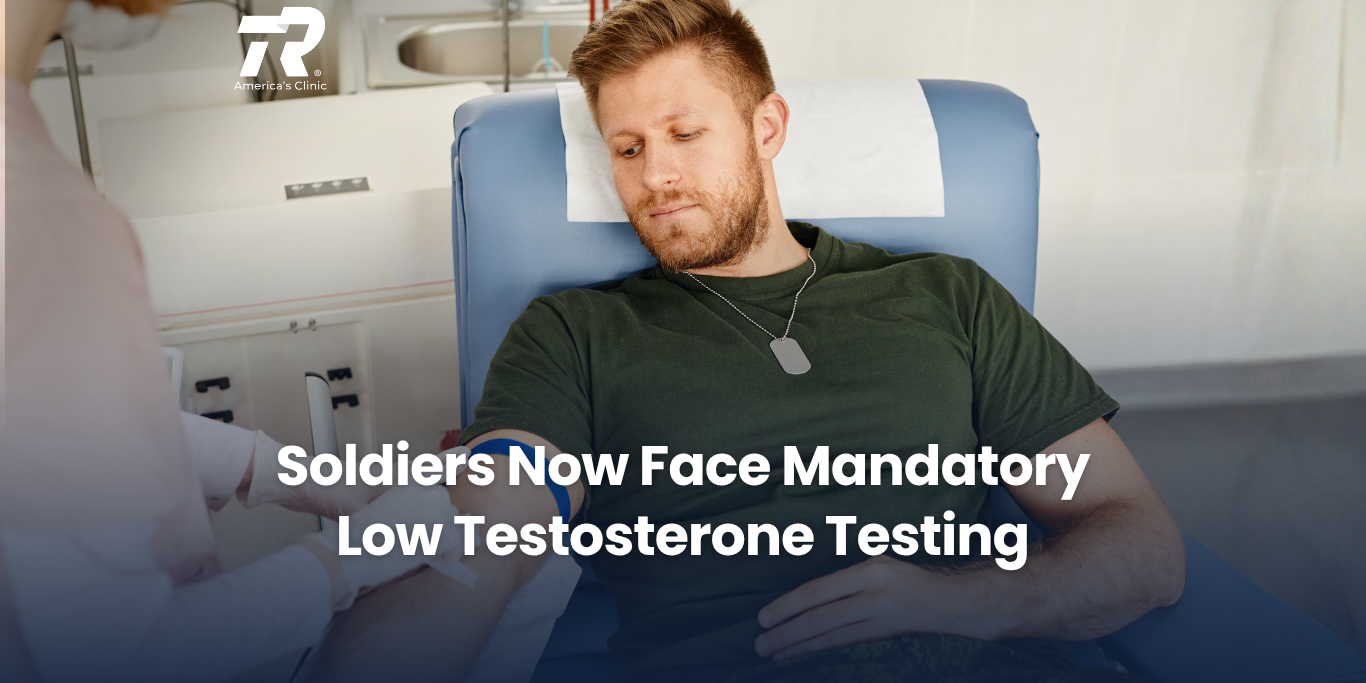
Soldiers Now Face Mandatory Low Testosterone Testing
Last Updated July 2026
In July 2026, the Department of Defense expanded its medical screening requirements to include low testosterone testing for active-duty soldiers. This marks more than a small administrative update. It signals that low testosterone is being treated as a real, measurable health issue worth checking for on a national scale, rather than something men only wonder about quietly on their own.
Guidance from the Department of Defense’s official health resources point to the same underlying reason: fatigue, low energy, and hormone imbalances have become common enough among young men that testing for low testosterone now has a formal place in routine medical evaluations. If a branch of the federal government believes testing low t belongs in a standard checkup, it raises a fair question for civilians too. If the Department of Defense believes low testosterone screenings are necessary for the those leading and protecting our country, should those leading and protecting our families also take note?
Why the Military Is Prioritizing Low Testosterone Testing Now
The push toward this test did not appear out of nowhere. Military health leaders have spent years tracking readiness data, and hormone health keeps showing up as a factor connected to energy, recovery, and overall performance. A few of the reasons behind this shift include:
- Physical readiness standards that depend on energy, strength, and recovery, all of which testosterone plays a role in
- Rising reports of fatigue, low mood, and reduced stamina among young men, patterns also described by the Mayo Clinic in its overview of low testosterone symptoms
- Department of Defense wellness initiatives that treat hormone health as part of overall fitness
- Growing medical consensus, echoed by the Endocrine Society, that testing low t catches treatable conditions early, before symptoms quietly pile up
- Note: implementing TRT into their health plan is optional, should a soldier have low testosterone
 Why This Policy Matters Beyond the Military
Low testosterone is not limited to soldiers. Lifestyle stress, poor sleep, weight changes, and normal aging all contribute to declining testosterone levels across the general male population. If low testosterone testing is becoming standard practice for one of the most physically screened groups in the country, it is worth considering what a similar test could reveal for men outside the military too. Read more about this shift, the great testosterone decline, and related hormone health topics.
 What Comes After Low Testosterone Testing
A low result on low testosterone testing simply marks a starting point rather than a dead end. Men who test low have options, and two of the most discussed are testosterone replacement therapy, commonly known as TRT, and enclomiphene, a treatment that can support the body’s own natural testosterone production rather than replacing it outright. TRT Nation providers work with men to review low testosterone testing results and build a plan suited to individual goals, whether that means TRT, enclomiphene, or a combination approach guided by labwork.
How TRT Works
TRT introduces testosterone directly into the body, most commonly through injections placed under the skin. Because it supplies the hormone directly, TRT tends to raise testosterone levels in a direct and predictable way, which is why it remains the most widely recognized option once low testosterone testing confirms a low result.
How Enclomiphene Works
Enclomiphene takes a different route. Rather than adding testosterone from an outside source, it signals the pituitary gland to increase the body’s own output of the hormones that drive natural testosterone production. Men who want to preserve natural production or fertility often bring enclomiphene into the conversation once low testosterone testing points to a low result.
Men who want a starting point before formal low testosterone testing can take the free Hormone Readiness Assessment.
 Frequently Asked Questions (FAQS)
Who must get low testosterone testing in the military?
The Department of Defense’s expanded screening requirements apply to active-duty soldiers as part of routine medical evaluations. Specific timing and eligibility can vary by branch, so service members should confirm details through their unit’s medical office. Men outside the military can pursue similar testing through TRT Nation without needing a military referral.
What age should men consider low testosterone testing?
Testosterone naturally declines with age, and many providers suggest low testosterone testing become part of routine bloodwork by the mid-thirties or sooner if symptoms appear. Younger men experiencing persistent fatigue, low drive, or mood changes should not wait for a certain birthday to ask about it. TRT Nation works with men across a wide age range to make low testosterone testing accessible whenever symptoms show up.
Is low testosterone testing painful or complicated?
Low testosterone testing typically involves a routine blood draw, like any standard lab work, and results are usually available within a few days. There is no special preparation for labwork. TRT Nation makes the process straightforward from initial testing through reviewing results with a provider.
Does low testosterone testing automatically mean starting treatment?
No single test result automatically leads to treatment. Providers typically review symptoms, repeat lab work, and overall health history before recommending next steps such as TRT or enclomiphene. TRT Nation providers walk men through what their specific numbers mean before any plan is put in place.
How can I get low testosterone testing outside the military?
Men do not need to be in the armed forces to access low testosterone testing. Primary care visits, men’s health clinics, and dedicated hormone health services like TRT Nation all offer testing options, often with more flexibility than a standard checkup. Starting with the TRT Nation Hormone Readiness Assessment or a visit to trtnation.com is a simple way to see where your own levels may stand.