


Testosterone Cypionate vs Enanthate: Which Is More Effective in 2026?
Choosing between testosterone cypionate and enanthate can be confusing for men starting testosterone replacement therapy (TRT). Both are effective esters that deliver the same active hormone and treat low testosterone; neither is considered clinically superior in terms of basic efficacy.
The differences lie in practical factors such as injection frequency, cost, carrier oils, and availability, which may affect convenience, comfort, and overall patient experience. Understanding these distinctions can help you and your physician decide which option fits better.
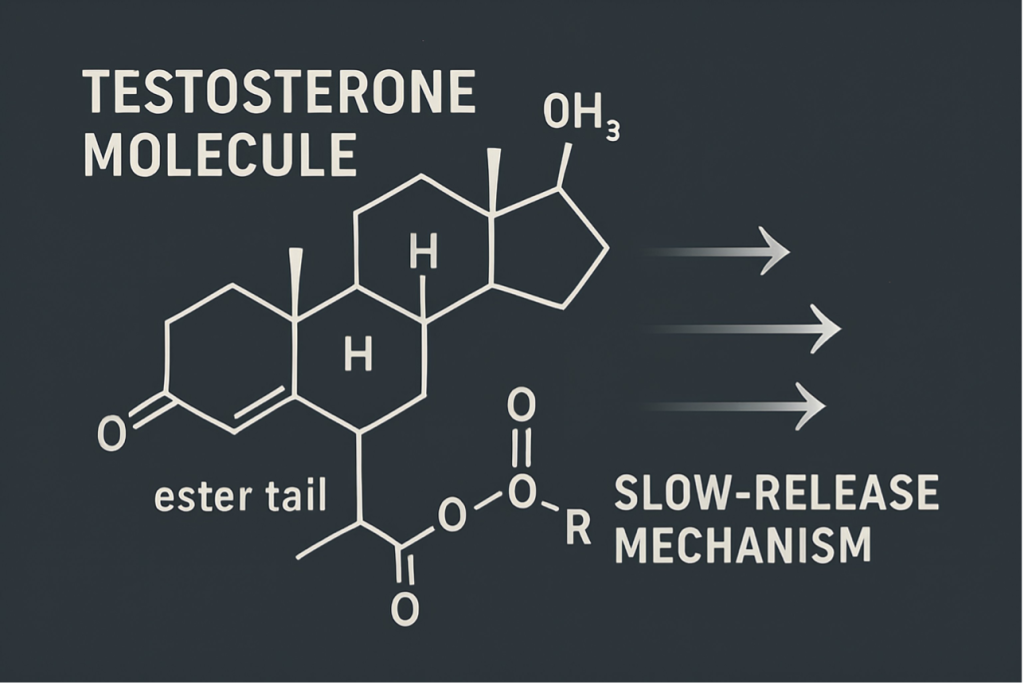
Understanding Testosterone Esters in TRT
Testosterone esters are modified forms of testosterone designed to slow down the release of the hormone into the bloodstream after injection. This allows therapy to be more convenient than daily dosing of pure (non‑esterified) testosterone while maintaining more stable hormone levels.
TRT aims to restore testosterone in men experiencing hypogonadism (low testosterone). Benefits often include improved energy, mood, muscle mass, libido, and mental focus. The two most prescribed injectable esters in the U.S. are cypionate and enanthate. Both have decades of clinical use supporting their safety and effectiveness.
Key Differences Between Testosterone Cypionate and Enanthate
Although both esters deliver the same active testosterone, practical differences can influence which your physician prescribes and which patients prefer. Testosterone cypionate has a half-life of roughly 7–8 days, while testosterone enanthate typically has a half-life of about 4–5 days. As a result, cypionate may remain active in the body a bit longer, which sometimes allows for a slightly less frequent injection schedule.
Cypionate is commonly formulated in cottonseed oil, while enanthate is often dissolved in thicker sesame oil. Some versions of either ester may instead use other carrier oils such as grapeseed or olive oil, depending on pharmacy practices and formulation choices.
Because the oils differ, more viscous oils like sesame may take longer to draw into a syringe and require more pressure to inject, which can affect injection comfort or the chance of localized lumps.
Pricing and availability can vary depending on pharmacy, insurance coverage, and program structure, such as telemedicine bundles that include labs and consultations. In addition, there is some regional variation, with cypionate being standard in the U.S. and enanthate more commonly used internationally.

Pharmacokinetics and Half-Life Comparison
Pharmacokinetics describes how your body absorbs, distributes, metabolizes, and eliminates a medication. Understanding the pharmacokinetics of testosterone esters helps predict how often you’ll need injections and how stable your hormone levels will remain between doses.
Testosterone cypionate’s longer half-life of 7–8 days means that after injection, it takes about a week for half of the medication to be metabolized and cleared from your system. Enanthate’s shorter half-life of 4–5 days results in faster clearance. This difference stems from cypionate’s slightly longer ester chain, which slows its release from the injection site and extends its activity.
A longer half-life offers the advantage of fewer injections and more stable testosterone levels over time, reducing the peaks and troughs that some patients find uncomfortable. However, a shorter half-life like enanthate’s allows for quicker adjustments if side effects occur or dosing needs to change.
Pros of a longer half-life (cypionate):
- Fewer injections required
- More stable blood levels
- Greater convenience for busy schedules
Pros of a shorter half-life (enanthate):
- Faster dose adjustments if needed
- Quicker onset of action
- May suit patients who prefer more frequent, smaller doses
Injection Frequency and Dosing Convenience
Your injection schedule directly affects convenience and adherence to TRT. Testosterone cypionate is typically administered every 7 to 10 days due to its extended half-life. Enanthate, with its shorter duration, is usually injected every 4 to 5 days, although some protocols call for more frequent dosing.
Less frequent injections appeal to patients with demanding schedules or those who dislike needles. On the other hand, more frequent, lower dose injections can minimize hormone fluctuations and maintain steadier symptom control.
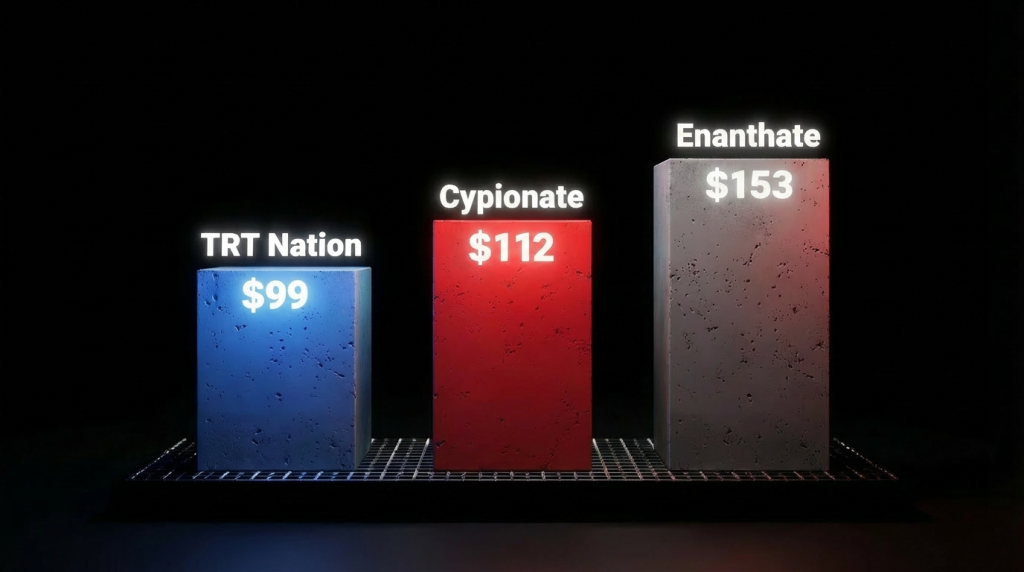
TRT Nation offers both testosterone cypionate and enanthate for 99 dollars, which makes cost comparison simple and predictable no matter which ester you choose. And while cypionate is traditionally dosed once weekly and enanthate twice weekly, many modern TRT protocols now use twice weekly injections for both esters. This approach helps prevent the roller coaster effect where larger once weekly doses can create noticeable peaks and dips in energy, mood, or libido. Splitting injections into two smaller doses per week supports smoother and more stable hormone levels, and many patients find this improves consistency and symptom control.
Your physician will tailor your injection schedule based on your lab results, symptom response, and preferences. Both esters allow flexibility, and many patients successfully manage their therapy with either option.
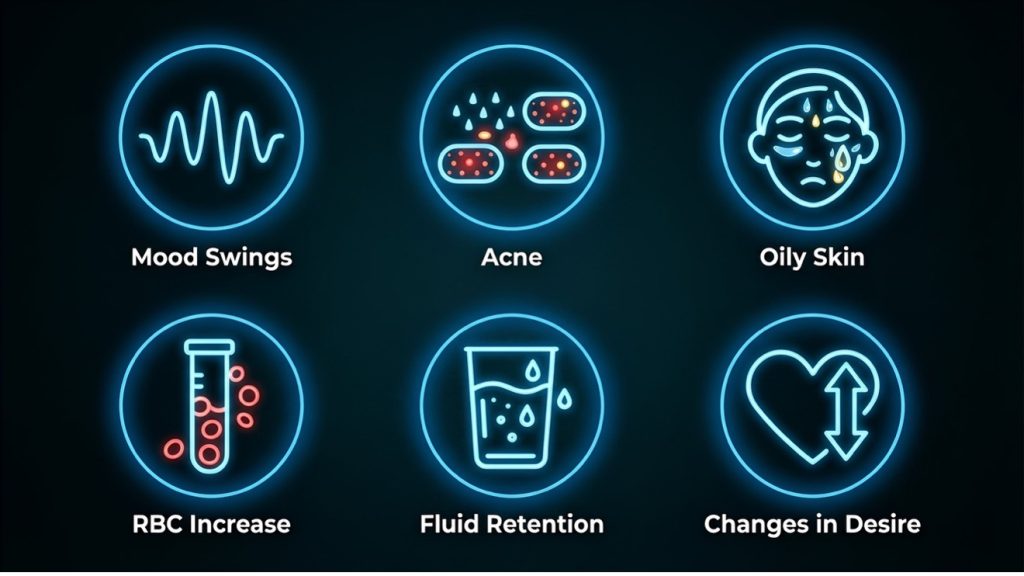
Side Effects and Safety Profiles
Testosterone cypionate and enanthate share nearly identical side effect profiles because they deliver the same active hormone. Common side effects include mood swings, acne, oily skin, increased red blood cell count, fluid retention, and changes in libido. Serious but rare risks include cardiovascular events, sleep apnea worsening, and prostate issues, which is why regular monitoring by a licensed physician is essential.
Injection site reactions differ slightly due to carrier oils. Enanthate’s sesame oil is thicker and may cause more localized pain, redness, or swelling at the injection site compared to cypionate’s thinner oils. Patients with sesame allergies must avoid enanthate entirely.
Both esters require the same safety precautions, including routine blood tests to monitor testosterone levels, hematocrit, liver function, and prostate-specific antigen (PSA). Neither ester is safer or riskier than the other when used under proper medical supervision. Your individual health history, not the ester type, determines your overall risk profile.
Clinical Effectiveness: Do Outcomes Differ?
From a clinical standpoint, testosterone cypionate and enanthate are equally effective at raising testosterone and alleviating symptoms of low testosterone. Studies show no significant difference in muscle gain, fat loss, energy improvement, or libido restoration between the two esters when dosed appropriately.
Both esters convert to the same bioavailable testosterone in your body. The ester portion simply controls the release rate—it does not change the hormone’s biological activity. This means your results depend on achieving and maintaining optimal testosterone levels, not on which ester you choose.
Patient-reported outcomes also show no meaningful preference for one ester over the other in terms of symptom relief. Factors like injection comfort, cost, and dosing convenience influence satisfaction more than the ester itself. Working with your physician to find the right dose and schedule matters far more than the specific ester name on the vial.
Cost and Insurance Coverage Considerations
Cost can be a deciding factor for many patients. As noted, testosterone enanthate averages $153 per dose, while cypionate costs around $112. Over a year of weekly injections, this difference adds up.
Insurance coverage varies widely. Most plans cover both esters when prescribed for diagnosed hypogonadism, but copays and prior authorization requirements differ. Some insurers favor one ester over the other based on formulary agreements with manufacturers.
Telemedicine TRT providers, including TRT Nation, often offer transparent, flat-rate pricing that includes medication, physician consultations, and lab work, making cost comparisons easier. If cost is a concern, discuss it openly with your provider. Switching from enanthate to cypionate, or vice versa, is straightforward and may save you money without compromising treatment quality.

Regional Availability and Prescribing Trends
Testosterone cypionate dominates the U.S. market due to its long-standing use and widespread availability at American pharmacies. Most U.S. physicians’ default to cypionate unless a patient has a specific reason to prefer enanthate.
Internationally, enanthate is more common, particularly in Europe, Australia, and parts of Asia. This regional split is largely historical and regulatory rather than clinical. If you travel frequently or live abroad part-time, confirming your ester’s availability in your destination country is wise.
Compounding pharmacies can prepare either ester, sometimes offering customized carrier oils or concentrations. This flexibility benefits patients with allergies or those seeking specific injection volumes.

Which Testosterone Ester Should You Choose?
The decision is guided by personal preference, lifestyle, cost, and practical considerations rather than clinical superiority. Cypionate may be preferable for those who want fewer injections, lower cost per dose, easier injection with thinner oils, and ready access to U.S. pharmacies. Enanthate may appeal to men who prefer more frequent, smaller doses, have insurance coverage favoring enanthate, want quicker dose adjustments, or live outside the United States. Many patients try one ester first and switch if it does not fit their routine or comfort level.
Consider testosterone cypionate if:
- You prefer less frequent injections
- You want lower cost per dose
- You have access to U.S. pharmacies
- You prefer thinner carrier oils for easier injections
Consider testosterone enanthate if:
- You prefer more frequent, smaller doses
- You live outside the United States
- Your insurance covers enanthate at a lower copay
- You want faster dose adjustments
Ultimately, your physician will help you select the ester that aligns with your medical needs, lifestyle, and budget. Many patients try one ester and switch to the other without issue if their initial choice doesn’t suit them.
Bottom Line
When it comes to choosing between testosterone cypionate and enanthate, the decision ultimately rests on lifestyle, comfort, and cost rather than clinical superiority. Both esters deliver the same benefits when properly dosed, but many men find cypionate slightly more convenient thanks to its longer half-life, easier injections, and wider availability in the U.S. If you prefer fewer injections, smoother levels, and a more affordable option, cypionate often becomes the more practical fit. That said, either ester can help you restore balance, improve performance, and feel like yourself again with the right guidance.
To learn more about testosterone therapy and get personalized support, connect with TRT Nation at [email protected], and discover how optimized hormones can help you take back your drive and confidence.
Frequently Asked Questions
Is testosterone cypionate or enanthate more effective?
Both are equally effective—they deliver the same testosterone and produce identical clinical outcomes when dosed correctly.
Can I switch between cypionate and enanthate?
Yes, switching is safe and straightforward under physician supervision, with no loss of effectiveness.
Which ester has fewer side effects?
Side effects are nearly identical; carrier oil differences may affect injection site comfort, but not systemic side effects.
How often do I need injections with each ester?
Cypionate is typically injected every 7–10 days; enanthate every 5–7 days, though schedules vary by protocol.
Which testosterone ester is cheaper?
Cypionate averages $112 per dose versus enanthate’s $153, though prices vary by pharmacy and insurance. TRT Nation offers Cypionate and Enanthate for $99 per dose.
References
- TestoDepot: “Cypionate vs Enanthate: Key differences and dosing.” Available here
- Verywell Health: “Testosterone cypionate vs testosterone enanthate: What’s the difference?” Available here
- MediVeraRx: “Testosterone cypionate and propionate formulations” Available here
Disclaimer: This information is for educational purposes only and is not medical advice. Always consult with a qualified healthcare provider before starting any hormone replacement therapy. TRT requires proper medical supervision, including baseline testing and ongoing monitoring.