

Why You’re Always Tired: The Silent Signs of Low Testosterone Men Over 30 Ignore
Feeling wiped out no matter how much you sleep? If you’re 30–50 and dragging through the day with brain fog, low drive, and slow recovery, you’re not “just getting older.” You may be dealing with low testosterone, a common, treatable imbalance that quietly undercuts energy, focus, and presence. Testosterone helps power red blood cell production, muscle repair, sleep quality, and motivation. When it drops, fatigue follows. The good news: with the right diagnosis and plan, most men regain their edge. Seeking answers isn’t weakness, it’s a sign of leadership. A strong man optimizes his health to provide, protect, and be fully present for his family. If fatigue is persistent and paired with other symptoms below, it’s time to test and take control.
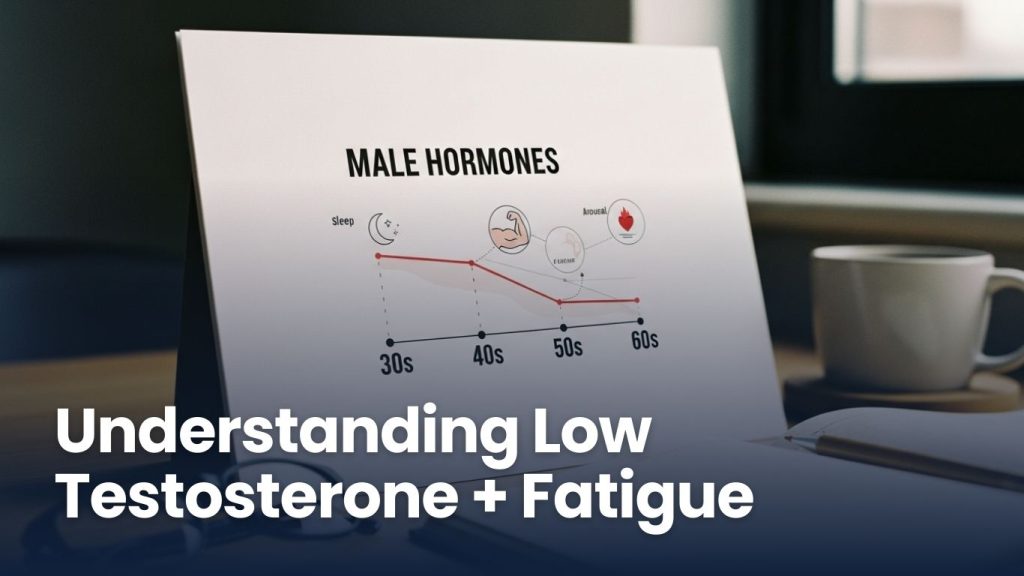
Understanding Low Testosterone and Fatigue
Testosterone is the engine oil of male performance. It supports muscle protein synthesis, red blood cell production, metabolic health, and the brain circuits that drive motivation and libido. When levels fall, men notice it first in their energy: workouts feel heavier, mornings feel slower, and the spark to initiate fades. That’s not a character flaw, that’s physiology.
Low testosterone (Low-T) means your body’s testosterone level is below the healthy range and you have symptoms such as fatigue, low sex drive, and reduced strength. Most guidelines diagnose Low-T when morning total testosterone is below roughly 300 ng/dL on two separate days, paired with symptoms. Testing should be done around 7–10 a.m. and confirmed before treatment, because levels vary day to day and fall later in the day, particularly in younger men. This symptom-plus-testing approach is standard across major centers, including the Mayo Clinic and primary care guidance from the AAFP 2024 guideline.
Testosterone does decline with age, about 1% per year after the third decade; yet that doesn’t mean feeling exhausted is inevitable. When symptoms interfere with work, training, or intimacy, that’s a medical signal, not a moral failing. According to the AAFP 2024 guideline, properly selected men with confirmed Low Testosterone can experience improvements in sexual function, mood, anemia, lean mass, and bone density on therapy.

Silent signs men over 30 often ignore:
- Persistent fatigue that sleep doesn’t fix
- Brain fog, slower recall, reduced drive
- Low libido or fewer morning erections
- Slower recovery, loss of strength or muscle, more belly fat
- Mood drift: irritability, “flat” outlook, or mild depression
- Poor sleep quality or increased snoring
- Reduced fertility or smaller testicular volume

How Low Testosterone drives what you feel:
| Sign | What’s happening | |
| All-day fatigue | Fewer red blood cells and lower muscle efficiency reduce stamina | |
| Brain fog | Hormonal dips affect attention, motivation, and mood circuits | |
| Low libido/ED | Androgen-sensitive tissues underperform; desire and performance slip | |
| Slow recovery | Impaired protein synthesis and sleep fragmentation blunt repair | |
| Belly fat gain | Lower T shifts body composition toward fat and away from lean mass | |
| Irritability/low mood | Neurotransmitter balance and sleep quality take a hit |

When to get a blood test:
- You’ve had 4–8 weeks of persistent fatigue plus two or more of the above signs
- You’ve noticed a clear decline in morning erections/libido or strength and recovery
- You’ve cleaned up basics (sleep, nutrition, alcohol) but still feel off
- You have risk factors like obesity, diabetes, or chronic opioid use
Ask your clinician for two separate morning total testosterone tests. If borderline or if symptoms don’t match the number, additional labs (free testosterone, SHBG) may help refine the picture. A full evaluation should also screen for other common fatigue drivers; sleep apnea, anemia, thyroid issues, and depression – so nothing is missed. This diagnostic approach is echoed by the Cleveland Clinic overview and Mayo Clinic guidance.
What’s the most effective therapy for Low testosterone signs?
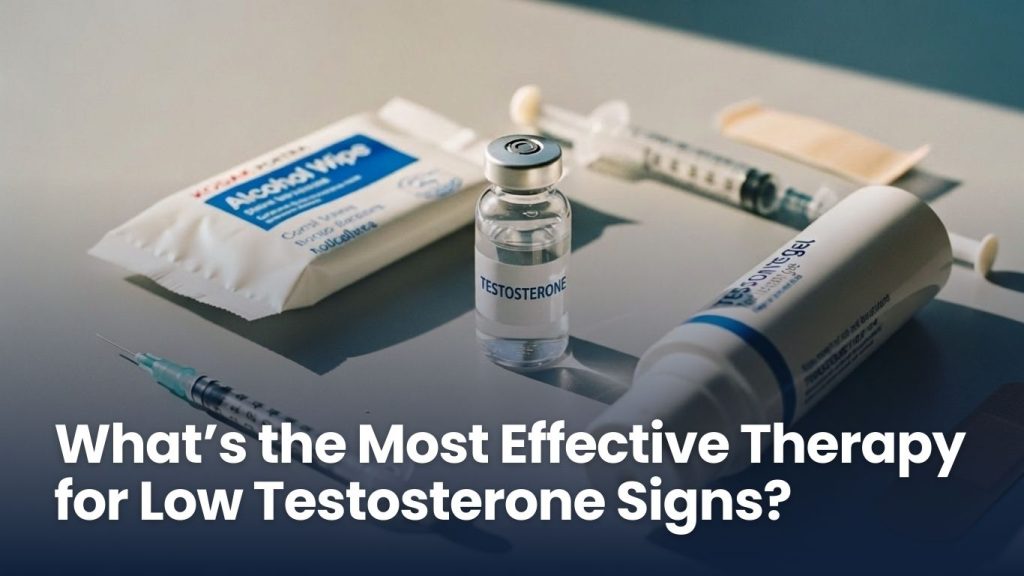
The best testosterone therapy is the one that safely restores you to a normal physiologic range and steadily relieves your symptoms with minimal side effects. For many men, TRT Nation’s medically supervised testosterone injections (cypionate or enanthate) provide the most reliable, cost-effective control of levels. Others prefer daily gels, patches, long-acting pellets, or nasal formulations. These modalities and their trade-offs are outlined in the Cleveland Clinic TRT overview and Mayo Clinic guidance.

Expect benefits to unfold over weeks to months: energy and libido often improve first; body composition and bone benefits build with consistent treatment and training. High-quality reviews, including the AAFP 2024 guideline and a Harvard Health review, note clinically meaningful improvements in sexual function, mood, anemia, and lean mass in appropriately selected men.
How TRT works:
Exogenous testosterone raises blood levels into a healthy range, which can normalize red blood cell production, improve sleep architecture, enhance protein synthesis, and restore androgen signaling in the brain; all of which translate to better energy, drive, and recovery. Dosing is individualized. The objective is steady, mid-normal levels; no peaks-and-crashes, paired with symptom resolution and safe labs.

Safety, fertility, and monitoring:
Side effects can include acne, fluid retention, higher red blood cell count, and lowered fertility. Because TRT suppresses sperm production, men who want children soon should discuss alternatives such as clomiphene citrate, or HCG with a specialist; this fertility caution is emphasized in the AAFP 2024 guideline.
Monitoring matters: check hematocrit/hemoglobin, testosterone levels, lipids, and PSA as appropriate, at baseline, 3 months after starting, then every 6-12 months. Untreated severe sleep apnea should be addressed before therapy, as TRT can worsen it in some men, a point noted in the AAFP 2024 guideline and Mayo Clinic guidance.
What you can start today:
- Prioritize sleep: 7-8 hours, consistent schedule, dark/cool room
- Lift weights 3-4days/weeks; add zone 2 cardio for metabolic health
- Dial in protein (0.7-1.0)g per pound of goal body weight and cut excess alcohol
- Reduce visceral fat; even at 5-10% weight loss can nudge testosterone upward, according to a Harvard health review.

Bottom line: if fatigue is stealing your edge, don’t accept it as your new normal. A simple blood test can confirm if Low Testosterone is the culprit. Choosing treatment is an act of strength, an investment in your focus, performance, and presence for the people who count on you. Reclaim your energy, lead from the front, and get the data you need to act. For evidence-based evaluation, clear guidance, and physician-led care, turn to TRT Nation, a team that treats you like an athlete returning to form.
Sources: Cleveland Clinic overview; Mayo Clinic guidance; Cleveland Clinic TRT overview; AAFP 2024 guideline; Harvard Health review.