


Normal Testosterone Levels But Low Energy: Why Your Labs Don’t Tell the Whole Story
Understanding the Gap Between “Normal” Test Results and How You Actually Feel
You’re exhausted despite sleeping eight hours. Your libido has disappeared. Brain fog makes simple tasks feel impossible. You struggle to recover from workouts that used to energize you. So you do the responsible thing: you see your doctor and get comprehensive blood work.
The result? “Everything looks normal.”
If this scenario sounds familiar, you’re not imagining your symptoms and you’re far from alone. Thousands of men each year find themselves caught in this frustrating gap between what their lab results say and how their body actually feels.
This disconnect doesn’t mean your doctor is incompetent or that you’re manufacturing problems. It reveals something more fundamental: the limitations of how modern medicine defines “normal” hormone levels, particularly when it comes to testosterone and male vitality.

How Testosterone Reference Ranges Are Actually Created
The Statistical Reality Behind “Normal” Lab Values
Most people assume lab reference ranges represent optimal health. The reality is more nuanced and explains a lot about why you might feel off despite “normal” results.
Here’s the standard process for creating testosterone reference ranges:
- Population sampling: A large group of men provides blood samples
- Statistical distribution: Laboratories identify the middle 95% of all results
- Range establishment: This middle 95% becomes the “normal” or “reference” range
- Clinical application: Values outside this range are flagged as “high” or “low”
The critical issue: These ranges include men with:
- Chronic stress and poor sleep
- Obesity and metabolic syndrome
- Sedentary lifestyles
- Age-related hormonal decline
- Undiagnosed health conditions
In essence, “normal testosterone levels” often reflect what’s statistically common not what’s physiologically optimal. Your testosterone might be “normal” compared to other 45-year-old men with similar lifestyles, but significantly lower than what your body needs to function at its best.
Why Age-Adjusted Ranges Can Be Misleading
Some labs use age-adjusted reference ranges, which further compounds the problem. A 50-year-old man with testosterone levels of 350 ng/dL might fall within the “normal” range for his age group, even though this represents a significant decline from optimal function and would be considered low for a younger man.
This approach essentially normalizes age-related decline rather than identifying opportunities for intervention.
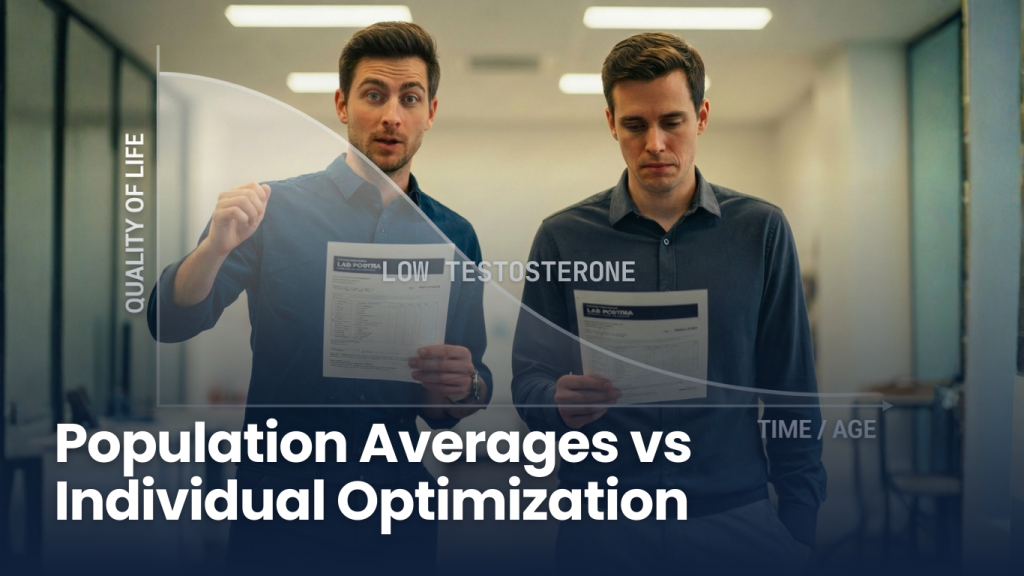
Population Averages vs. Individual Hormone Optimization
The Difference Between Disease Diagnosis and Quality of Life
Modern medicine excels at identifying and treating disease. Standard lab work can detect:
- Pituitary tumors affecting hormone production
- Primary testicular failure
- Genetic conditions like Klinefelter syndrome
- Severe endocrine disorders
These are critical, potentially life-threatening conditions that require immediate intervention.
However, the medical system is far less equipped to address functional optimization, the zone where you’re not clinically diseased, but also not functioning at your best. This is where many men with low energy, decreased libido, and cognitive fog find themselves stuck.
Why Two Men With Identical Testosterone Levels Feel Completely Different
Consider this scenario:
Man A: Total testosterone 450 ng/dL
- Feels energetic and motivated
- Strong libido and sexual function
- Sharp mental clarity
- Excellent workout recovery
Man B: Total testosterone 450 ng/dL
- Persistent fatigue and low motivation
- Decreased libido
- Brain fog and concentration issues
- Poor exercise recovery
The lab value is identical, yet their experiences couldn’t be more different. Why?
Because testosterone function depends on multiple factors:
- Free testosterone levels (not just total testosterone)
- SHBG (sex hormone-binding globulin) affecting bioavailable testosterone
- Individual receptor sensitivity to hormones
- Baseline levels earlier in life (a drop from 800 to 450 feels very different than someone who’s always been at 450)
- Overall health context including thyroid, cortisol, and insulin sensitivity
Your individual biology matters more than population statistics.

Why Primary Care Physicians Are Conservative With Testosterone Replacement
Understanding Your Doctor’s Perspective (Without Dismissing Your Symptoms)
If you’ve felt dismissed by your primary care doctor regarding testosterone therapy, it’s important to understand their position and reject inadequate care, but to navigate the system more effectively.
Legitimate medical concerns about TRT include:
- Fertility suppression: Exogenous testosterone typically shuts down natural sperm production
- Polycythemia risk: Elevated red blood cell counts that may increase cardiovascular risk
- Cardiovascular considerations: Ongoing research into long-term heart health effects
- Prostate health monitoring: Though modern evidence is more reassuring than past concerns suggested
- Lifelong commitment: Starting TRT often means permanent therapy
Systemic constraints your doctor faces:
- Limited consultation time: 5-10 minute appointments aren’t conducive to complex hormone discussions
- Liability concerns: Conservative prescribing protects against potential complications
- Training gaps: Most primary care physicians receive minimal education in hormone optimization
- Insurance limitations: Coverage often requires meeting strict diagnostic criteria
- Guideline adherence: Professional standards typically require clear hypogonadism before treatment
From your doctor’s perspective, if your testosterone levels fall within the broad reference range, the safest approach is often watchful waiting or addressing lifestyle factors first.
This doesn’t invalidate your symptoms. It reflects how the healthcare system prioritizes risk management over quality-of-life optimization for borderline cases.
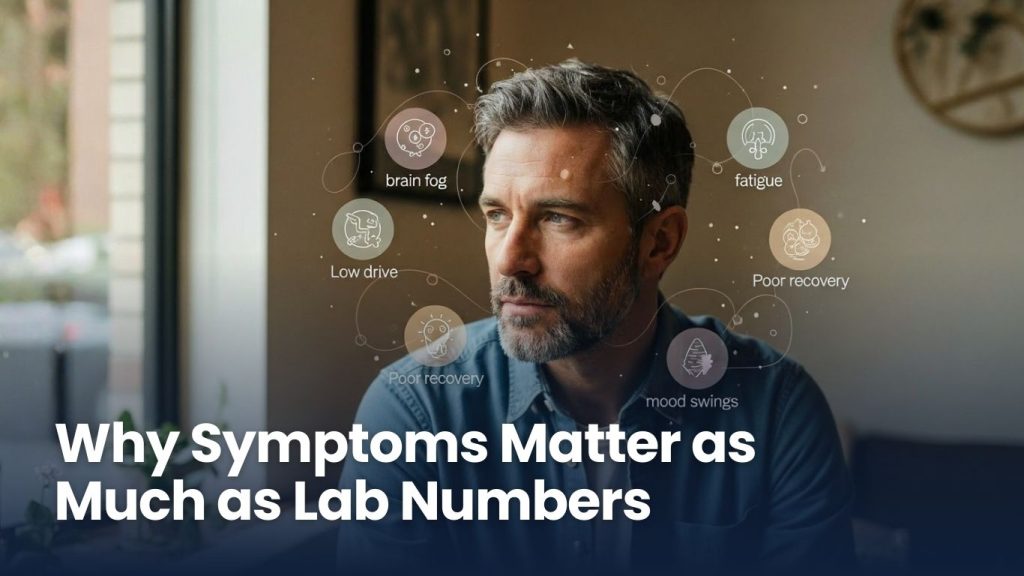
Why Symptoms Matter as Much as Lab Numbers
The Complex Reality of Hormone Function
Hormones don’t operate in isolation. Your testosterone levels interact dynamically with:
- Sleep architecture and quality
- Chronic stress and cortisol elevation
- Thyroid hormone function
- Insulin sensitivity and blood sugar regulation
- Systemic inflammation markers
- Mental health and neurotransmitter balance
- Body composition and muscle mass
A single testosterone measurement can’t capture this physiological complexity.
Common Low Testosterone Symptoms That Labs Might Miss
Men with suboptimal testosterone function often report:
Physical symptoms:
- Persistent fatigue despite adequate sleep
- Decreased muscle mass and strength
- Increased body fat, especially abdominal
- Poor workout recovery
- Reduced physical endurance
Sexual symptoms:
- Decreased libido and sexual desire
- Erectile dysfunction or decreased quality
- Reduced spontaneous erections
Cognitive and emotional symptoms:
- Brain fog and difficulty concentrating
- Memory problems
- Decreased motivation and drive
- Mood changes, irritability, or depression
- Reduced confidence and assertiveness
Metabolic symptoms:
- Difficulty losing weight despite diet and exercise
- Increased insulin resistance
- Unfavorable cholesterol changes
When these symptoms persist despite “normal” lab values, dismissing them because of a number overlooks the fundamental question: How does your body actually function?
The Importance of Longitudinal Data
Responsible hormone evaluation looks at:
- Symptom duration and progression over time
- Multiple lab tests to establish patterns, not one-off readings
- Trends in your personal history (how do current levels compare to your past?)
- Response to conservative interventions before considering hormone therapy
This approach respects both objective data and subjective experience.

How Ethical Hormone Clinics Approach Low Testosterone
What Responsible Testosterone Therapy Looks Like
The hormone clinic industry has a mixed reputation. Some providers are excellent, while others prioritize profit over patient welfare. Understanding the difference is crucial.
Comprehensive diagnostic approach includes:
- Extensive lab work beyond basic testosterone:
- Total testosterone
- Free testosterone
- SHBG (sex hormone-binding globulin)
- Estradiol (estrogen)
- LH and FSH (pituitary hormones)
- Prolactin
- TSH and thyroid panel
- Complete metabolic panel
- Complete blood count
- PSA (prostate-specific antigen)
- Detailed symptom assessment:
- Validated questionnaires (like the ADAM or AMS scales)
- Timeline of symptom development
- Impact on quality of life and daily function
- Previous interventions attempted
- Medical history review:
- Cardiovascular health
- Fertility considerations and family planning
- Current medications and supplements
- Sleep patterns and stress levels
- Diet and exercise habits
- Repeat testing for confirmation:
- Morning testosterone levels (when naturally highest)
- Multiple tests separated by weeks
- Ruling out temporary suppression from illness, stress, or poor sleep
- Discussion of alternatives:
- Lifestyle optimization (sleep, stress, nutrition, exercise)
- Treating underlying conditions (sleep apnea, thyroid issues)
- Addressing medications that lower testosterone
- Weight loss for overweight individuals
- Targeted supplementation when deficiencies exist
Conservative treatment protocols:
- Starting with lower, physiologic doses
- Regular monitoring every 3-6 months initially
- Adjusting based on labs AND symptoms
- Managing side effects proactively
- Honest discussion of risks and commitment required
Crucially, ethical providers recognize that testosterone therapy isn’t appropriate for every man seeking treatment. Sometimes the issue is sleep apnea, thyroid dysfunction, depression, or simply lifestyle factors that haven’t been adequately addressed.

Red Flags: When Hormone Clinics Get It Wrong
Protecting Yourself From Overprescribing
Not all hormone clinics operate with your best interests in mind. Be cautious of providers who:
Rush the process:
- Prescribe testosterone after a single lab test
- Don’t inquire about fertility plans or family goals
- Skip comprehensive health screening
- Pressure you to start immediately
Use aggressive protocols:
- Start with supraphysiologic doses (significantly above natural levels)
- Push additional medications or supplements aggressively
- Recommend escalating doses without clear rationale
- Dismiss concerns about side effects
Ignore long-term consequences:
- Don’t discuss fertility implications
- Skip regular monitoring after initiation
- Fail to check red blood cell counts, PSA, or cardiovascular markers
- Don’t have protocols for managing complications
Prioritize profit over care:
- Treat nearly every patient regardless of actual need
- Upsell expensive proprietary formulations
- Require purchasing supplements or additional products
- Lock patients into long-term financial commitments
These practices don’t invalidate testosterone therapy as a legitimate medical treatment. They simply highlight the importance of choosing providers carefully and asking critical questions before committing to treatment.
A good provider should welcome your questions, take time with your evaluation, and be honest when TRT might not be the best solution for your specific situation.

Moving Forward: Informed Self-Advocacy in Your Healthcare Journey
Your Experience Is Valid
If you’ve been struggling with persistent low energy, diminished libido, cognitive fog, or poor recovery, and been told your labs are “normal”… Your experience deserves to be taken seriously.
Feeling unwell despite reassuring lab values doesn’t mean you’re:
- Broken or defective
- Lazy or unmotivated
- Imagining symptoms
- Chasing solutions to non-existent problems
It means your individual biology may not align with broad population averages. This is far more common than most men realize.
You Deserve Comprehensive Care
Quality healthcare should provide:
- Clear, honest explanations of what your labs mean and don’t mean
- Thoughtful evaluation that considers your full health picture
- Respect for both objective data and lived experience
- Time to discuss concerns without feeling rushed or dismissed
- Exploration of all relevant options, not just the easiest or most profitable
Advocating for Yourself Isn’t Rejecting Medicine
Seeking better answers doesn’t mean:
- Dismissing medical expertise
- Demanding treatments you don’t need
- Ignoring legitimate health risks
It means:
- Engaging more deeply with your healthcare
- Asking better, more informed questions
- Seeking providers who treat you as an individual
- Making decisions based on comprehensive information
- Taking ownership of your long-term health trajectory
Practical Next Steps
If you’re navigating this situation:
- Document your symptoms systematically: Keep a detailed log of energy, mood, libido, recovery, and cognition over several weeks
- Request comprehensive hormone testing: Ask for the full panel mentioned earlier, not just total testosterone
- Get tested at optimal times: Morning tests when testosterone is naturally highest; avoid testing during illness or extreme stress
- Consider repeat testing: A single test is rarely definitive for hormone evaluation
- Explore lifestyle optimization first: Prioritize sleep quality, stress management, nutrition, and exercise before considering hormones
- Research providers carefully: Look for clinics with transparent processes, medical oversight, and balanced approaches
- Ask detailed questions: Any provider worth your trust will welcome thorough questioning about their protocols
- Seek second opinions: Especially if you’re unsure about recommended treatment
- Trust the process, not just the marketing: Good care is deliberate and methodical, not rushed or aggressive
Final Thoughts on Normal Testosterone Levels and Optimal Health
The gap between “normal” lab results and optimal health is real, measurable, and increasingly recognized in progressive medical circles. You’re not chasing an illusion. You’re pursuing a more nuanced understanding of your health than traditional reference ranges provide.
Whether the solution involves testosterone therapy, lifestyle changes, treating other underlying conditions, or some combination depends entirely on your individual situation. What matters most is finding healthcare providers who respect that complexity and work with you as a partner in optimizing your health.
That’s not rebellion against medicine. That’s responsible health ownership.
You deserve to feel like yourself again. The path forward starts with informed self-advocacy and finding care that treats you as an individual, not just a number on a lab report.

Frequently Asked Questions About Normal Testosterone Levels and Symptoms
Q: Can I have low testosterone symptoms with normal testosterone levels?
Yes. “Normal” reference ranges are broad and based on population averages, not individual optimization. Additionally, factors like SHBG levels, receptor sensitivity, and overall hormone balance affect how testosterone functions in your body, meaning you can have symptoms even with technically normal total testosterone.
Q: What testosterone level is considered optimal for men?
There’s no single “optimal” level that applies to everyone. However, many men feel best with total testosterone between 600-900 ng/dL and free testosterone in the upper-normal range. What matters more than the specific number is how you feel and function at a given level, combined with overall health markers.
Q: Should I consider testosterone replacement therapy if my levels are normal but I have symptoms?
Not necessarily as a first step. Before considering TRT, address: sleep quality, stress management, body composition, nutrient deficiencies, thyroid function, and other hormonal factors. Many men see significant improvement through lifestyle optimization. If symptoms persist despite these interventions and you have borderline testosterone with clear symptoms, TRT might be worth discussing with a knowledgeable provider.
Q: How do I find a good hormone doctor or TRT clinic?
Look for providers who: conduct comprehensive lab work, require multiple tests before diagnosis, discuss fertility implications, start with conservative doses, provide regular monitoring, are transparent about risks, explore non-hormone solutions first, and welcome your questions without pressure tactics.
Q: What’s the difference between total testosterone and free testosterone?
Total testosterone measures all testosterone in your blood, including testosterone bound to proteins. Free testosterone measures only the unbound, bioavailable testosterone that can actually enter cells and exert effects. You can have normal total testosterone but low free testosterone if your SHBG is elevated, which is why comprehensive testing matters.
Q: Will my insurance cover testosterone testing and treatment?
Coverage varies significantly. Most insurance plans cover basic testosterone testing when ordered by your primary care physician. Coverage for testosterone therapy typically requires meeting specific diagnostic criteria for hypogonadism. Many men working with specialized hormone clinics pay out-of-pocket as these services often aren’t covered by insurance.
Q: Are online testosterone clinics legitimate?
Some are excellent, while others prioritize profit over patient care. Legitimate telehealth hormone clinics should follow the same diagnostic protocols as in-person clinics: comprehensive labs, thorough evaluation, regular monitoring, and conservative treatment approaches. Be skeptical of any clinic that prescribes after minimal evaluation or doesn’t discuss risks and alternatives.